
Suresh Acharya
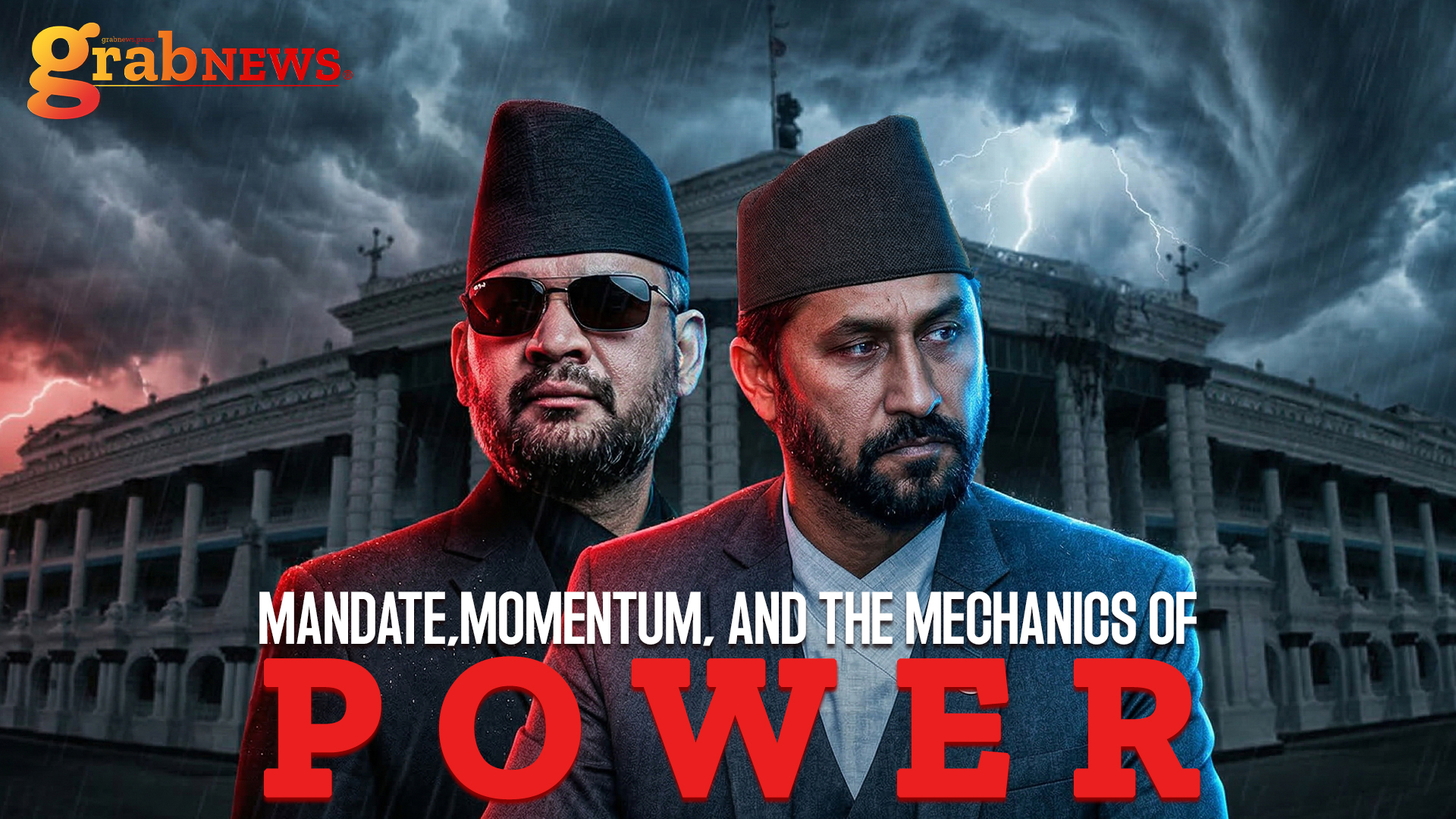
The eleventh-hour political alignment of 47-year-old Rabi Lamichhane and 36-year-old Balendra Shah has secured a mandate in the midterm elections of March 5 that far exceeds their earlier perceived “political lifesize.” This outcome is not merely electoral, it marks the arrival of a new socio-political class within Nepal’s state structure. In an evolving political culture, the familiar imagery of leaders in topi, dhoti, and sari-cholo is steadily giving way to a new cohort associated with the Rastriya Swatantra Party (RSP); urban, globally exposed, English-speaking, professionally accomplished, and distinctly modern. This is more than aesthetic; it signals a structural shift in representation and introduces a different ethos into Parliament. The rise of this modern, ambitious, tech-savvy, and economically confident class; particularly after what may be termed the Gen Z Uprising of 2082, has pushed traditional forces such as the Rastriya Prajatantra Party, Communist Party of Nepal (Unified Marxist–Leninist), Nepali Congress, and Communist Party of Nepal (then Maoist Centre) toward gradual decline, increasingly perceived as traditionalist, if not politically stagnant. Yet, this is not unprecedented. Nepal’s political history has moved in waves: 2007 BS, 2019 BS, 2046 BS, and 2062 BS. Each moment carried immense public hope, and each ultimately confronted the limits of delivery. As John F. Kennedy once observed, “Change is the law of life.” But change, as history shows, is only as durable as its outcomes. What makes the current moment distinct is its intensity and concentration. Within the party, RSP enjoys overwhelming internal cohesion, backed by a near two-thirds majority and over five million proportional votes leaving little resistance in shaping its national roadmap. Public support, too, appears strong and decisive, providing the leadership with both legitimacy and momentum.

However, beyond this internal strength lies a far more complex external landscape. As Balendra Shah is poised to become the 44th Prime Minister of Nepal, he will confront a fragmented political environment burdened by contradictions: ranging from constitutional ambiguities and competing public expectations to entrenched interests and evolving social contracts. The paradox is clear: the stronger the mandate, the greater the expectations, risks, and vulnerabilities that must be carefully managed. In times of transformation, background matters less than performance. The government that emerges from this mandate will be subjected to relentless public scrutiny, its ideas, decisions, and delivery measured in real time. In this context, it is worth recalling that ideas shaping today’s discourse did not emerge in isolation. During the 2079 BS elections, this author had the opportunity to contribute to the manifesto of Rastriya Prajatantra Party Nepal, where concepts such as dividends, partnerships, and investmentbased governance were articulated. Their re-emergence today reflects not coincidence, but the gradual evolution of Nepal’s political imagination. What distinguishes the current wave, however, is its language of governance. Traditional parties spoke of Matadaan: the donation of votes. RSP speaks of Matalagaani: the investment of votes. Taxes are framed not as burdens, but as citizen investments, with governance expected to generate public dividends. This is more than semantics; it redefines citizens as stakeholders and governance as a system accountable for returns. Yet ideas alone do not sustain legitimacy, they must deliver. And quickly. A younger, impatient electorate; particularly Generation Z will dominate the early evaluation of Balen’s government. Their expectations are clear: good governance, anti-corruption, accountability, and visible justice, including action against perpetrators of violence of Sep 23-24. These are not long-term aspirations; they are immediate benchmarks. Global experience suggests a narrow window: within 30 days, visible action must begin; by 60 days, patience begins to thin; beyond 90 days, a trust deficit emerges. Governments that fail this test often lose moral authority before they lose power.
History offers sobering lessons. In India, the Asom Gana Parishad rose from a student movement to a sweeping electoral victory, only to falter under the weight of unmet expectations. Elsewhere, overwhelming mandates have collapsed with startling speed. As Lord Acton warned, “Power tends to corrupt, and absolute power corrupts absolutely.” For RSP, the challenge is compounded by a structural dilemma: balancing immediate delivery with long-term reform. While the party did not initially emphasize systemic overhaul, its leadership, particularly Prime Ministerin-Waiting Balen now appears inclined toward constitutional amendments. Such reforms are necessary but slow, often requiring one to three years. The tension between short-term results and long-term transformation will define the government’s credibility. Economically, the stakes are equally high. The reform-oriented agenda associated with Swarnim Wagle offers a credible framework. Even partial implementation could significantly alter Nepal’s trajectory. But economic reform must be matched with balanced foreign policy, especially in navigating relations with India, China, and the United States. Leadership style will also be critical. Balen’s tenure as Mayor was marked by assertiveness; sometimes effective, sometimes contentious. His direct and unfiltered approach resonates with a public weary of indecision, yet governance at the national level demands diplomacy, coordination, and institutional balance. At the same time, the electoral mandate has disrupted traditional and identity-based strongholds both in Hills and Terai-Madhesh, opening space for a more meritocratic political culture. Whether this promise materializes will depend not on rhetoric, but on practice.
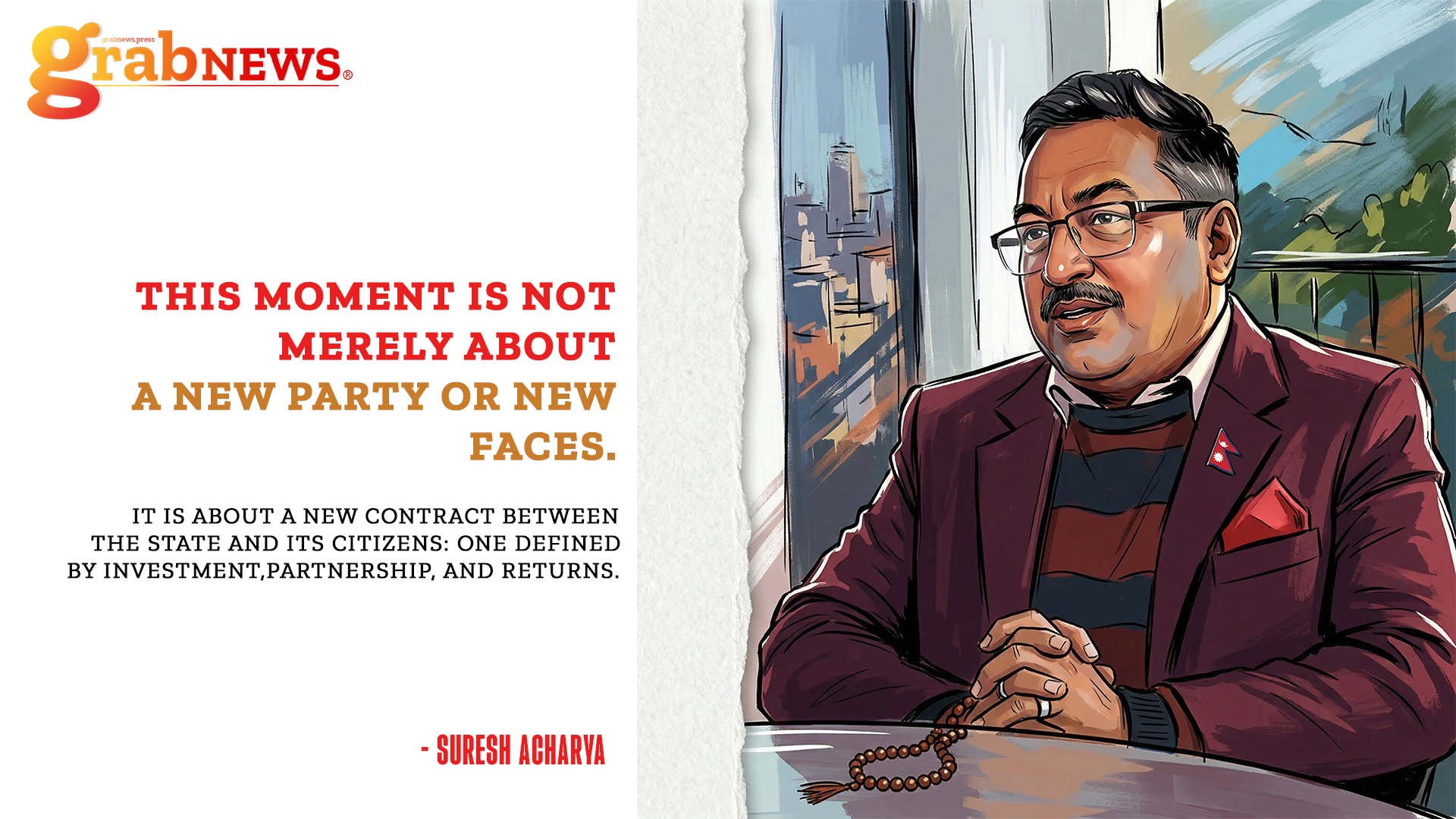
The risks are equally real. Unnecessary confrontation, whether with opposition parties or monarchist forces could erode stability. Ultimately, Balen’s statesmanship will be tested in his ability to engage diverse political currents, including monarchist sentiment, while firmly safeguarding political stability and democratic norms. For Balen, the first year, therefore, will be decisive as Prime Minister. His government must focus on tangible priorities: resolving the protracted cooperative crisis, initiating sweeping administrative reform, generating youth employment, expanding access to free healthcare, strengthening technical education, alleviating poverty, and addressing the concerns of farmers, workers, and small-scale industries. As Abraham Lincoln reminded, “Public sentiment is everything. With it, nothing can fail; without it, nothing can succeed.” This moment is not merely about a new party or new faces. It is about a new contract between the state and its citizens: one defined by investment, partnership, and returns. The question is no longer whether this new political class can rise. The real test is whether it can deliver, endure, and ultimately redefine governance in Nepal.
(Acharya writes in contemporary issues)
sacharya139@gmail.com