
As a documentary filmmaker myself, I have spent years navigating the ethical tightrope of storytelling-balancing raw truth with context, emotion with evidence, and individual tragedy with national reality. Watching the BBC World Service’s recent documentary Shot Like Enemies: Inside Nepal’s Gen Z Uprising left me deeply troubled. Released at a moment when Nepal stands on the cusp of historic elections in March 2026, the film constructs a narrative that paints the Nepal Police and the then government as villains in a morality play of state brutality against innocent youth. It selectively forensic-analyzes leaked police radio logs and cherry-picked videos to suggest a premeditated “shoot-to-kill” policy against unarmed children, while glossing over the chaos, arson, looting, and institutional attacks that defined the two days of September 8-9, 2025. This is not balanced journalism. It is a guided purge of nuance, feeding a naive Gen Z idealism disconnected from geopolitics, governance realities, and the fragile democracy of a landlocked nation caught between giants.

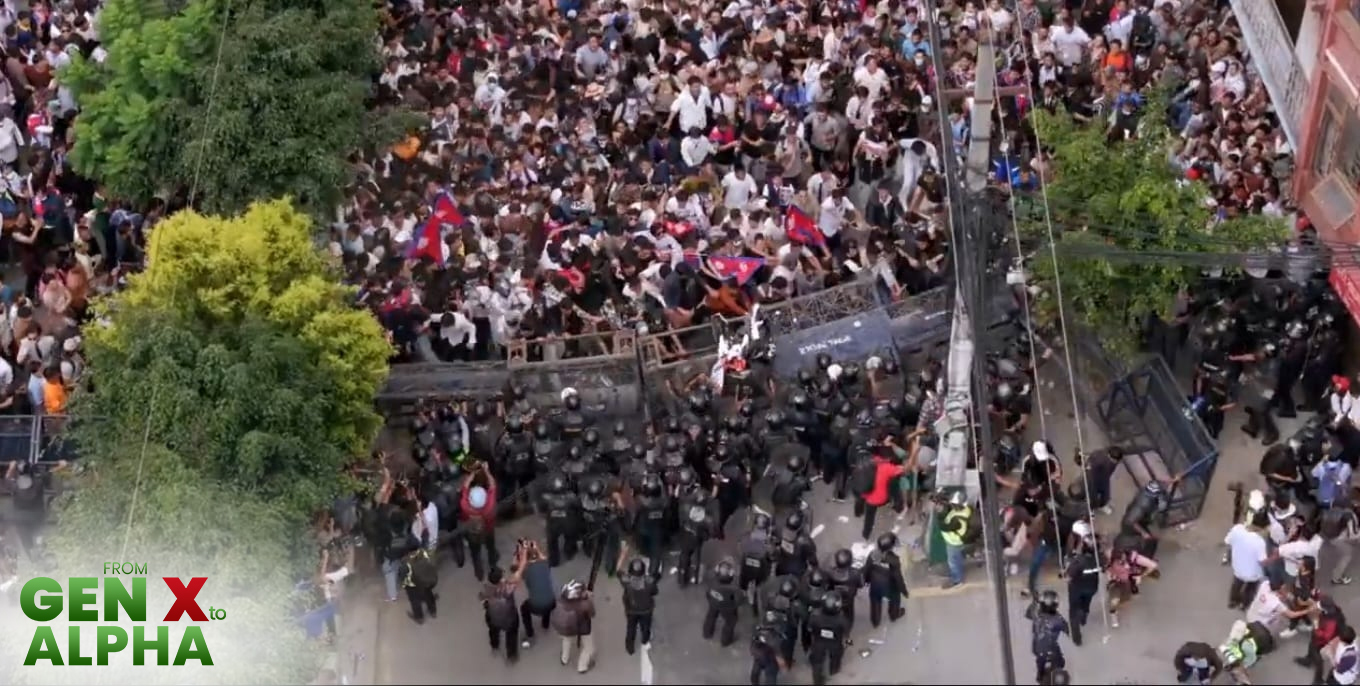
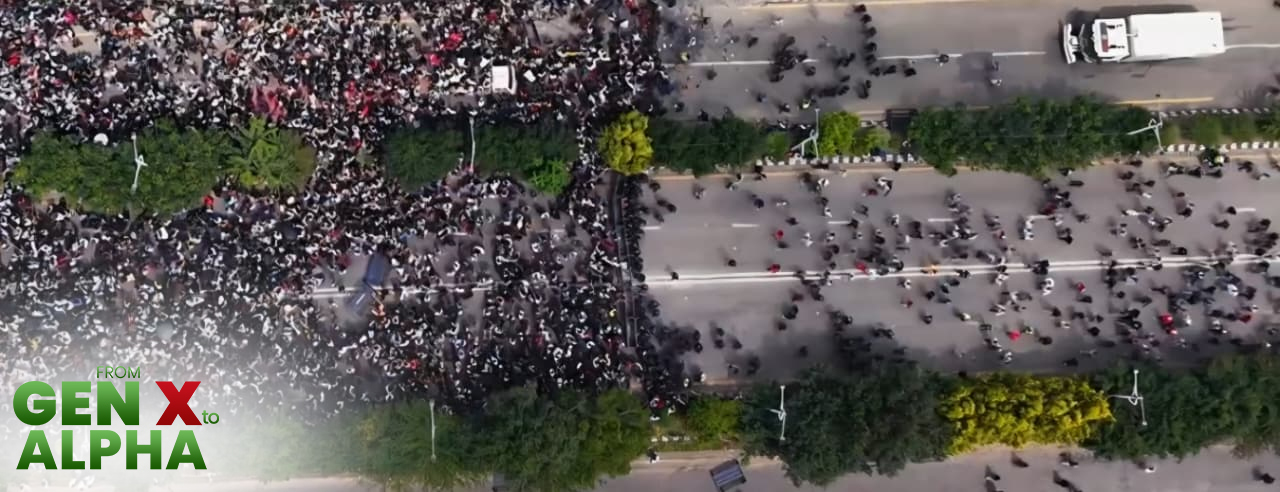
Let us start with the facts the BBC downplays or buries. The protests began legitimately. A government ban on 26 social media platforms on September 4, 2025, for failing to register under new digital regulations-aimed at enforcing taxes, VAT, and curbing unchecked misinformation-ignited simmering youth anger over corruption, nepotism (#NepoKids), unemployment (around 20% among youth), and elite excess in a country where remittances prop up 33% of GDP and average income hovers near $1,400. Thousands of Gen Z protesters gathered peacefully on September 8 near Maitighar and Parliament in Kathmandu. Their energy was admirable: a digitally native generation demanding accountability in a system long plagued by patronage.
But peaceful protest does not remain peaceful when crowds climb perimeter walls, hurl stones at security forces guarding the seat of democracy, and ignore curfew announcements. Police responded in graduated stages-tear gas, water cannons, rubber bullets-standard protocol worldwide when public property and lives are threatened. Only when the situation escalated did “necessary force” get authorized, per leaked logs the ВВС sensationalizes as cold-blooded orders from then-Inspector General Chandra Kuber Khapung (“Peter 1”). Nepal Police has clarified this followed explicit approval from a government security committee, after non-lethal options were exhausted, and in line with Nepali law for protecting critical infrastructure. Tragically, 19 died in Kathmandu that day, including innocents like 17-year-old Shreeyam Chaulagain. Every death demands investigation and accountability – interim Prime Minister Sushila Karki’s government has pledged this, with compensation of NPR 1 million per martyr family. But framing these as “shot like enemies” while ignoring the mob dynamics ignores the reality: security forces faced thousands in a confined, highstakes zone. Forensic reconstruction cuts both ways; the BBC’s 4,000+ videos and photos do not show the full sequence of provocation. The film’s greatest omission?

September 9-the day the “uprising” revealed its hijacked face. Gen Z organizers themselves distanced from what followed, calling it the work of “opportunists,” political cadres, and external elements. Protesters torched Parliament, the Supreme Court, Singha Durbar, the Presidential Residence, party headquarters, and leaders’ homes (including those of multiple former PMs). Prisons were stormed nationwide-over 13,500 inmates escaped, creating a security nightmare in a country already vulnerable to organized crime and cross-border threats. Three police officers were killed. Fires and clashes pushed the two-day toll to 76 dead (per Nepal Army reports: 22 protesters, 3 police, 10 prisoners killed during escapes, others in related violence) and over 2,000 injured. Economic damage exceeded $586 million. The army had to deploy, close Tribhuvan International Airport temporarily, and restore order. This was not “state overreach”; it was a sovereign response to near-anarchy that threatened the very institutions Gen Z claimed to reform.
Prime Minister Oli resigned on September 9. Parliament was dissolved. An interim government under respected former Chief Justice Karki took over, lifted the social media ban immediately, and scheduled fresh elections for March 5, 2026. Youth turnout will be massive (915,000 new voters). Far from a “modus operandi” of authoritarian control, this sequence demonstrates Nepal’s democratic resilience: grievances heard, leadership changed, elections advanced. The BBC portrays this as victory for the victims against a repressive regime. In truth, it is the system self-correcting without descending into the prolonged instability seen elsewhere in the region.

Here lies the deeper lopsidedness. The documentary treats Gen Z as pure, tech-savvy heroes-Rakshya Bam organizing via Discord, schoolkids in uniform-while erasing their political naivety. In a nation of 30 million sandwiched between India and China, where hydropower, borders, and debt diplomacy are existential, “anticorruption” protests amplified on foreign platforms risk becoming vectors for external influence. Social media trends do not equate to geopolitical literacy. The speed with which a regulatory ban morphed into burning the Supreme Court suggests coordination beyond organic youth rage-opportunists and cadres the Gen Z leaders themselves disowned. BBC ignores this, just as it skips the three police deaths, prison breaks, and economic sabotage. Selective empathy for “innocent youths” while justifying (or omitting) mob violence against the state is not reporting; it is ideological scripting.
International NGOs like Amnesty and Human Rights Watch echo the BBC’s focus on “unlawful killings” and “excessive force,” calling for probes. Fair enough-Nepal’s interim government is conducting them via judicial commission. But these voices rarely apply equal scrutiny to the arsonists who destroyed public assets or the digital echo chambers that escalated a policy dispute into national crisis. Foreign media, operating from London or New York, apply a one-size-fits-all “youth vs. dictator” template ill-suited to Nepal’s context: a young democracy recovering from decades of monarchy, insurgency, and coalition fragility.
Nepal does not need external validation to mourn its dead or hold its forces accountable. What it needs is recognition that maintaining order amid legitimate protest is not demonizable “brutality.” The police protected Parliament-not for personal power, but for the continuity of the republic the protesters demanded reform within. Gen Z’s passion is Nepal’s future strength, but unchecked it risks becoming a tool for those who benefit from chaos: regional players, vested interests, or global narratives that paint small nations as failed experiments. The BBC documentary arrives suspiciously close to our elections, prompting even Nepal’s Election Commission to flag its sensitivity and seek curbs on amplification. This timing amplifies its impact as thought-processing for a generation “ready” for premature polls but perhaps unprepared for the responsibilities of power. True documentary filmmaking demands the full mosaic: youth idealism, state restraint under fire, tragic loss on all sides, and institutional survival. Shot Like Enemies offers half the frame-emotionally potent, factually selective, geopolitically blind.
Nepal’s story is not one of purge or oppression. It is one of a nation absorbing shock, enforcing accountability, and marching to the ballot box. The youths who died deserve justice. So do the officers who stood their ground, the institutions that endured arson, and the 30 million Nepalis who deserve stability amid reform. Foreign cameras may zoom in on blood on the streets, but they miss the heartbeat of a resilient Himalayan democracy refusing to be lectured into instability. Let the elections of March 2026 write the real epilogue-not a BBC script.
I was dismayed by the timing of the BBC documentary’s release! Moreover, it is skewed, appearing to favour the ‘new’ parties and leaving out critical facts, such as the use of GPS to locate the houses of political party leaders, which suggests advance planning. Until now, I had resisted the narrative of ‘foreign hands’. The BBC article and HimanKhabar’s recent investigative report on the September 8-9 events and certain characters have compelled me to believe that there is indeed an external force behind the plot. Over the years, the BBC has been losing its credibility, and this documentary has further slumped its reputation.