A satellite built by Chepang students has been launched from China. Named “Slippers to Sat,” the satellite was launched at 9:45 this morning.
Project Manager Rishab Adhikari informed that the satellite has already reached space.
“It has reached space. We will establish an online connection with it at around 12 PM. For that, we are heading to NAST’s ground station. Once it comes online, we will consider it our initial success,” Adhikari told Onlinekhabar.
This tube-shaped nano-satellite weighs 1.2 kilograms and is equipped with two high-capacity cameras. These cameras can capture real-time images and collect data on Nepal’s vegetation cover and water resources.
Another important feature of the satellite is its earthquake early warning system. Adhikari explained that the satellite includes technology capable of detecting micro electromagnetic waves generated before an earthquake and providing early alerts.
The satellite is also equipped with an electromagnetic system that allows it to halt its motion and adjust its orbit directly from Earth.
According to the original plan, the satellite was expected to operate for at least five years. However, the Sun’s 25th solar cycle has reached its peak (solar maximum), which means solar radiation will be extremely intense. Due to this, the launch team now estimates that the satellite’s orbital lifetime may be shortened, and it may function for only around one and a half years. The project was carried out with technical support from amateur radio digital communication, and children from the Chepang community in Chitwan were also involved.
All data transmitted from the satellite will be freely accessible to licensed amateur radio frequency holders and institutions worldwide. “Slippers to Sat” is the third satellite made from Nepal through coordination with the private sector.
TikTok today announced the rollout of a new search guide in Nepal aimed at providing timely help and critical support to users who may be at risk of, or impacted by, sexual abuse. The new feature is part of TikTok’s wider safety initiative to ensure that the platform remains a space where users feel safe, supported, and informed.
Users in Nepal who search for terms with keywords related to sexual abuse such as, “sexual assault”, “abuse hotline”, “Metoo” etc. will now be shown a dedicated banner connecting them to local helplines and TikTok’s Sexual Abuse Support page within the platform’s Safety Center. This page provides educational content, external reporting pathways, and direct links to professional support services.
“At TikTok, user safety is our highest priority,” said Waskito Jati, Outreach and Partnership Manager, Trust and Safety, at TikTok. “We know that many users turn to online platforms during difficult times. By proactively surfacing support options and credible resources, we hope to guide people towards professional help and reinforce our zero-tolerance policy towards sexual abuse in any form.”
The Sexual Abuse Support page within the Safety Center educates users on the different forms of sexual abuse—such as child sexual abuse material (CSAM), grooming, sexual harassment, and non-consensual sexual acts—and offers guidance on how to report such content. It also strongly discourages interacting with harmful material and emphasizes TikTok’s confidentiality in handling user reports.
In addition to TikTok’s in-app reporting features, users are informed about available external reporting options. The support page also makes it easier for survivors and their supporters to locate professional help. It includes access to a searchable database of local organizations and international support providers who specialize in survivor care, trauma response, and legal assistance. For those seeking community and empowerment, TikTok also highlights relevant hashtags and content created around healing and recovery.
This initiative builds on TikTok’s ongoing efforts to improve digital safety and well-being through community guidelines enforcement, educational partnerships, and platform-level interventions. TikTok continues to collaborate with experts, survivor advocacy groups, and mental health organizations to ensure users are protected and empowered.
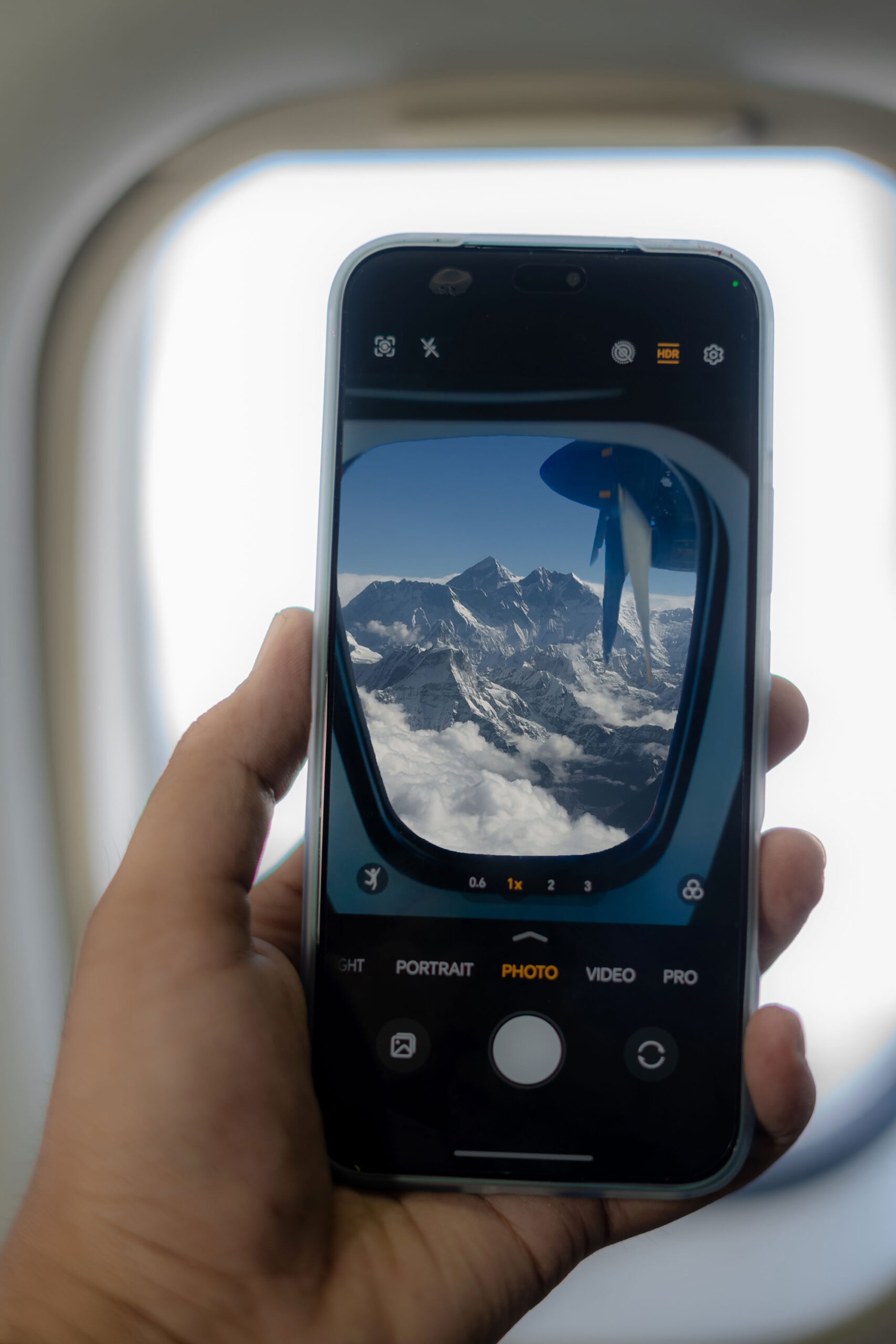
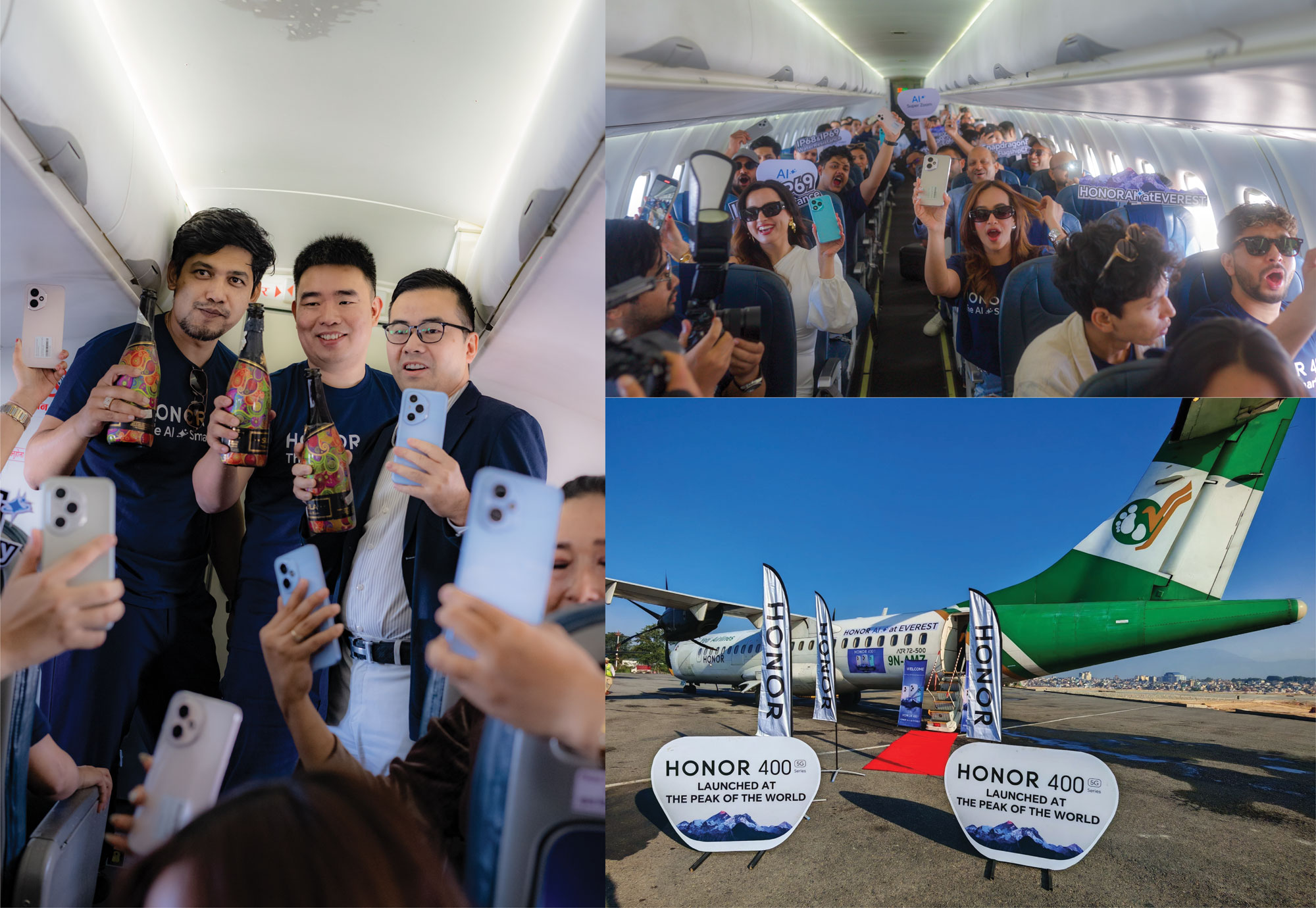
Global tech giant Honor has launched its latest smartphone, the Honor 400 5G Series, from the summit of Mount Everest — the highest point on Earth. In a world-first stunt, the company aimed to symbolise that “Honor AI is at the Peak of the world,” aligning the product’s technological leap with the peak of global innovation.
According to a press statement released by Celltron Nepal, the Honor 400 5G series promises cutting-edge features including a 200MP ultra-clear AI main camera, AI image-to-video capabilities, AI Super Zoom, and a suite of advanced photo editing tools.
Powered by the Snapdragon 8 Gen 3 processor, the device is equipped with a massive 6000mAh battery and 100W fast charging, along with IP68 and IP69 water resistance — making it rugged enough for extreme conditions.
Speaking at the launch event held at Hilton Hotel in Kathmandu, Rahul Rathi, CEO of Celltron Nepal, announced that pre-booking for the phone has begun with free consumer offers. The first sale is set for June 16.
Max International, the authorized distributor for Acer and MSI in Nepal, announces the launch of Acer’s latest lineup of high-performance monitors tailored for gamers, content creators, and home entertainment users.
The newly introduced monitors include:
Acer Nitro VG272K
This 27-inch 4K UHD (3840 x 2160) monitor offers a 160Hz refresh rate and 1ms response time, making it ideal for both immersive 4K gaming and professional content creation. With its high resolution and smooth performance, it’s a perfect blend of clarity and speed.
Acer Nitro QG270 S3BIPX
Designed for esports enthusiasts and FPS gamers, this 27-inch Full HD monitor delivers a blazing 180Hz refresh rate and 1ms response time. It’s built to give players a competitive edge in fast-paced titles like Valorant and CS: GO.
Acer Nitro XZ396QU
Offering an expansive 38.5-inch WQHD curved display (2560×1440), this monitor provides an ultra-immersive experience with its 170Hz refresh rate and 1ms response time. It’s a dream come true for gamers who crave cinematic visuals and deep immersion.
Acer DA321QK
The 32-inch 4K UHD Acer DA321QK features integrated Google TV and 100% sRGB color gamut, making it the ultimate choice for home entertainment, multitasking, and high-quality streaming.
Acer has established itself as a leading brand in Nepal for both laptops and monitors, particularly known for its strong presence in the gaming laptop market. With models that combine powerful hardware, innovative cooling solutions, and stylish designs, Acer gaming laptops are favored by many gamers seeking reliable performance at competitive prices.
Beyond laptops, Acer continues to expand its product lineup with high-quality monitors that complement its devices, offering gamers, content creators, and everyday users improved visual experiences. These new monitors deliver smooth refresh rates, fast response times, and vibrant displays to meet diverse needs—from fast-paced gaming to professional work and entertainment.
Max International, the authorized distributor for Acer and MSI in Nepal, helps bring these products to the local market, ensuring genuine products and support are available to consumers.
Mach24 Orbitals, Nepal’s private space-tech startup joins the elite NVIDIA Inception Program, fusing advanced AI with space launch innovation and propelling a nation’s aspirations into orbit.
Mach24 Orbitals has been inducted into the prestigious NVIDIA Inception Program, a global initiative that accelerates the world’s most groundbreaking startups using AI to push the boundaries of science and technology.
Following its standout showcase at Startup Mahakumbh 2025 in New Delhi, where Mach24’s hybrid-rocket prototype captured the attention of leading aerospace players from across the globe, the company is now poised to harness NVIDIA’s AI prowess to accelerate its mission of developing Nepal’s first orbital-class rocket. This strategic collaboration propels Mach24 onto the global stage and positions Nepal as an emerging contender in the space-tech arena.
To understand the significance: NVIDIA is one of the world’s leading AI computing companies, renowned for its dominance in GPU technologies that power everything from cutting-edge data centers and autonomous vehicles to generative AI and space exploration. With a market capitalization surpassing $2.5 trillion and a pivotal role in driving the global AI revolution, NVIDIA is not just a tech giant, it is the backbone of modern computational innovation. Its Inception program is a highly selective platform, offering strategic support to startups that have the potential to transform entire industries.
Backed by NVIDIA’s advanced AI infrastructure and global support ecosystem, Mach24 will dramatically reduce design and testing cycles, refining rocket-engine simulations and trajectory modeling with unprecedented speed. These capabilities are critical as the company prepares for a 100 km suborbital test flight later this year and an orbital launch by 2029.
“Becoming part of NVIDIA Inception is not just a recognition of our technical vision, it’s a powerful affirmation of Nepal’s future,” said Himalaya Adhikari, Co-founder and Chief of Operations at Mach24 Orbitals. “For a Nepali startup to enter this global league is proof that we have what it takes to compete, build, and lead in the space frontier. This is a moment of national pride, and with each launch, we carry not just technology but the hopes and honor of a nation. As I often say: ‘We march forward, bearing our nation’s hope and pride on our shoulders.’”
Nepali content creation is experiencing a remarkable rise, with creators gaining recognition not just locally but globally. Platforms like YouTube, TikTok, and Instagram have opened up new opportunities, and with this growth, brand deals and sponsorships are at an all-time high. From promoting local products to endorsing international brands, Nepali creators are carving out their space in the ever-growing digital economy. However, with this success comes the challenge of navigating partnerships responsibly, as recent global controversies, like the Honey Browser Extension Scam, reveal the risks of unchecked endorsements and poorly researched brand deals. This serves as a timely lesson for Nepali creators to be cautious as they embrace new opportunities.
The Honey Browser Extension, once promoted by hundreds of Youtube content creators as an effortless way to save money while shopping online, is now under fire for alleged unethical practices. After the takeover by PayPal in 2020, the extension is now called PayPal Honey.
It now faces accusations of misleading consumers, exploiting the affiliate marketing system, and undermining content creators who helped popularise it. Two class-action lawsuits have been filed against PayPal in the US District Court in California, alleging Honey unfairly hijacked affiliate commissions and failed to deliver on its promises to users.
Honey Logo: Photo: PayPal Honey
The controversy on the Honey Browser Extension gained a huge spark after the video of Tech creator Megalag with a thorough investigative video on the details about how Honey operates. The revelations have sparked public backlash from influencers like Linus Tech Tips (LTT) and Marques Brownlee (MKBHD), leading to a broader discussion about the ethics of digital tools like Honey.
Honey Browser Extension: A tool for effortless savings?
Honey launched with a compelling promise: to save users time and money by automatically finding and applying the best coupon codes at checkout. The way the Honey Browser Extension works is simple: install the free extension, and it will find out discounts or coupons available on the internet.
Marketed as “free money,” Honey quickly became popular with online shoppers eager to save effortlessly. Its user-friendly design and compatibility with major e-commerce sites made it a must-have tool for millions, with over 17 million users currently.
The Honey Browser Extension was not limited to consumers. Influencers across platforms, from YouTube to social media, heavily promoted Honey, showcasing its convenience and savings potential. These promotions greatly uplifted its popularity and trustworthiness, making it one of the most downloaded browser extensions.
For businesses, the Honey Browser Extension promised to reduce the number of abandoned carts, a common e-commerce problem, and increase sales. By claiming to help shoppers save money while ensuring merchants gained more purchases, Honey presented itself as a win-win solution.
However, recent revelations have exposed practices of the Honey Browser Extension that raise serious ethical and legal concerns. Investigation by Megalag shows that Honey prioritised its own profits over providing real value to users or supporting the creators who promoted it. What once appeared to be a groundbreaking tool for online shopping is now under heavy scrutiny, with critics questioning the fairness and transparency of its business practices.
How it works and manipulates the system
The Honey Browser Extension claims to help users save money by finding and applying discounts from across the internet. However, as detailed in YouTuber MegaLag’s investigation, its operations often prioritise its own financial interests over the value it delivers to users. The extension’s back-end practices reveal a pattern of exploitation, particularly within the affiliate marketing system.
Affiliate marketing rewards individuals or entities, such as influencers or websites, for driving traffic or sales to a vendor’s site. When a user clicks an affiliate link, a small file called a cookie is stored in their browser, which tracks the referral.
If the user completes a purchase, the referrer earns a commission. MegaLag explained that most affiliate marketing systems operate on last-click attribution, meaning the entity that interacts with the user just before their purchase gets credit for the sale. “Affiliate marketing is fairly straightforward,” MegaLag noted. “The influencer who shares the link gets the cookie, and if you buy, they get a commission. But Honey changes the game completely by stealing that last click.”
One major criticism of Honey Bowser Extension is its practice of replacing legitimate affiliate cookies with its own. MegaLag explained that when users click an influencer’s link, a cookie tracks the referral to ensure the creator earns a commission.
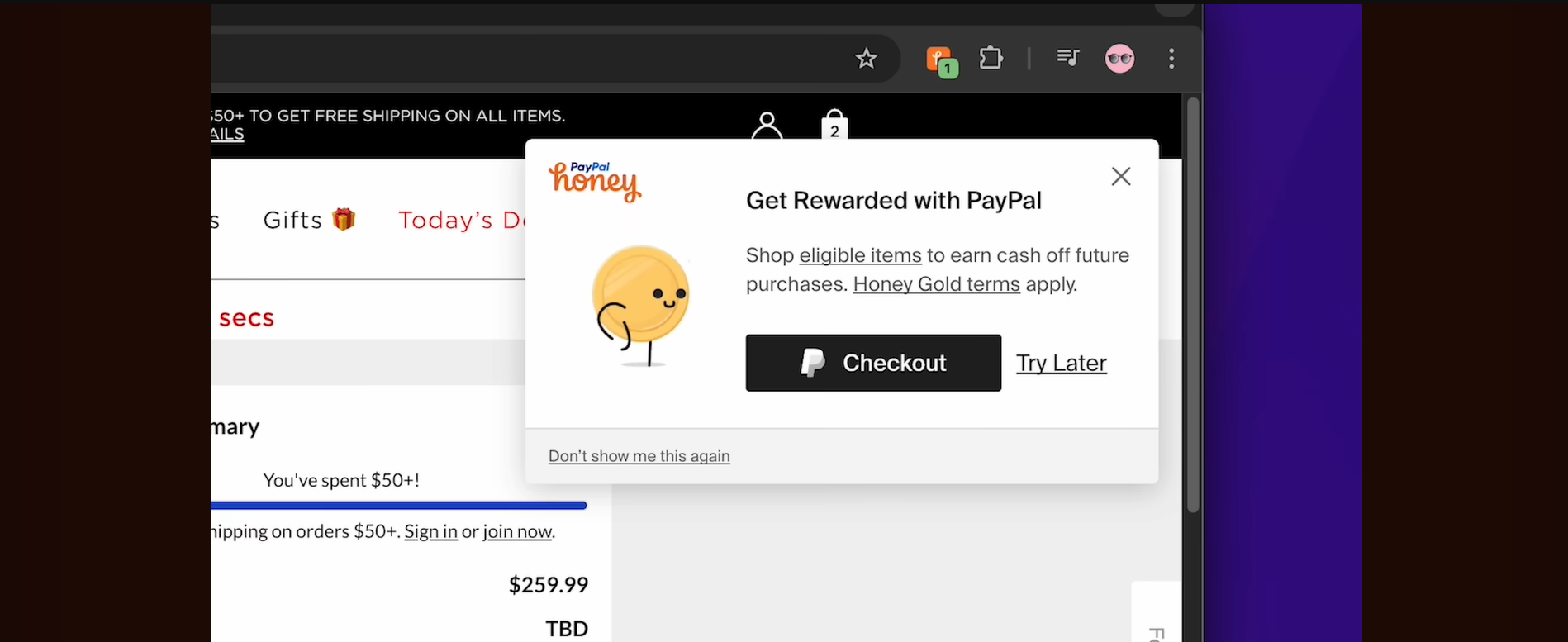
However, when the Honey Browser Extension is activated at checkout, it opens a hidden tab to make it appear as though it referred the user to the site. This allows Honey to claim the commission, even if it did not contribute to the sale. MegaLag said, “Users don’t realise it’s happening, and creators lose their rightful earnings.”
Screen Grab from Megalag’s video.
Honey also introduced a cashback program called Honey Gold to encourage users to engage with the extension. While it rewards users with points that can be redeemed for discounts or gift cards, MegaLag revealed that these rewards are minimal compared to what Honey collects in commissions.
“In one test, Honey earned $35 from a sale, and I got just 89 cents in rewards,” MegaLag said. The cashback system ensures Honey remains the last referrer, allowing it to continue claiming commissions, even if its contribution is minimal.
Additionally, Honey prioritises discounts approved by merchants, even if better deals are available elsewhere. MegaLag noted that Honey often ignores user-submitted coupon codes, further limiting its ability to provide the best savings. “Honey claims to find the best deals, but it applies what merchants want you to see,” MegaLag said. “It’s not about helping users—it’s about serving its own interests.” These practices raise serious questions about Honey’s transparency and fairness to both users and creators.
MegaLag’s investigation shows that Honey uses questionable practices to benefit itself while harming creators, consumers, and businesses. By overriding affiliate cookies and prioritising discounts that merchants approve, Honey goes against the promises it markets to users. “Consumers think they’re getting a great deal,” MegaLag explained, “but Honey is really working for itself and its merchant partners, taking money from the creators who helped make it popular.”.
Backlash from influencers and creators
The fallout from MegaLag’s video has sparked significant backlash, with influencers addressing their past sponsorships with the Honey Browser Extension. While some creators have taken responsibility, others have faced criticism for their delayed responses.
One of the most notable names is MrBeast, the world’s most popular YouTuber, with over 300 million subscribers. Fans and critics alike are calling on him and his team to explain their involvement with Honey and provide clarity on their role in promoting the extension. This controversy has highlighted the growing demand for influencers to be more transparent and cautious about the products they endorse.
Among those who have responded, Linus Tech Tips (LTT) and Marques Brownlee (MKBHD) have taken different approaches to address the issue. Linus explained that his team stopped working with Honey in 2020 after discovering its affiliate cookie practices. At the time, they were unaware of other problems, such as Honey prioritising merchant-approved discounts over better deals for users.
Marques Brownlee apologised to his audience in a video, admitting he promoted the Honey Browser Extension without fully understanding its practices. He removed affiliate links from his videos and encouraged viewers to research such tools before using them. While some fans appreciated their honesty, others criticised them for not addressing these issues sooner. This situation has emphasised the responsibility creators have when endorsing products and the impact of their choices on their audiences.
Legal actions against it
The backlash against Honey has led to two class-action lawsuits filed in January 2025, accusing PayPal and Honey Browser Extension of unfairly claiming affiliate commissions and misleading consumers. Devin Stone, a lawyer and YouTuber known as LegalEagle, is one of the plaintiffs, calling Honey’s actions deceptive. Stone stated, “Honey is not providing the benefits they say they’re providing. They’re telling retailers they were responsible for a sale when they were not.” The lawsuits seek damages and changes to Honey’s affiliate practices.
The controversy surrounding the Honey Browser Extension has had widespread consequences for consumers, creators, and businesses. Users are misled into believing they are getting the best deals, while Honey prioritises merchant-approved discounts over better ones.
Creators lose significant earnings as Honey overrides their affiliate cookies, eroding trust in the affiliate marketing system. Businesses face financial losses from unauthorised discounts, often leading to higher prices for customers. Once celebrated as a revolutionary tool, Honey now faces lawsuits and growing scrutiny over its practices.
This situation highlights the importance of transparency and accountability in digital tools, reminding consumers and creators alike to critically evaluate the platforms they use and promote. As MegaLag stated, “Honey isn’t just a broken promise; it’s a betrayal of everyone it claimed to help.”
How Nepali Creators Can Stay Safe from Similar Scams
The controversy surrounding the Honey Browser Extension serves as an important lesson for Nepali content creators navigating the growing digital economy. With the rise of affiliate marketing and brand partnerships in Nepal, creators must exercise caution by thoroughly understanding agreements, verifying company claims, and staying informed about industry practices to maintain audience trust.
Representational image: Photo: Freepik
Open discussions within creator communities and access to resources from supportive organisations can help identify and avoid unethical partnerships. Learning from global cases like the Honey Browser Extension scandal, Nepali creators can take a proactive approach to protect their content, revenue, and reputation, ensuring they make informed decisions in the rapidly changing online space.
Kamakhya Dham, located at Basantapur in Palpa near Butwal, has recently developed not only as a tourist destination but also as a popular wedding venue.
Under the leadership of the IME Group, the Lumbini Cable Car, the first in Lumbini Province came into operation two and a half years ago with an investment of Rs 1.5 billion involving both the company and local stakeholders. The company reports that around 400,000 tourists have used the cable car in this period, with a significant number of visitors coming from various cities in Uttar Pradesh, India, according to manager Prajwal Ghimire.
The upper station of the cable car houses the famous Shaktipeeth Kamakhya Devi Temple and the Durga Temple, where worship has reportedly been performed for nearly a century. Owing to these sacred sites, both Nepali and Indian visitors have increasingly begun choosing the area as a wedding destination.
Hindus believe that receiving blessings from Goddess Kamakhya ensures a successful married life, brings the joy of children, and helps overcome life’s obstacles. This belief has contributed to the growing number of couples choosing to marry at the temple, said chief priest Suresh Paudel.
Just two days ago, Vijay Jaiswal and Chandni Jaiswal from Uttar Pradesh, India, arrived in Basantapur with their relatives and got married there.
“Marriage is a memorable and joyous event for everyone, so we chose a new destination,” said groom Jaiswal. “Our family are devotees of Kamakhya Devi, but travelling to Guwahati in India is far, so we decided to marry at Nepal’s Kamakhya Dham instead.”
He said that Basantapur hill, located about 1,000 meters above sea level, is green, peaceful and beautiful, making their wedding experience especially delightful.
“Compared to last year, the number of couples marrying here has increased this fiscal year. This month alone, five couples are getting married,” chief priest Paudel said, adding that the first couple of the wedding season is from Uttar Pradesh.
Hari Aryal, president of the Butwal Chamber of Commerce and Industry, said that even if a small percentage of Uttar Pradesh’s 240 million population could be brought to Butwal each year for cable car rides and visits to the Basantapur hill station, it would positively impact Rupandehi’s economy.
“The government authorities must work with the private sector to attract Indian tourists to hill stations such as Basantapur, Nuwakot and Hill Park near Butwal,” Aryal said. “Tourism is the easiest means to revive the economy weakened after the Gen Z movement.”
The cable car connects the lower station at Bamghat in Butwal-3 with the upper station at Basantapur in Tinau Rural Municipality-3 of Palpa. The upper station, located about three kilometres away, can be reached in 12 minutes.
According to operations manager D.N. Kayastha Sainju, the proportion of Indian visitors increased from 8 per cent last fiscal year to 21 per cent this fiscal year. Nearly 100,000 Indian tourists have visited in the past two and a half years. Visitors from other countries account for less than one per cent.
Prem Shrestha, chairperson of Tinau Rural Municipality, said that Basantapur once deserted for decades has become vibrant following the operation of the cable car.
Facilities such as a zipline, sky cycling, giant swing, children’s park, viewpoint, restaurant, and seminar hall have been built in Basantapur.
The cable car offers free rides on birthdays and special discounts for groups of more than 50. A grand evening aarti is held on the first day of every month.
Manager Ghimire said that Basantapur is around 7 to 10 degrees Celsius cooler than the Tarai, making it pleasant in summer and warm in winter, attracting tourists year-round.
He said that due to religious and tourism infrastructure, favourable climate in all seasons, and a peaceful environment free from noise and pollution, Basantapur has become a preferred destination not only for Nepalis but also for tourists from Uttar Pradesh, India.
The cable car, built by Austria’s Doppelmayr Company, is 2.6 kilometres long and has 25 gondolas, capable of transporting up to 6,000 tourists daily.
The Province Tourism Development Council has listed Basantapur as a major tourist site following the operation of the cable car, according to council chief Ramu Joshi.