The Discord Revolution: Nepal’s Youth Movement Ignites Existential Crises Across Institutions

Ah, Nepal-the land of Everest, enlightenment, and apparently, endless political entertainment. In 2025, this Himalayan haven decided to swap its serene stupas for a chaotic circus, courtesy of a Gen Z uprising that started on Discord (yes, the app meant for gamers trash-talking over Fort nite, not overthrowing governments). What began as a digital grumble against a ridiculous social communication ban has ballooned into a full-blown farce, complete with burning state and private establishments, jailbreaks (pioneered by a neo hopeful in judicial coustody) and a 73-year-old grandma-turned-interim PM voted in via emoji polls. It’s like if your group chat decided to run the country-and honestly, it might do a better job than the current jingbang. But beneath the laughs, Nepal’s in a steaming hot pot of soup, existential threats bubbling over political dinosaurs, corrupt cronies, and institutions that function about as well as a chocolate teapot. The world watches, chuckling at the spectacle, treating Nepal like the global village idiot who’s accidentally set his own house on fire while trying to light a cigarette. As of November 23, 2025, with fresh clashes in Simara-where youths lob stone bombs like confetti and cops respond with tear gas tantrums -the saga continues, proving that in Nepal, politics isn’t tragedy; it’s comedy gold with a side of tragedy.

Picture this: On September 4, 2025, Prime Minister KP Sharma Oli, slaps a ban on 26 social media platforms because, apparently, Reel dances are more dangerous than his government’s corruption scandals. It’s like banning forks because people are getting fat-utterly genius. Enter Discord, the irony machine: named for harmony, but in Nepal, it becomes the headquarters for harmonious havoc. Servers explode to 145,000 members, filled with memes roasting “nepo babies” like the offspring of politicos and tycoons scoring cushy gigs while average Joes queue for passports to escape this clown show. Take the 2024 wide-body aircraft fiasco: Officials skimmed millions in kickbacks, leaving Nepal Airlines grounded in debt, while viral Discord threads photoshopped leaders’ faces onto crashing planes. Stakeholders? Meet Shaswot Lamichhane, the 18-year-old Discord wizard moderating strategy sessions like a teen dungeon master; Rakshya Bam, 26, chatting up the army like she’s swiping on Tinder; Sudan Gurung of Hami Nepal, flipping from Tibet advocacy to protest catering (think water bottles and anti-corruption sandwiches); and shadowy pseudo leaders like “DiscordRebel007,” who pop up like unsolicited LinkedIn requests, dictating chants without a resume. By September 8, Maitighar Mandala turns into a mosh pit: Peaceful placards screaming “No more nepo!” morph into mayhem as cops fire live rounds, offing 22- including a kid filming his last TikTok in Nepal’s bloodiest anti-graft giggle-fest. Protesters torch gov n pvt houses like a bad barbecue, and a jailbreak frees 12,500 inmates who join the party with pilfered pitchforks. Meanwhile, “washed-out” leaders like Sher Bahadur Deuba (79, looking like he napped through the monarchy), Oli hide behind cronies implicated in scams like the fake Bhutanese refugee racket, where they sold Nepali dreams to the US for bribes and a confused PUSHchanda the miyaooist. It’s hilarious until you realize this soup’s so thick, Nepal’s youth are emigrating faster than rats from a sinking ship.

Nepal’s institutions? Think of them as a rusty bicycle held together by duct tape and prayers-wobbling toward oblivion. The bureaucracy, that partisan playground of incompetence, bungles basics like it’s an Olympic sport: Witness the 2024 сооperatives scam, where officials looted billions from poor savers, triggering rural suicides while they sipped chai in Kathmandu. Stakeholders include UML and NC-aligned desk-jockeys, whose “chronic incompetencе” means 2,000 youths bolt daily for foreign jobs, remittances keeping the economy afloat like a leaky lifeboat. The police, now under Inspector General Dan Bahadur Karki, are divided like a bad divorce: During September 8 chaos, they ditched posts faster than a bad date, letting rioters loot armories. Viral videos show cops stomping protesters’ heads while belting party anthems-because nothing says “law and order” like a political beat down. The Nepal Army, led by General Ashok Raj Sigdel, plays the ultimate fence-sitter: “Please-all” mode activated, they brokered Karki’s gig in a gunfire-laced tent meeting, but won’t touch loyalist goons with a 10-foot pole. Judiciary? A puppet show starring ex-Chief Justices: Sushila Karki, impeached in 2017 for daring to probe graft, versus Cholendra Shumsher Rana, booted in 2022 over lottery scams/family favoritism and of course Kalyan Shrestha the limelight seeker. Their evident tussles delays trials like the 60kg gold-in-e-cigarettes heist, with judges flipping like pancakes on constitutional matters, leaving provinces begging for crumbs. Courts are so confused about which constitution to defend, they might as well flip a coin-or better, consult a Discord poll. Globally, this makes Nepal the punchline: “How do you overhaul a system this broken? With a sledgehammer and a prayer wheel.”

Nepal’s 2015 constitution? It’s like smartphone from the Stone Age out dated, glitchy, and responsible for 14 governments in 17 years, each more unstable than a Jenga tower built by toddlers. a Stakeholders: President Ram Chandra Paudel, dithering like a deer in headlights over ordinances; interim PM Karki, emoji-elected in a September 9-10 Discord frenzy with 100,000 votes (because nothing says democracy like a thumbs-up emoji); and parties like NC and UML, sulking in the corner. March 2026 elections? A cosmic joke, with Karki’s crew pretending to guard the charter while army-led “people’s picnics” debate fixes around bonfires. Enter the “rogue imported narrative”: NGOs like Open Society Foundations (pumping cash since 2007) and NED smuggling in color evolution vibes, turning Hami Nepal’s chants into echoes of Bangladesh’s student shindigs -“Elite Out!” graffiti everywhere, like a bad street art festival. This nexus of youths, military, and opportunists consolidates power via kangaroo courts purging bureaucrats, making the world snicker: Nepal, where elections are as trustworthy as a politician’s promise.

Nepal’s foreign policy? It’s like a drunk tightrope walker balancing between India and China – overloaded PMs juggling diplomacy with recalled ambassadors who probably forgot their passports. Stakeholders: Karki, multitasking like a one-armed juggler; Indian and Chinese envoys whispering sweet nothings about BRI loans. Case in point: China’s Pokhara Airport, a BRI boondoggle where 2025 bribes turned it into a debt-trap ghost town, underused and overpriced like a luxury coffin. India nods approval to Karki while fortifying Lipulekh borders, youths burning Oli effigies near embassies in protest of “sellouts.” Oli’s scrapped India jaunt amid riots? Peak confusion. Imported rogue narratives-NED style destabilization kits-mimic Sri Lanka and Bangladesh, with Nepal eyeing BRICS like a kid at a candy store. Internationally, it’s meme fodder: Nepal, the ping-pong ball in Asia’s great game, bouncing hilariously toward irrelevance.

The private sector? A scared kitten in a room full of rocking chairs confused, corrupt, and crammed with cartels hiking prices like Everest treks. Stakeholders: Importers, Remittance tycoons, tourism barons and brokers knotted in political business tangles; outfits behind 2023 job scams stranding migrants like bad travel agents. September riots racked up Rs 36 billion in smashed windows and looted shops, per Transparency International’s 2024 roast (Nepal 108th, basically the dunce cap of corruption). Think some cola’s NGO tie-ups during protests or goldsmuggling e-cig empires dodging taxes via bribes. Youth boycotts like “No Buy from Nepo” target elite chains, leaving businesses hunkered like doomsday preppers. Worldwide, it’s a hoot: Nepal’s economy, where malpractice is the main export, making investors laugh all the way to safer banks.

Conclusion: From Digital Discord to National Reckoning

In the end, Discord-supposed harbinger of harmony-delivered Nepal a masterclass in discord, flipping the script on dinosaur leaders and forcing a comedic overhaul of creaky systems. From Alisha Sijapati’s tales of grassroots gaming revolutions to Morocco’s Gen Z echoes, this Himalayan hullabaloo enchants with its absurdity: A nation where teens topple tyrants via voice chats, but the soup’s so serious, it’s scalding. Bara’s petrol-bomb parties and Simara’s gas-cloud galas remind us: Nepal’s treated as the world’s laughing stock, a perpetual punchline in global headlines. Yet, beneath the satire, it’s a sobering stew-unless reformed, this circus risks becoming a tragedy. Time for Nepal to swap the clown shoes for hiking boots and climb out of this mess, or forever remain the butt of international jokes.

China launches three multifunctional satellites into space

China launched three multifunctional satellites into space on Wednesday afternoon, according to China Aerospace Science and Technology Corp, the nation’s leading space contractor.

A Long March 2C carrier rocket lifted off at 12:01 pm from the Jiuquan Satellite Launch Center in the Inner Mongolia autonomous region and soon transported the Shijian 30A, 30B, and 30C satellites to their preset orbit, the State-owned company said in a news release.

The satellites have been built by the Shanghai Academy of Spaceflight Technology, a CASC subsidiary, and will be used to survey the space environment and conduct technology demonstration, it added.

A product of the China Academy of Launch Vehicle Technology in Beijing, also a CASC subsidiary, the Long March 2C rocket type is 43 meters long and 3.35 meters wide and has a liftoff weight of 242.5 metric tons. The rocket is mainly used to deploy satellites to low-Earth and sun-synchronous orbits.

The launch marked the 74th space mission in China and the 608th flight of the Long March rocket fleet.

Expect the unexpected with Kagtali

Imagine this: it’s your first marriage anniversary. Your partner is at home, and you arrive, excited to surprise her. But as you walk in, you see her with someone you’ve never met or heard of before. You discover she’s having an extramarital affair. To make matters worse, you’ve already invited guests to celebrate the occasion. Now, put yourself in this situation, could you still celebrate the day? What would you do next? Isn’t it hard even to imagine?

A similar situation unfolds in Kagtali, a play currently being staged at Kausi Theatre, Kathmandu.

Written and directed by debutant Nabin Chandra Aryal, Kagtali tells the story of Shital (played by Basna Timalsina), Suraj (played by Rupesh Lama), and Bibash, Shital’s husband, played by Sabin Bhattarai. The characters find themselves entangled in an unconventional and emotionally complex encounter when they all come face-to-face under unexpected circumstances.

Blend of thriller and humour

The play, based on the crime thriller genre, not only keeps you curious about what happens next but also consistently adds elements of humor and comedy. In Kagtali, the audience can’t stop laughing throughout the performance, while simultaneously growing more curious about the consequences of the unconventional situation unfolding on stage.

This blend of suspense and humor is something rarely seen in Nepali theatre, and debutant writer-director Nabin Chandra Aryal does justice to the genre. He demonstrates how humor can be woven into even the most intense and unconventional scenarios.

Kagtali offers a refreshing take on genre-blending that Nepali theatre artists should consider exploring more in the days to come.

Kagtali wouldn’t have been this engaging and entertaining if the actors hadn’t executed their roles so well. Speaking of the performances, all ten characters deliver a phenomenal job on stage.

Awesome acting

Basna and Rupesh, in particular, impress the audience with their control over expressions and body language, especially in emotionally complex scenes.

Even as the audience and other characters burst into laughter, Basna and Rupesh manage to maintain their intense expressions, adding depth to the play’s contrasting tones.

The role played by Basna and as Shital and her aunty (played by Sushma Niraula) holds particular significance because they represents women who are well-educated and have the potential for successful careers but, due to family circumstances, are deprived of the opportunity to step outside the home and explore their individuality. Their characters becomes a voice for countless women whose aspirations are quietly buried under the weight of domestic expectations, shedding light on the silent sacrifices made in the name of tradition and duty.

Teku, played by Jiwan Dahal, steals the show with his attitude and body language. Whenever he appears or does something on stage, the audience can’t stop laughing. He’s the kind of character who might remind you of a loud and oversmart relative that almost every family has.

The conversations among the characters feel natural—they mostly talk about everyday topics like family, work, and life. This makes the play relatable and grounded in reality.

As for the setting, the play is staged in a modest rented two bedroom apartment with a balcony, where characters often step out to smoke.

One particularly charming aspect of the production is the use of classic Nepali music in the background. The playlist is impressive, featuring songs like Ma Mauntama by Om Bikram Bista and Aruna Lama’s Pohor Saal Khushi, among others.

Room for improvements

While the play overall is exceptionally well-executed, there are a few elements the creators could consider improving. Firstly, according to the calendar hanging on the right side of the stage, the play is set in 1995. However, the bookshelf on the left side contains books published after that date, for instance, Vijay Kumar’s Khusi (2014) and Bettany Hughes’s The Hemlock Cup (2010). Similarly, there is a newspaper on the table dated 1996. Additionally, there is also a scene where the character Teku sign in a cheque from Gobal IME Bank, a bank established in 2012. These inconsistencies in set details create confusion about the play’s timeline.

Secondly, one of the characters uses a real khukuri on stage. It would be better to use a prop or artificial replica instead, firstly, for safety reasons, especially since there is an intense brawl scene where things could easily go wrong.

Secondly, because theatre, by its nature, is about making the artificial feel real, not about using real objects to heighten authenticity.

Kagtali: A must watch show

The play’s ending, too, is a memorable one, cleverly crafted to challenge your assumptions and leave you thinking long after the curtain falls.

Overall, Kagtali is an exceptional show. Whether you’re having a bad day or simply looking to be entertained with a mix of thrills and laughter, Kagtali is the best choice, catch it while you can.


NPL: All you need to know about eight teams

After a long held dream, for the first time in Nepal’s cricket history, a match will be played under floodlights, and parapet seating has been arranged for spectators.

Cricketers will play day-night matches under floodlights, while spectators will sit in proper seats to watch the game. As the second edition of the Siddhartha Bank Nepal Premier League (NPL) begins today, a new chapter in Nepali cricket will unfold.

Players, CAN officials, cricket supporters, and all Nepalis are ready to witness this moment. While the first edition of the NPL was played only during the day, in this edition 23 out of 32 will be played under the floodlights.

On Sunday, the floodlights and parapet were officially handed over to CAN. Now, the defending champions Janakpur Bolts will begin their title defense on Monday against Kathmandu Gorkhas under the floodlights.

Eight franchise teams will compete in this season’s NPL. Here’s a brief look at them:

Janakpur Bolts

Under coach Pubudu Dassanayake, Janakpur won the first season by defeating Sudurpaschim Royals in the final. Their only goal this season is to defend the title.

Janakpur has changed everything from the head coach to the logo for the second edition, but the ambition remains the same; to lift the NPL trophy again.

For the second edition, Janakpur has hired West Indies’ Shivnarine Chanderpaul as the head coach. The core squad from season one has been retained.

Nine players from the first season’s squad are still with the team, including Aasif Sheikh, captain Anil Kumar Shah, Lalit Rajbanshi, Kishore Mahato, Rupesh Singh, Shubham Khakurel, and Tul Bahadur Thapa.

However, New Zealand all-rounder Jimmy Neesham, who played a key role in their championship run last season, will not be part of the team this time.

Janakpur has released Sher Malla, Hemant Dhami, Araniko Yadav, and Aakash Tripathi, and signed Mayan Yadav, Sachin Bhatt, Bikash Aagri, and Aditya Mahato from the auction.

Foreign players include South Africans Wayne Parnell and Imran Tahir, Sri Lankans Lahiru Samarakoon and Sangeeth Cooray, Americans Lahiru Milantha and Sanjay Krishnamurthy, and Namibia’s Jan Nicol Loftie-Eaton.

Janakpur Squad: Aasif Sheikh, Anil Kumar Shah, Lalit Rajbanshi, Kishore Mahato, Rupesh Singh, Shubham Khakurel, Tul Bahadur Thapa, Mayan Yadav, Sachin Bhatt, Bikash Aagri, Aditya Mahato, Lahiru Milantha, Wayne Parnell, Imran Tahir, Lahiru Samarakoon, Sanjay Krishnamurthy, Jan Nicol Loftie-Eaton, Sangeeth Cooray.

Sudurpaschim Royals

Sudurpaschim will play its second season under the guidance of Jagat Tamata, one of Nepal’s most successful domestic coaches. The team includes national players like Dipendra Singh Airee and Aarif Sheikh, along with experienced names Binod Bhandari, Abinash Bohora, and Ishan Pandey.

They have retained foreign players Scott Kuggeleijn and Harmit Singh from last season, and have signed Australian batters Chris Lynn and Josh Brown.

Sudurpaschim has signed only four foreign players so far, though teams can sign up to six. With these signings, their squad looks balanced.

Lynn will open the innings, supported by Binod  Bhandari and Ishan Pandey.
In the middle order are captain Dipendra Singh Airee, Aarif Sheikh, and Josh Brown, with Deepak Bohora and Milan Bohora as options.

In pace bowling, they have last season’s highest wicket-taker Scott Kuggeleijn, along with Abinash Bohora and Hemant Dhami. Talent-hunt recruit Hikmat Mahara is also in the squad.

Spin options include American Harmit Singh and Naren Saud, with captain Dipendra also contributing.

Sudurpaschim Squad: Dipendra Singh Airee, Binod Bhandari, Aarif Sheikh, Ishan Pandey, Abinash Bohora, Naren Saud, Hemant Dhami, Deepak Bohora, Milan Bohora, Dipendra Thapa, Tek Rawat, Hikmat Mahara, Chris Lynn, Josh Brown, Scott Kuggeleijn, Harmit Singh.

Karnali Yaks

Led by Nepal’s most experienced player, Sompal Kami, Karnali won four of their seven league matches last season.

They have retained their core group and continued with head coach Gyanendra Malla.

Retained players include Sompal Kami, Gulshan Jha, Nandan Yadav, Arjun Gharti, Bipin Sharma, Dipendra Rawat, and Yunish Bikram Thakuri.

Karnali has signed all-rounder Pawan Sarraf, spinner Yuvraj Khatri, and bowlers Deepak Dumre and Imran Sheikh from the auction.

Australian all-rounder William Bosisto has been retained after his good performance last season.

Karnali Squad: Sompal Kami, Gulshan Jha, Nandan Yadav, Arjun Gharti, Bipin Sharma, Dipendra Rawat, Yunish Thakuri, Pawan Sarraf, Yuvraj Khatri, Imran Sheikh, Deepak Dumre, William Bosisto, Mark Watt, Max O’Dowd, Najibullah Zadran, Priyank Panchal.

Chitwan Rhinos

Kushal Malla remains Chitwan’s marquee player. They retained six players from last season and continued with experienced overseas cricketers Ravi Bopara and Sohail Tanvir.

They strengthened their foreign lineup by signing England’s Dawid Malan and Saif Ali Zaib, the top performer for Sudurpaschim last season.

Chitwan also brought back Bipin Rawal and Ranjit Kumar from the auction. Medium pacer Kamal Singh Airee, who missed the first season due to injury, returns to the squad.

They have added five more foreign players, making the squad strong in all positions, particularly top order, middle order, and pace bowling.

However, they lack specialist spinners and rely mostly on part-timers.

Chitwan Squad: Kushal Malla, Kamal Singh Airee, Rijhan Dhakal, Deepak Bohora, Amar Singh Routela, Gautam KC, Dev Khanal, Arjun Saud, Bipin Acharya, Ranjit Kumar, Bipin Rawal, Ravi Bopara, Sohail Tanvir, Dawid Malan, Saif Ali Zaib, Alpesh Ramjani.

Kathmandu Gorkhas

Kathmandu retained six players including marquee player Karan KC. They added Mohammad Adil Alam Ansari and four others in the mini-auction.

They have signed six foreign players, including Namibia’s captain Gerhard Erasmus.

They strengthened their coaching staff by hiring India’s former Nepal head coach Monty Desai, who will be assisted by Basanta Shah Thakuri.

They have recruited English wicketkeeper John Simpson, South African wicketkeeper Ricardo Vasconcelos, and all-rounders Milind Kumar and Sunny Patel.

Erasmus, Milind Kumar, and Sunny Patel are spin all-rounders. Nepali spinners Shahab Alam and Dipesh Kandel will support them.

Karan KC and Rashid Khan are pace bowling all-rounders. Kathmandu has added Adil Alam from the auction to balance the pace department.

Kathmandu Squad: Karan KC, Bhim Sharki, Shahab Alam, Dipesh Kandel, Rashid Khan, Pratik Shrestha, Adil Alam, Uttam Magar, Aakash Tripathi, Tul Bahadur Thapa, Santosh Yadav, Sonu Devkota, Gerhard Erasmus, Milind Kumar, Ben Charlesworth, John Simpson, Ricardo Vasconcelos, Sunny Patel.

Biratnagar Kings

Biratnagar made headlines last season by signing New Zealand star Martin Guptill. This season, the team has drawn even more attention.

With Sandeep Lamichhane as their marquee player, Biratnagar signed South African superstar Faf du Plessis, creating huge excitement.

They retained Guptill and also signed South African fast bowler Marchant de Lange, Australian Sam Hain, American Shubham Ranjane, and Scotland’s George Munsey.

Nepali batters Lokesh Bam and Naren Bhatt have been retained, while Shankar Rana has been signed from the auction. All-rounders Basir Ahmed and Narayan Joshi are also in the team.

Biratnagar will play three foreign batters at the top: Guptill/Faf du Plessis, Munsey, and Hain.

Faf du Plessis will miss some early matches due to his involvement in the Abu Dhabi T10 League from November 18.

In bowling, Biratnagar has Sandeep Lamichhane, Suryata Tamang, Subash Bhandari, and Basir Ahmed for spin, while Pratish GC is the domestic pace option. Marchant de Lange has been signed to strengthen pace.

Biratnagar Squad: Sandeep Lamichhane, Lokesh Bam, Pratish GC, Basir Ahmed, Naren Bhatt, Subash Bhandari, Suryata Tamang, Sahil Patel, Narayan Joshi, Sarwan Kisku, Shankar Rana, Ayush Neupane, Faf du Plessis, George Munsey, Sam Hain, Martin Guptill, Marchant de Lange, Shubham Ranjane.

Pokhara Avengers

Although Pokhara Avengers had a strong team in the first season, they underperformed. For the second season, the franchise has rebranded everything from logo to overall branding.

Nepal national opener Kushal Bhurtel is their marquee player. Pokhara has retained seven players from last season.

They prioritized local players in the auction, signing young batter Arjun Kumal and Nepal U-19 players Sandeep Chhetri , Krishna Poudel, and Abhishek Tiwari.

Jimmy Neesham, who won the title with Janakpur last season, will play for Pokhara this season. Pokhara has also signed England’s Adam Rossington, Dan Douthwaite, Barbados’s Raymon Reifer, and England’s Jason Roy.

Kushal Bhurtel, Dinesh Kharel, and Rossington strengthen the top order, while young Arjun Kumal is a promising option.

In the middle order, Neesham will be supported by Tritt Raj Das and Kiran Thagunna and Abhishek Tiwari is another option.

Spin duties will be handled by Sagar Dhakal and Bipin Karki, while medium pacer Akash Chand leads the pace attack.

Pokhara Squad: Kushal Bhurtel, Dinesh Kharel, Sagar Dhakal, Akash Chand, Tritt Raj Das, Bipin Khatri, Kiran Thagunna, Arjun Kumal, Sandeep Chhetri , Krishna Paudel, Abhishek Tiwari, Adam Rossington, Raymon Reifer, Dan Douthwaite, Jimmy Neesham, Jason Roy.

Lumbini Lions

Under captain Rohit Paudel, Lumbini Lions aim to forget their disappointing first season and produce strong performances this year.

They have changed their logo, team colors, and head coach for the second season. They have also made major changes to their foreign players.

Along with captain Rohit, Lumbini retained Sandeep Jora, Bibek Yadav, Dinesh Adhikari, Abhishes Gautam, and Tilak Bhandari. Injured Vivek Yadav has been replaced by Sumit Maharjan.

They have signed medium pacer Durgesh Gupta, along with Dilip Nath, Sher Malla, Adil Khan, and Bishal Patel from the auction.

Lumbini has revamped its coaching staff by appointing India’s Robin Singh as mentor and Tinu Yohannan as head coach. Shakti Gauchan continues as consultant coach.

Their foreign signings include Australian opener D’Arcy Short, Afghanistan all-rounder Gulbadin Naib, Italy’s Thomas Draca, Namibia’s Ruben Trumpelmann, and Namibia all-rounder JJ Smit.

Lumbini Squad: Rohit Paudel, Sandeep Jora, Dinesh Adhikari, Abhishes Gautam, Tilak Bhandari, Sumit Maharjan, Durgesh Gupta, Dilip Nath, Sher Malla, Adil Khan, Bishal Patel, D’Arcy Short, Thomas Draca, Gulbadin Naib, Ruben Trumpelmann, JJ Smit.

NPL: Janakpur bolts face Kathmandu Gurkhas in season opener today

Defending champions Janakpur Bolts and Kathmandu Gurkhas are facing each other in the opening match of the Nepal Premier League (NPL) beginning today. The match will start at 4 pm at the Tribhuvan University International Cricket Ground in Kirtipur.

In the first edition of the NPL, Janakpur had comfortably defeated Kathmandu. Janakpur, which was then led by Pubudu Dassanayake, former coach of the Nepali national team, will now play under the leadership of West Indies’ Shivnarine Chanderpaul.

Likewise, Kathmandu has appointed India’s Monti Desai as the head coach for the second edition. Desai is also the former chief coach of the Nepali national team.

TU Cricket Ground lights up for first-ever full floodlight test

All six floodlights at the TU International Cricket Ground in Kirtipur, Kathmandu, have been switched on for testing.

On Saturday, the lights of all six floodlight towers were turned on at the stadium for the first time. With all six lights, the TU ground looked bright and impressive.

The upcoming Nepal Premier League (NPL) cricket tournament appears fully ready to be played under floodlights. This is the first time a match is set to be played under floodlights at the TU Cricket Ground.

Gearing up for WordCamp Nepal 202

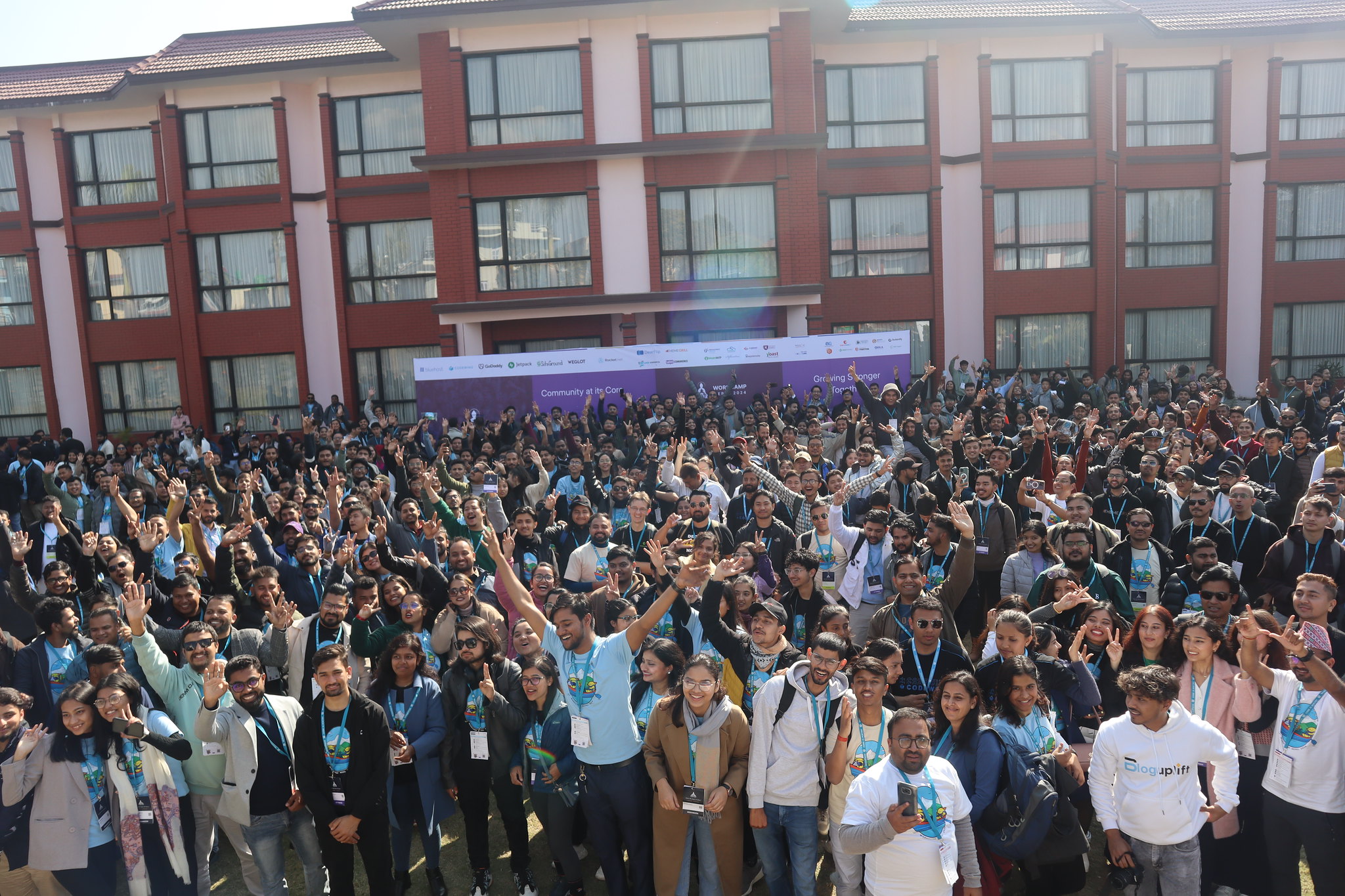
WordCamp Nepal 2025 is schelduled on April 4 and April 5 with an aim to enhance the participants’ career, stay updated on industry trends and connect with a vibrant community. The event is taking place at Kundalini Durbar, Chandol, Kathmandu.

According to a press statement, the event features a rich agenda of workshops, knowledge-sharing sessions, and discussions on the latest WordPress plugins, tech innovations, and future trends. Beyond being a WordPress gathering, it offers a unique platform to launch careers, connect with leading companies, and network with industry experts. Attendees can explore job opportunities, meet industry leaders, and gain valuable insights to advance their careers.

It adds that on April 4, Contributor Day will engage participants in the open-source WordPress project, fostering collaboration and learning for both newcomers and seasoned professionals. April 5th is Conference Day, offering sessions tailored for all skill levels. “It provides an ideal environment for networking, idea exchange, and skill-building in various WordPress roles, including development, content creation, UX/UI design, and SEO,” the statement reads.

Technical experts will share experiences, insights on business development, and strategies for market success, guiding beginners on building careers within the WordPress ecosystem. For more details, visit https://nepal.wordcamp.org/2025/.

Here is how the social media ban could affect Nepali film and music

After the government decided to ban social media on Thursday, netizens have turned into frenzy . The government’s decision to deactivate popular platforms such as Facebook, Messenger, YouTube, and X has also sparked debates.

Some argue that this is a blow to democracy and freedom of expression, while others believe that big tech companies should come under Nepal’s law.

In this context, it is certain that the shutdown of social media will have a widespread impact on entertainment industries. In recent times, the ecosystem of Nepali film and music has revolved around social media. Be it promotion, box office, stardom-building, or interaction with audiences, social media has been an essential platform for the entire entertainment sector.

Here is how the ban of social media will affect the entertainment sector, particularly film and music. Firstly let’s begin with the film.

Impact of social media ban on film industry

Damage to marketing and promotion

Trailers, posters, teasers, songs, and other promotional content reach audiences through Facebook, Instagram, and YouTube. TikTok also has some role in this, but YouTube remains the main source. Without social media, the promotion system is bound to collapse. Promotion, which so far has been cost-free, will suddenly become expensive. Films set to release during Dashain may feel the immediate impact.

Reduced audience reach

Social media helps films reach audiences worldwide. Without these platforms, that reach will be significantly restricted.  Nepalis living abroad make up a large market for Nepali films. Without social media, films will lose connection with this global audience.

End of collaboration with influencers

Artists and content creators on TikTok, Instagram, and YouTube have been promoting films and interacting with fans. This style of promotion will stop.

Impact on the box office

Word of mouth spreads very quickly on social media. Without it, the footfall in the  theaters could decrease significantly.

Decline in global viewership

Nepali films that gain attention at international festivals often rise to fame through online popularity. Whether for festivals or foreign promotion, without social media, Nepali films risk losing global exposure.

Impact of social media ban on music industry

Loss in digital revenue

In recent times, for Nepali musicians and record labels, YouTube is the biggest source of income. The ban will directly cut down their earnings.

Burden for independent artists

Rappers, indie singers, and emerging bands rely on social media reels and YouTube for listeners. Without social media, new talents will struggle to break through. This was already seen when YouTube removed its trending page.

Halt of viral trends

Many Nepali songs become popular through social media dance challenges and reels. Without these, songs will lose wide reach and popularity.

Fewer global collaborations

In recent years, Nepali musicians have been collaborating with foreign artists and brands, with most connections starting on social media. Banning these platforms will reduce international opportunities, especially at a time when Nepali songs are being released in foreign languages as well.

Reduced fan interaction

Artists interact with fans through live sessions, comments, and inboxes. Losing this direct connection will affect their branding and engagement.

All you need to know about the Miss Nepal 2025 winners

Winners of Miss Nepal 2025 in four categories have been announced. The Hidden Treasure declared the winners during the finale held on Saturday at the Sunrise Convention Center in Godawari.

These four winners represent the Gen-Z generation. A total of 26 finalists competed for the titles.

Here’s a brief introduction to the winners:

Luna Luintel (Miss Nepal World 2025)

Luintel, 26, a native of  Kathmandu, is currently pursuing her Master’s degree in Public Health at the University of Sydney, Australia. With the motto “Learn, Study, and Return,” she aims to support Nepalis abroad who wish to return and contribute to Nepal.

She enjoys playing the flute, listening to podcasts, and exploring the underwater world as a scuba diver. She also loves swimming. Previously, she was the first runner-up of Miss Teen 2015. She aspires to provide transformative leadership in public health and spread global knowledge at the local level to create meaningful community impact.

Urusha Bhandari (Miss Nepal International 2025)

Bhandari, 26, of Lalitpur, is pursuing her Bachelor’s in Dental Surgery. She is passionate about academics, music, and staying connected with nature.

Through modeling, dentistry, and social service, she hopes to positively impact human lives. A fitness enthusiast, she enjoys playing the guitar, swimming, and basketball. She has walked the runway in well-known fashion shows such as TGIF, TPJFS, and Kathmandu Fashion Week. She aims to bring social change through her skills in oral surgery and media.

Sony Ghale (Miss Nepal Earth 2025)

Ghale, 25, from Dhunche in Rasuwa, is a kho-kho player and bodybuilder. With the aim of promoting educational equality, she has implemented the Ek Shiksha (One Education) project. She wants to bridge the gap between private and public education.

Through her NGO Khushi Kopila (Happy Bud), she is contributing to her community. She hopes to become a leader who moves forward with confidence and guides the future.

Deepshikha Nepal (Miss Nepal Cosmo 2025)

Nepal, 24, from Jhapa, is pursuing her Bachelor’s degree in Environmental Science. A researcher and outspoken advocate for environmental justice, she wants to link environmental issues with society. She has been working for youth, women, and communities affected by environmental challenges, and she seeks to provide policy-level training and advocacy at all levels of government.

Her interests include anchoring, singing, and reading books. In 2023, she participated in a United Nations environmental program on sustainable development held in Thailand.

For Nabin K Bhattarai live shows are the heart of music

In the last three decades, singer-songwriter Nabin K Bhattarai has performed thousands of live shows at both national and international venues with his band. Even today, his passion for live performances remains the same. For him, performing live is what keeps music, and the entire art form alive. He especially cherishes the interaction with the audience that unfolds during his shows.

“Those interactions in live shows are one of the most beautiful parts of music,” says Bhattarai.

Together through music

Bhattarai, who loves performing live more than anything else, is now excited as he prepares to perform for the first time at Lord of the Drinks, one of the country’s top clubs, on August 23, with his band Nabin K Bhattarai and the Atripta which features Bhattarai on vocals, Bhaskar Raj Ghimire and Bishal Chhetri on guitar, Dhiraj Chhetri on keyboard, Chandan Darshandhari on bass and Prabhat Risal on drums.

Interestingly, he has never set foot in a club, not even as an audience member, which makes him all the more curious about this upcoming show.
Bhattarai, except in a couple of exceptional cases, has always performed with a band. He finds performing with a band more authentic and joyful, than performing in the karaoke. He has refused to perform in a lot of shows because the organiser asked him to perform in a karaoke.

The thing that keeps him connected to his band is his background in music education. He earned a bachelor’s degree in ethnomusicology from Kathmandu University, where he was part of the very first batch of students in the program. His education encouraged him to explore different instruments and helped him appreciate the essence of working together with band members.

Secondly, his inspirations, bands such as Pink Floyd, Deep Purple, and Guns N’ Roses, motivated him to perform with a band.

“Performing with a band has a different energy; it provides enough space for improvisation,” says Bhattarai. “Karaoke performances do not offer such an experience.”

Beauty in imperfection

Photo: Facebook/Atripta- Nabin K Bhattarai Band

Speaking to Onlinekhabar, Bhattarai recalls his first live show in the early 1990s at the National Academy Hall with his band Steel Wheels, where they performed Pink Floyd’s iconic track Time.

Since then, Bhattarai has witnessed a plethora of changes in the live music scene, in terms of stage setup, technology, equipment, audiences, and more. Back then, everything was analogue, whereas today almost everything has gone digital.

“The pace of technological advancement is so rapid that sometimes it’s hard to keep up,” says Bhattarai.

According to Bhattarai, the advancement of technology in music has been helpful in many ways, but at the same time, it is also making music sound robotic.

“Under the pretext of being perfect, musicians these days, even during live shows, are becoming overly dependent on technology, which in fact is killing the art,” says Bhattarai. “There is no such thing as perfection in art; the small errors that occur during a live performance are the true beauty of live music.”

Besides his evergreen hits like Aankhama TimilaiTimilai Ma Dobaato MaEh JhariSanjha PakhaRaat Bityo and many others, Bhattarai is also well known for his live performances, which are consistently well received by audiences. According to him, practice, patience, and consistency are the key elements that make a band tight, ultimately allowing them to deliver a proper show.

His band also follows certain pre-show and post-show rituals, which, he believes, play a vital role in ensuring a good performance. One of their main rituals is practicing three days a week leading up to a show, but deliberately avoiding practice the day before. Each session lasts for a maximum of two hours.

“If we practice one day before a show and any band member makes a mistake during rehearsal, that mistake tends to linger in their mind, which can negatively affect their performance on stage,” says Bhattarai.

On the day of the performance, another pre-show ritual is to avoid talking about music as much as possible. After the show, however, the band reviews each other’s performances and works on resolving any issues to improve future shows.