6 health benefits of giving up fried foods

In recent times, people have increasingly shown a reluctance to compromise on taste. Street stalls offering a variety of fried snacks often make it hard to resist. At home, when cravings for spicy, tangy, or savory food arise, choices usually lean towards fried items like samosas, pakoras, chips, and French fries.

These fried foods have become an integral part of daily life. However, scientific studies provide ample evidence of their harmful effects on health. For example, fried foods are high in trans fats, saturated fats, and calories, which increase the risk of obesity, heart disease, and diabetes.

If we completely eliminate such foods from our diet, the body undergoes positive changes that improve both physical and mental health while also keeping the skin healthy.

1. Helps reduce excess weight
Fried foods contain excessive amounts of fat, which add unnecessary calories and lead to weight gain. They are packed with high calories and trans fats, increasing the risk of obesity. Cutting down on fried foods lowers calorie intake, prompting the body to use stored fat for energy. This also reduces other obesity-related problems such as joint pain and fatigue.

2. Lowers the risk of heart disease
Fried foods are rich in trans fats and saturated fats that raise bad cholesterol and reduce good cholesterol. This increases the risk of high blood pressure, obesity, and heart disease. Eliminating fried foods improves heart health and lowers the risk of heart attack, stroke, and heart failure.

3. Relief from oxidative stress
Fried foods accumulate unhealthy fats and oxidative compounds in the body, which damage cells and increase stress. This raises the risk of diabetes, cancer, and arthritis. They also contribute to obesity, heart disease, type 2 diabetes, and gut issues. Quitting fried foods enhances the repair of damaged cells and supports overall recovery.

4. Improves digestive health
Fried foods are hard to digest and can cause acidity, constipation, bloating, and gut problems. According to the Cleveland Clinic, they worsen reflux and inflammation. They can also trigger discomfort in people with irritable bowel syndrome or acid reflux. Avoiding such foods allows the digestive system to function better, improves nutrient absorption, and balances gut bacteria leading to overall better health and even improved mood when fast foods are avoided.

5. Healthier, glowing skin
Excess fried food consumption often leads to acne, rashes, and oily skin. It also accelerates premature aging. Quitting fried foods restores the skin’s natural glow and slows down aging signs, boosting self-confidence.

6. Reduces diabetes risk and improves lipid profile
Fried foods are high in unsaturated and trans fats, which negatively affect blood lipid levels and increase the risk of diabetes. They also heighten the chances of heart disease, stroke, and premature death. Reducing fried food intake improves lipid profiles, helps control blood sugar levels, and lowers the risk of diabetes. Regular consumption fuels chronic illnesses, but avoiding them reduces the risks of heart disease and diabetes.

From Australia to Miss Nepal World 2025 Luna Luitel embraces responsibility and dreams big

A few months ago, Luna Luitel returned from Australia, carrying the dream of becoming Miss Nepal! Perhaps destiny had already written her fate to become Miss Nepal World. On August 30 (Saturday) she was crowned as Miss Nepal World 2025.

When her name was announced as the new Miss Nepal on Saturday night in the Sunrise Convention Center, Godavari,  the applause went on for a long time. Along with her, the winners of Miss Nepal Earth, International, and Cosmo were also declared.

First Gen-Z Miss Nepal

For the first time, the country had four Gen-Z Miss Nepals.

Luna, 26, is tech-savvy, enjoys freedom, and likes to write the script of her own dreams.

In her first interview after winning the Miss Nepal crown, Luitel spoke with SajhaKatha about her journey in the Miss Nepal competition, her nursing studies at the University of Sydney, Australia, and her thoughts on how the youth should intervene in policymaking.

Luitel still can’t believe she bagged the crown of Miss Nepal World.

“When my name was announced, I went into a surreal life. Even now, I feel like I am living between reality and dreams,” she says

She considers herself grounded.

“The Luna I was yesterday is the same Luna I am today, even after wearing the crown. The only difference is that now I carry responsibility,” she says.

Luitel is a devotee of Lord Krishna. She has memorized verses of the Bhagavad Gita. Raised in a spiritual family, she recalled Krishna’s teaching: “Do your duty without attachment to the results.”

Remembering lord Krishna’s lesson she says that her task is to do good deeds, without caring about the results.  To her, the Miss Nepal crown is not just an object but a symbol of social responsibility.

“Wearing this crown, I am ready to face the challenges ahead,” she said.

Shaping policy futures

She believes the value of the crown is heavier than its physical weight.

Although young, she speaks with maturity. She describes herself as “hardworking, empathetic, and flexible.”

Expressing her wish to work in policymaking in the future, Luitel says, “Policy influences the entire system and the lives of people in the country. That is why I want to engage in this field.”

She also believes her nursing studies helped her in the Miss Nepal competition. “While working, I treated patients from different backgrounds. Even when I didn’t understand their language, I could understand their emotions. Nursing has taught me to empathize, which helped me a lot in Miss Nepal too,” she says.

Her philosophy is ‘Learn, Earn, Return.’ She advises those who want to study abroad to remember this. Having traveled to nine countries, she says she often felt insulted and devalued at immigration counters when showing her Nepali passport.

That experience gave birth to her ‘Learn, Earn, Return’ philosophy. She considers the Nepali passport her greatest asset. “It may sound nationalistic at first, but lived experience has made me mature in this belief,” she says.

Her heart felt heavy while showing the Nepali passport.

“No matter how much money is in my account, if my country’s passport is weak, it is a problem,” she says.

Every time she goes through immigration, she feels stressed because of the weak status of her country’s passport.

She adds, “We often take foreign citizenship after going abroad. But for me, my greatest asset is my Nepali passport.”

“Equality changes lives”

Luitel has lived in Australia for nine years and holds permanent residency. She could easily get citizenship, but she does not want to give up her Nepali identity.

“I am a Nepali citizen. I will no longer live in Australia. My asset, my identity, is the Nepali passport. I cannot live by losing my Nepali identity,” she says.

When asked what social and health issues she hopes to raise through the Miss Nepal platform, Luitel says she wants to end gender discrimination in education.

“Men and women are born equal, but they have not been given equal opportunities. For women, education is limited, and they are confined to household work. There is a big difference between boarding and public schools. If it’s a son, he is sent to boarding school; if it’s a daughter, she is sent to government school,” she says. “This inequality must end. If such inequality ends, everyone can stand on their own.”

She adds that Gen-Z must also take actions that influence other people’s lives.

“I cannot speak for all Gen-Z, but I believe we are capable of living independently. Still, we must do things that impact others’ lives,” she says.

Luitel’s hobbies include scuba diving, playing flute, and swimming, which she says help keep her grounded.

“When you go scuba diving, you see a whole different world underwater where humans and turtles swim together. It makes you feel down-to-earth,” she says.

In her free time, while driving or doing household chores, she always listens to podcasts. She frequently listens to Nikhil Kamath.

Her advice to all Nepali girls is: “Believe in yourself. There are many multidimensional problems in Nepal and the world, and we must come together to solve them.”

She envisions herself in policymaking within the next five years.

In the grand finale of Miss Nepal 2025, the judges had asked: If you had to change one aspect of beauty pageants, what would it be? We also asked Luna the same question. Repeating her final answer, she says: “We have been looking at beauty pageants only from the lens of physical beauty. But it is also about commitment. Like my own commitment, Learn, Earn, Return. Go abroad, understand the system, and come back. That is how we can make Nepal great.”

Teej fasting: Here are some pros and cons, as well as warnings, that you should know

Apart from being known as the women’s festival, Teej is also famous for the 24-hour arduous fasting. Fasting is an integral part of Teej. Many Nepali Hindu married women take Teej fasting, praying for the longevity and good health of their husbands whereas the unmarried ones do it wishing for good husbands as a  blessing of Lord Shiva and Goddess Parvati.

Teej fasting has religious and cultural connotations; hence, it is rarely seen from a health perspective. However, 24 hours of arduous Teej fasting without even having a drop of water has some health benefits as well as hazards, informs a clinical dietician at Norvic International Hospital, Praniti Singh. Meanwhile, she also shares some warnings for the people fasting.

Let’s get to know the pros and cons of Teej fasting better as shared by Singh:

Pros

1. Increase in human growth hormone (HGH)

Many studies have shown that general fasting for 24 hours boosts the human growth hormone,  produced by the pituitary gland. This will eventually better your metabolism, and weight, and increase muscle strength. Overall, it helps with the recovery of the body. The HGH starts increasing generally after eight to 12 hours of fasting.

2. Formation of new cells

After 16 hours of fasting, your body goes into a state of autophagy, in which the body cleans out old damaged cells and renews or regenerates newer and healthier cells. So, new cells are built up in this process in the body.

3. Detoxification

After 12 hours of fasting, your body also goes into detoxification mode. When you do not eat for 12 hours, your body will not get glucose from the food, which is the main source of energy. After that, the body, mainly the liver, starts burning the glycogen stored in the body and uses it for energy, which also helps in fat burning.

4. Reduction in inflammations

Fasting helps in lowering inflammation by releasing toxins from the body, lowering oxidative stress, and giving a break to the digestive system. So, it also has time for recovery.

5. Preparedness for adverse conditions

After certain hours of fasting, when your body goes into a state of starvation, it puts a strain on your body. And, when the body is strained, it forces body cells to adapt to this kind of environment. The body cells learn to cope with such adverse conditions, thus their coping mechanism and ability are built and they are better suited to cope with these kinds of circumstances.

Cons

1. Dehydration

The ways Nepali women used to have “Dar” (special delicacies) on the eve of Teej in the past and what they do in recent times are totally different. In old times, that used to be scientific; they used to eat dar just a day before fasting and they used to have healthy home-cooked food. But, now, many are feasting on fast food and even alcohol. Intake of junk food and alcohol will not provide any energy to the body rather dehydrates the body and increases the cravings on the Teej fasting day.

3. Adding toxins to body

All of this intake of junk food and alcohol during the Dar eve can also add toxins to the body and stay in fat cells.

4. Fluctuation in blood sugar level

If a person with diabetes goes on fasting, their blood sugar level can fluctuate. If fasting is done under medical guidance, it does help to control your obesity, blood sugar level, and hypertension. But if you choose to do it on your own, it can have negative impacts on your health.

Caveats

Further, Singh also mentions who should not be fasting:

  1. Pregnant women
  2. Breastfeeding women
  3. Children below 15 years
  4. People with fluctuating blood sugar levels and hypoglycemia and hyperglycemic patients
  5. People having low blood pressure levels
  6. People under heavy medication which needs to be taken with food
  7. People with eating disorders, binge eating or anorexia
  8. People with severe gastritis

5 morning drinks to cleanse your stomach and boost digestion

If your day often begins with bloating, acidity, or sluggish digestion, your eating habits may be to blame. Unhealthy food patterns can slow down the digestive system, leading to constipation, discomfort, and indigestion. These issues get worse in summer, when heat naturally slows digestion, leaving many people feeling heavy and uneasy throughout the day.

A simple remedy lies in your kitchen. Drinking warm water mixed with certain natural ingredients first thing in the morning can gently cleanse the stomach, improve digestion, and leave you feeling lighter and more energised.

Here are five such options you can try as suggested by Ayurvedic Dr Shanti Timilsina also a pychologist:

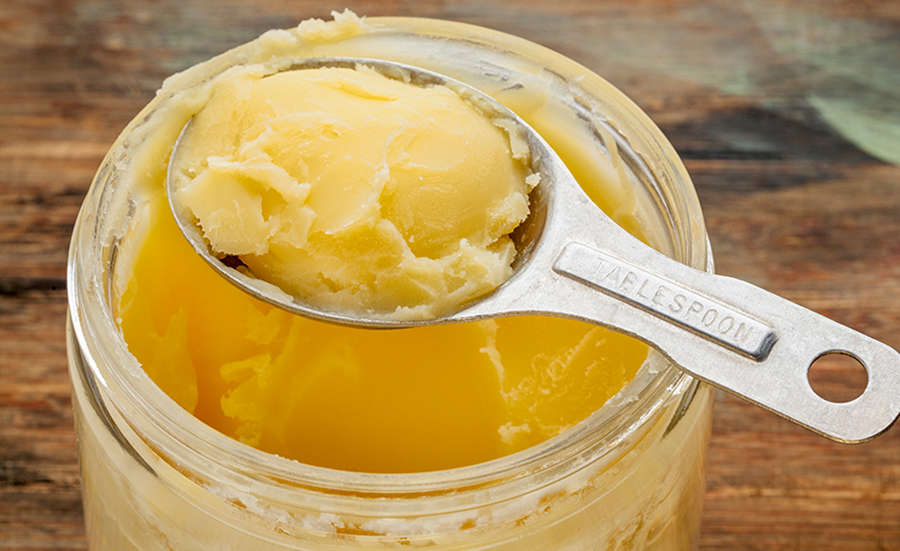
1. Ghee in warm water

jar and measuring tablespoon of ghee – clarified butter

A teaspoon of ghee stirred into warm water can do wonders for your digestive health. Ghee helps soften stools, relieve constipation, and improve intestinal function. Rich in butyric acid, it supports healthy digestion and provides sustained energy. However, those prone to indigestion should avoid this morning drink.

2. Fennel in warm water

Fennel seeds are naturally cooling, making them an excellent choice for summer. In Ayurveda, fennel is known to reduce gas and acidity while supporting smooth digestion. Drinking fennel-infused warm water in the morning can help ease bloating, constipation, and indigestion, while keeping your digestive system balanced.

3. Cumin in warm water

Cumin seeds in warm water act as a gentle cleanser for the stomach. They help relieve acidity, bloating, and constipation, while also stimulating appetite and aiding food absorption. Since cumin has a warming effect on the body, people with excess body heat or a pitta constitution should consume it sparingly.

4. Fenugreek seeds in warm water

Soaked fenugreek seeds are rich in fiber and antioxidants, making them a natural detoxifier. Leave a spoonful of fenugreek seeds in water overnight and drink it with lukewarm water in the morning. This remedy is particularly effective against gas, acidity, and constipation, while also supporting overall gut health.

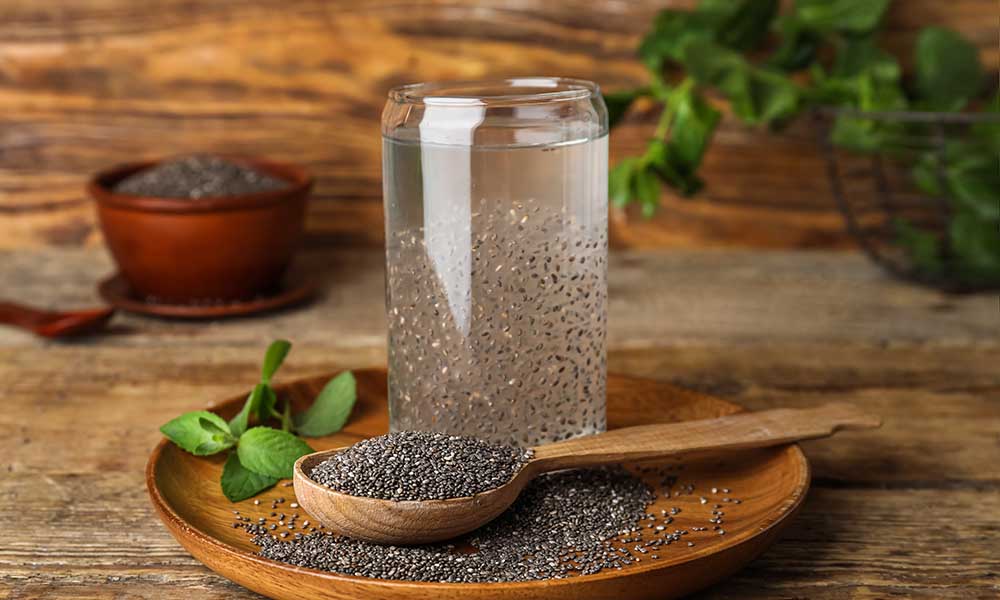
5. Chia seeds in warm water

Chia seeds are packed with fiber and expand when soaked, providing a soothing effect on the digestive system. Drinking chia seed water in the morning helps regulate blood sugar, reduce cholesterol, and improve bowel health. It also keeps you feeling full for longer, making it an excellent choice for those trying to manage weight.

Your digestive health sets the tone for your entire day. By starting your morning with any of these simple warm water infusions, you can keep your stomach clean, support healthy digestion, and feel more energetic throughout the day naturally and without side effects.