Minister for Communications and Information Technology, Jagadish Kharel, has urged officers of the Nepali Embassy in the Republic of Korea to carry out activities becoming a guardian of all Nepalis there. Visiting the Nepali Embassy in Seoul, South Korea, today, the Communications Minister stressed that the Nepali Embassy officers should play effective role for the rights and welfare of Nepalis staying in South Korea as well as facilitate to resolve their problems.
He also requested the Nepali Ambassador to South Korea Dr Shiva Maya Tumbahamphe to play role to create environment to bring in foreign investment in Nepal by further strengthening Nepal-Korea relations.
Minister Kharel urged the Nepali Embassy to play effective role in expansion of relations and cooperation between the two countries, and to take initiatives related to mutual welfare and cooperation between the two countries at a time when various complaints about the issue of Embassy’s role are being received.
Similarly, Ambassador Tumbahamphe shared that they have not been able to carry out effective works due to limited staffs and dispute of some Non-Resident Nepali Association. She opined that she was committed to carrying out activities for the welfare of Nepal and Nepalis.
On the occasion, Minister Kharel drew the attention of the Nepali Embassy to take initiative for the operation of Nepal Airlines’ flights to Seoul as well as to take initiatives to resolve different types of problems Nepali migrant workers in Korea have been facing due to mental health issues.
The Communications Minister also expressed commitment to take initiatives to send additional human resources at the Nepali Embassy as per quota. Minister Kharel, leading a Nepali delegation, left here for South Korea on November 11 to participate in the 11th Global ICT Leadership Forum organised at Seoul of South Korea.
More than 30,000 new voters were added in a single day as the Election Commission of Nepal began registering voters based on National Identity Card data.
According to the Election Commission, as of 8 pm Wednesday, the total number of new voters had reached 239,940, with 30,373 added that day alone. The deadline for voter registration is set for November 16 (Kartik 30). Officials said the number of new registrants has been steadily increasing as the deadline approaches.
From Thursday, the commission has started incorporating citizens into the voter list using details from the National Identity Card database. The new provision allows individuals with a National ID number especially those unable to visit election offices in person to register more conveniently.
Acting Chief Election Commissioner Ram Prasad Bhandari said technical preparations and system testing were completed overnight on Wednesday to ensure a smooth launch of the new system.
Officials expect the integration of National ID data to accelerate the registration process in the remaining days before the deadline.
On Wednesday, Prime Minister Sushila Karki held discussions with top Election Commission officials regarding preparations for the upcoming elections. During the meeting, the commission briefed the Prime Minister about the plan to begin voter registration through the National ID system from Thursday.
Director General of theDepartment of National Id and Civil Registration, Namaraj Ghimire, also attended the meeting and expressed readiness to provide the biometric data collected during the distribution of National Identity Cards to the Election Commission for voter registration purposes.
A total of 209,552 new voters have been added so far, with 23,638 registered on Tuesday alone.
According to data compiled by the Election Commission as of 8 pm Tuesday, the newly registered voters include 122,740 men, 86,785 women, and 27 individuals from other categories.
Following the interim government’s announcement to hold the House of Representatives election on March 5, the Election Commission began updating the voter roll targeting Generation Z on September 25. The registration process will continue until November 16.
Citizens aged 18 and above with a Nepali citizenship certificate can register their names at provincial or district election offices between 8 am and 6 pm on working days.
Eligible citizens can also update their details, change their voting location in case of marriage or migration, or correct any errors in the voter roll.
To manage the growing number of service seekers, the commission has arranged 12-hour daily registration services in two shifts in districts where more than 800 registrations are being recorded daily, said Commission Spokesperson Narayan Prasad Bhattarai.
In the Kathmandu Valley, 14 additional registration staff have been deployed from the National ID and Registration Department. Similarly, Chief District Officers outside the Valley have been asked to assign extra personnel as needed, the Commission said.
The ‘Gen-Z Movement’ has demanded the dismissal of Energy Minister Kulman Ghising, alleging irregularities worth Rs 430 million in a power purchase agreement with India’s PTC India Ltd.
The movement claims that Minister Ghising was involved in the deal that caused a financial loss of Rs 430 million to Nepal.
In a statement issued on Tuesday, Movement Spokesperson Bijay Sah said, “Energy Minister Kulman Ghising must be immediately dismissed and a case filed against him at the Commission for the Investigation of Abuse of Authority (CIAA). Nepal Electricity Authority Managing Director Manoj Silwal should be suspended and investigated under the Anti-Money Laundering Act. The Electricity Regulatory Commission must form an independent probe committee and make all power purchase agreements public.”
The Gen-Z Movement has also demanded that those involved in the “anti-national agreement” be imprisoned and that the misused state funds be recovered through legal procedures.
The dispute over the Chief Minister’s appointment in Madhesh Province has taken an intense turn. Both the Office of the Chief Minister and the Office of the Provincial Head have been vandalized, while party leaders and cadres burned tires and demonstrated in front of the Madhesh Building.
Leaders and cadres of dissatisfied parties have assaulted government employees in Madhesh Province over the issue of the Chief Minister’s appointment. The attack took place inside the Chief Minister’s office.
A video shows a male staff member trying to protect official records during the vandalism. The mob then surrounds him, punching him on the head. The file he was holding falls to the floor. Another employee then helps him escape the furious crowd and takes him outside the room.
Earlier in the morning, lawmakers, including those from the Nepali Congress, entered the Chief Minister’s office and vandalized property. During the chaos, one lawmaker even removed and threw away Nepal’s national flag.
Provincial lawmakers and cadres from the Nepali Congress, Janata Samajbadi Party (JSP), and Loktantrik Samajbadi Party (LSP) have protested the appointment of UML leader Saroj Kumar Yadav as Chief Minister.
Provincial Head Sumitra Subedi Bhandari had announced around 4 am on Monday that she was unwell and would be leaving for Kathmandu. Outgoing Chief Minister Jitendra Sonal saw her off, offering flowers and wishing her a speedy recovery.
However, after reaching Hotel Panas in Kalapani, Bardibas Municipality–3 of Mahottari, Provincial Head Bhandari administered the oath of office to UML parliamentary party leader Saroj Kumar Yadav as Chief Minister, recognizing him as the leader of the largest party. This incident has stirred political turmoil in Madhesh Province.
Dissatisfied parties have strongly criticized the move. Outgoing Chief Minister and LSP leader Sonal accused the Provincial Head of “robbing the dignity of Madhesh Province.”
Similarly, Janamat Party Chair Dr. CK Raut said this is the right moment to declare Madhesh autonomous. He has called for the Madhesh Provincial Assembly to hold its session, even on the streets if necessary, to announce autonomy.
The second and final phase of Bihar’s state assembly elections is taking place today.
Voting has begun in 122 assembly constituencies across 20 districts, including those bordering eastern Nepal. A total of 1,302 candidates are contesting in this phase.
In view of the elections, border checkpoints between Nepal and India have been closed. The Morang and Sunsari district border points were sealed from Saturday evening and will reopen after voting concludes, according to the Morang District Administration Office.
More than 37 million voters, including 17.4 million women, are eligible to vote at 45,399 polling centers.
The first phase of elections was held on November 6 across 121 constituencies in 18 districts, with a voter turnout of 65.08 percent.
The final phase of polling will determine Bihar’s new government and its political future.
President Ram Chandra Paudel administered the oath of office and secrecy to newly appointed Madhesh Province Chief Surendra Labh Karna on Tuesday.
Karn was appointed as the Chief of Madhesh Province on the recommendation of the Council of Ministers, according to President’s Office Spokesperson Pradeep Kumar Koirala. The appointment was made in accordance with Article 163(2) of the Constitution.
The oath-taking ceremony was attended by Vice President Ram Sahay Prasad Yadav, Prime Minister Sushila Karki, Speaker Devraj Ghimire, and other officials.
On Monday, the Cabinet had dismissed Sumitra Subedi Bhandari from the post of Madhesh Province Chief.
Bhandari had earlier drawn controversy by appointing CPN-UML’s Saroj Kumar Yadav as Chief Minister in Bardibas, Sarlahi, and administering the oath in a hotel early in the morning, in violation of constitutional procedure.
Her move sparked widespread protests in Janakpur, the provincial capital, on Monday, during which disgruntled provincial lawmakers vandalised the Chief Minister’s Office.
When Wi-Fi Dies, Gen Z Thrives (With a Side of Chaos)
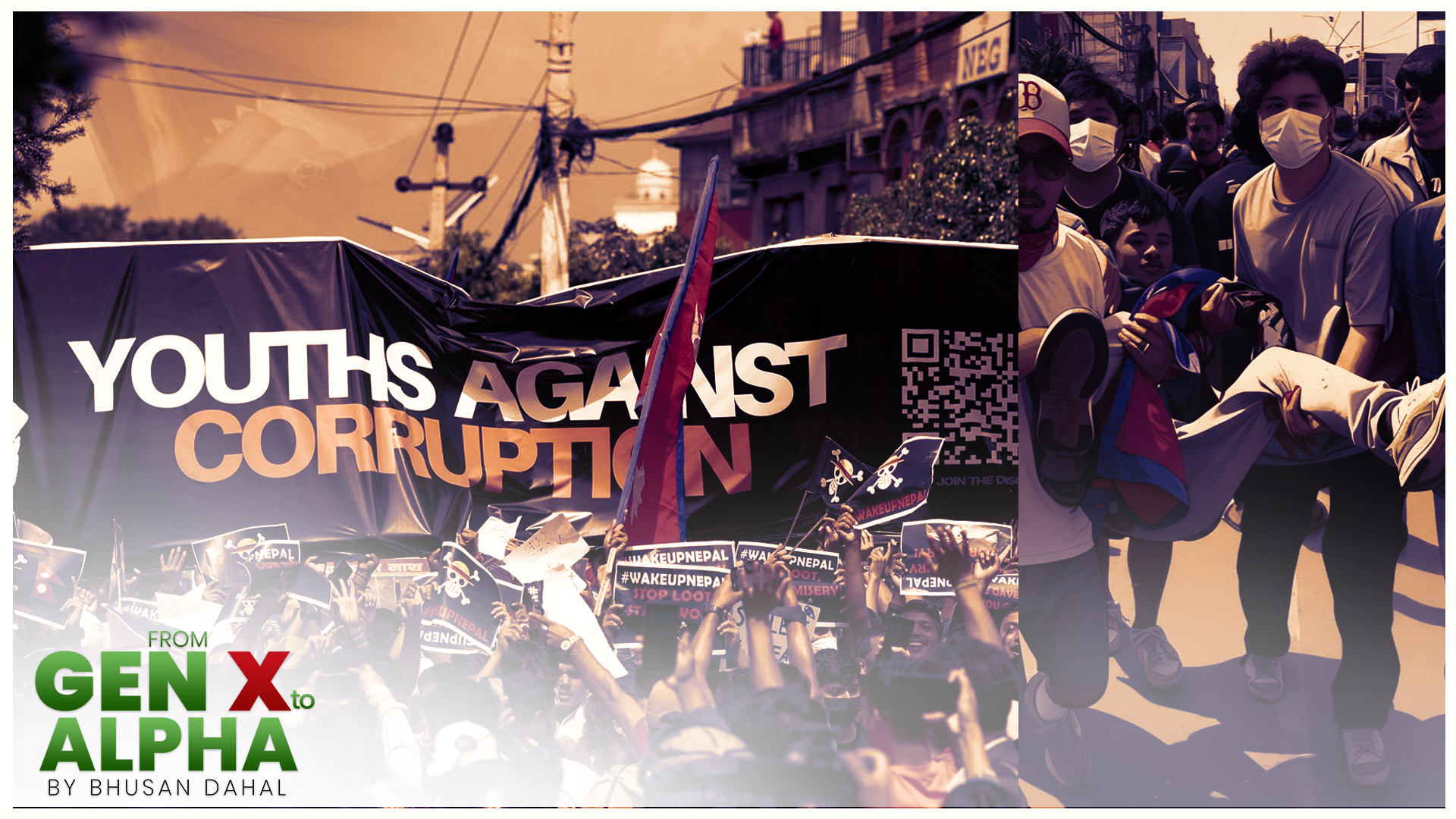
Picture this: It’s early September 2025, and Nepal’s streets are basically a live-action Fortnite battle royale. Gen Z kids (we’re talking 15-25, the ones who can meme their way out of anything) hit Kathmandu like a viral dance challenge gone rogue. Why? A social media ban on September 4 that basically yelled, “Shut up and scroll no more!” What was meant to muzzle corruption call-outs turned into the “Gen Z Revolt” – a leaderless squad using Discord servers (yes, the gamer app) to coordinate epic takedowns. They torched government offices, yeeted into parliament, and by September 9, forced Prime Minister K.Р. Sharma Oli to peace out faster than a bad Tinder date. At least 25 folks lost their lives (bullet wounds), hundreds got hurt, and the whole country hit pause – airports closed, cities on lockdown. But here’s the tea: These weren’t just Wi-Fi warriors; they were screaming for a Nepal 2.0. Unemployment at 20.8% for youth? Check. Politicians’ kids flexing Rolexes on Insta while everyone’s broke? Double check. And now, amid the smoke, loud chants of “Bring back the king!” are turning into full-on group chat debates. But wait – before we fast-forward to elections in March 2026 (which feel as distant as a Gen Z retirement plan), let’s actually listen to these kids. Their voices aren’t just noise; they’re the blueprint for fixing this mess. Skipping straight to polls without stakeholder chats? That’s like dropping a sequel without reading the reviews – recipe for flop.
The 2015 Constitution: More Plot Holes Than a Bad Netflix Series
Ah, the 2015 Constitution – Nepal’s big “happily ever after” after years of civil war drama. It promised provinces, fair reps, and a PM who actually answers to parliament. Spoiler: It’s more like a chooseyour-own-adventure book where everyone picks “chaos.” Fast-forward to 2025: 14 governments in 17 years, none lasting a full term. It’s like musical chairs, but with corruption instead of music. Enter the plot twist — after Oli’s dramatic exit, former Chief Justice Sushila Karki swoops in as Nepal’s first female PM on September 12. Iconic? Sure. Constitutional? debatable. She skips the whole “get parliament’s thumbs-up” step and convinces President Ram Chandra Paudel to dissolve it anyway, slapping elections on March 2026. Nepali Congress and the Supreme Court (who’ve called out similar shenanigans before) are like, “Um, illegal much?” But here’s the real gag: This doc was supposed to shield folks from power grabs, yet it’s been wiped more times than a bad tweet. Economy’s tanking – remittances from abroad are the only glue holding it together – and innovation? Nepal’s chilling at 107th in the 2025 Global Innovation Index, probably because everyone’s too busy dodging joblessness. The social media ban? Final boss level trigger. Gen Z didn’t just protest; they exposed the Constitution as a glitchy app overdue for an update. But rushing to elections without hashing out these fails? That’s ignoring the bug reports from the users who actually play the game.
Monarchy Vibes: From “Old-School Cringe” to “Maybe Not So Bad?” Plus, How It Could Clap Back at Communist Shade
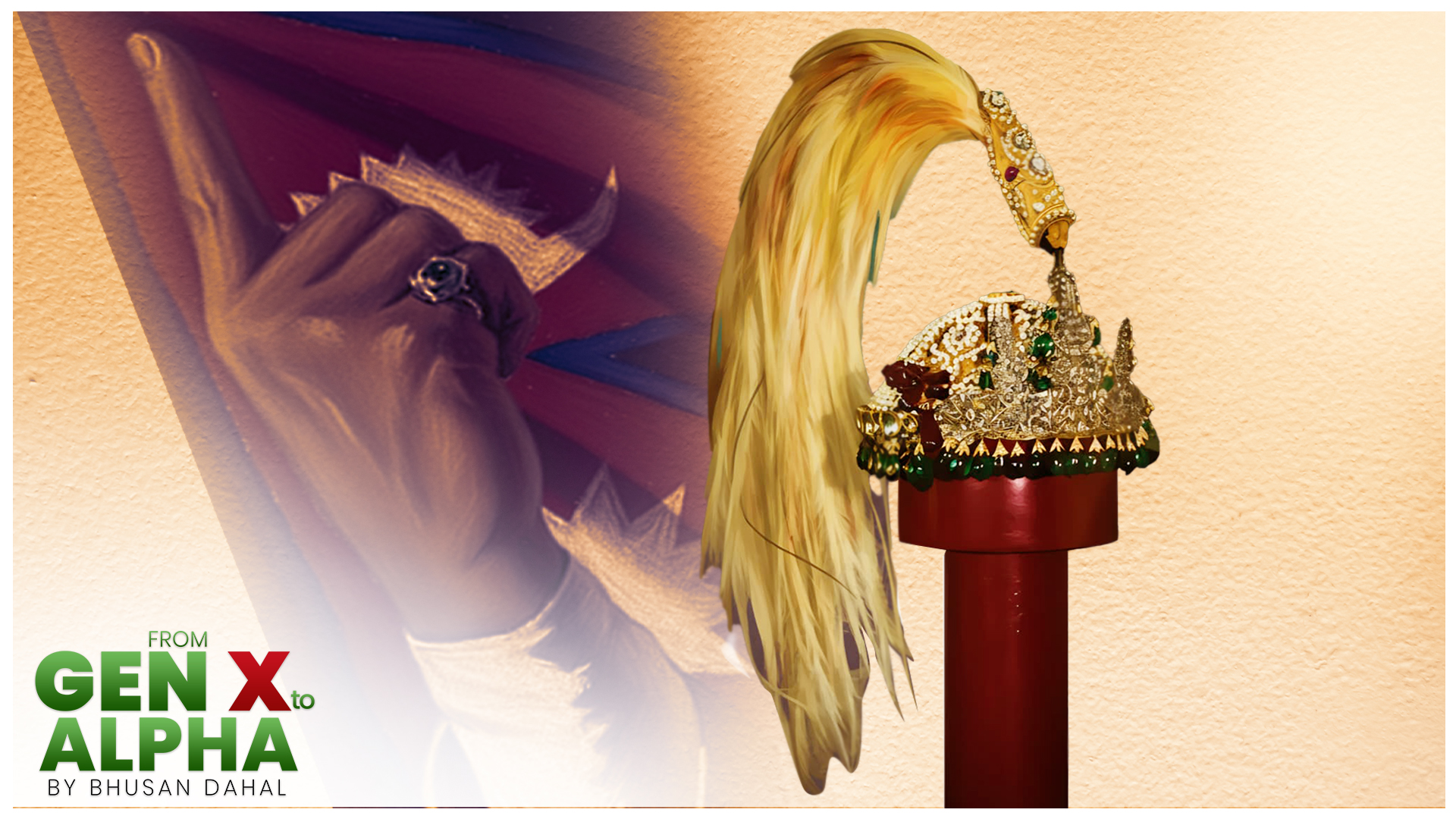
Okay, buckle up for the wildest subplot: In the middle of buildings burning and curfews dropping, Gen Z’s whispering (okay, tweeting) about reviving the monarchy. Yep, the one axed in 2008 for being too “dictator chic.” But 2025’s got folks rethinking – earlier this year, promonarchy rallies popped up in March and May, demanding a Hindu Adhirajya and crown comeback. Not everyone’s on board – or probably a resounding silent majority but more like a niche TikTok trend gaining traction amid the revolt for sure. Why? Back in king days, Nepal had that unity glow-up – a symbol everyone could stan, not some flipflopping pol. Geopolitically? Nepal slayed, balancing India and China like a pro gamer. Post-2015? We’re the awkward middle child in border spats and trade fails. Gen Z isn’t craving a crown-wearing overlord; they want a chill figurehead for stability, maybe even pride points on the world stage. Recent buzz? Even during talks, pro-monarchy voices like Durga Prasai tried sneaking in, but youth leaders shut it down hard – no royal revival on their watch. Still, the sentiment’s bubbling in group chats and streets. But let’s level up: How do modern monarchies even work without turning into medieval memes? Think constitutional monarchies – the upgraded version where the king or queen is basically a national icon with zero cheat codes for real power. In places like the UK, Sweden, Japan, and even Thailand, the monarch chills as head of state: cutting ribbons, hosting state dinners, and waving from balconies. Real decisions? That’s parliament’s gig – elected peeps handle laws, budgets, and foreign policy. The royal fam provides continuity (no election drama every few years), non-partisan vibes (they’re above the political roast sessions), and a unity symbol that glues diverse folks together. Hereditary? Yeah, but with constitutions slapping limits – no absolute rule, just constitutional sparkle. They’ve adapted by staying out of governance, focusing on charity, culture, and soft power – It’s like having a family heirloom that’s pretty but doesn’t run the house. Now, the spicy bit: How could a Nepal monarchy nuke that old anti-monarchy communist narrative? Communists have been dragging the crown since the 1940s, calling it feudal, oppressive, and antiequality – fueling the 1996-2006 Maoist insurgency that ended the monarchy in 2008. Pushpa Lal Shrestha translated the Communist Manifesto in the 1940s, and Maoists pushed for a people’s republic to smash royal privilege. But fast-forward: Communist-led govs since then? Plagued by splits, corruption, and flops – like the Nepal Communist Party’s legitimacy crisis under Prachanda and Oli. Restoring a modern monarchy could flip the script by exposing communist hypocrisy – they’ve been in power, yet instability reigns. Pro-monarchists argue it’d bring stability, end “endless instability and corruption,” and boost nationalism/Hindu identity to counter leftist secularism. It could improve India ties (Hindutva vibes hate commie leadership), rally anti-communist factions, and position monarchy as a “democratic reset” – not autocratic, but a unifying figurehead. By highlighting communist failures (unproductive politics, rural neglect), a restored crown could rebrand as pro-people, erasing the “oppressor” label with modern reforms. But here’s the fresh take: Before we yeet into election mode, articulate these whispers! Gen Z’s floor isn’t just about kings; it’s about unity, jobs, and not bowing to big neighbors. Elections in six months? Too far, too vague especially when not all stakeholders (youth, parties, even monarchists) are at the table yet.
The Waiting Game: Nepal’s on a Loading Screen, and It’s Buffering Badly
Nepal’s vibes right now? Straight-up precarious. Civil servants in tents, ministers scrambling like it’s a bad escape room, court docs half-toasted. Add earthquakes, border beef, and an economy that’s one remittance dip from a faceplant. But the real clown show? Conspiracy TikToks blaming “CIA plots” or “Indian spies” for everything, ignoring that it’s homegrown rage. This paranoia? It’s why fixes flop – disasters get botched, innovation stalls, and brain drain hits hard (Gen Z’s bouncing abroad faster than you can say “visa”). If elections drag or get delayed, demands like a Hindu state, direct votes, or justice for revolt violence could spark round two. Tourists? Ghosting. FDI? Doubled commitments, but post-protest jitters could scare ’em off. The danger? Treating elections as the endgame without engaging Gen Z now. Their issues corruption, nepotism, economic stagnation aren’t tabled fully. PM Karki’s recent chats with parties and youth are a start (as of late October 2025), but it’s baby steps. Waiting game? Nah, that’s a losing strat. Articulate the Gen Z voice first – roundtables, not rallies – or watch the fire emoji turn real again.
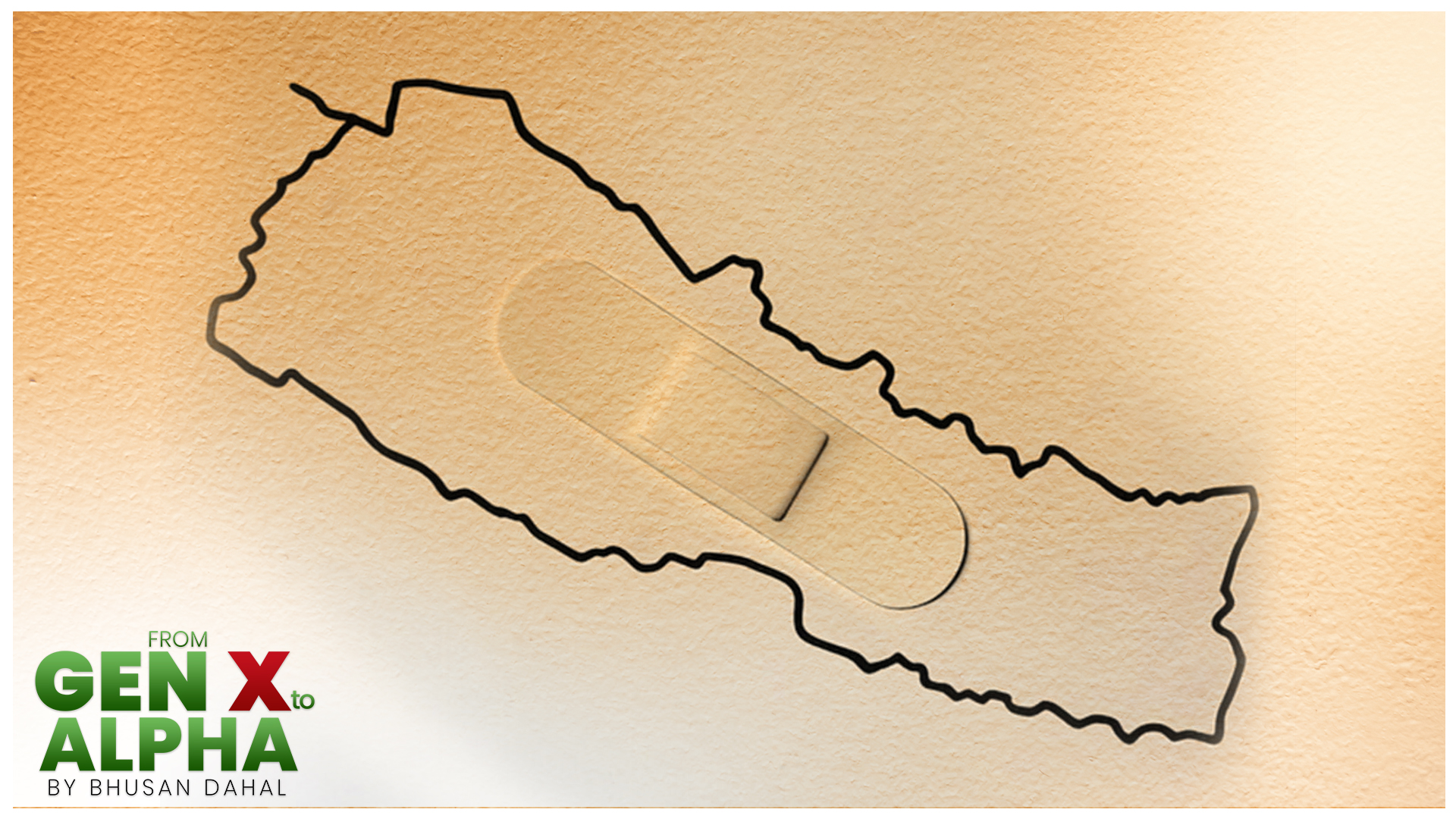
Skip the Band-Aid, Build the Glow-Up With Gen Z Leading the Chat
Gen Z didn’t arson for likes; they want a Nepal that’s lit in all the right ways – fair gov, clean bureaucracy, cops who protect, not puppet. Trust facts over fake news, and reclaim that global swagger. The monarchy buzz? It’s a symptom of desperation for unity, not a cure-all. But elections in March 2026? Feels like promising pizza next year when everyone’s starving now. Lack of full stakeholder engagement means not all cards are on the table – youth demands, monarchist conclutions, economic woes. Fresh perspective: Pump the brakes on poll rants and amplify Gen Z’s floor. They’re the devs Nepal needs for the reboot. Make it theirs with action, not just whispers. Otherwise, the revolt’s sequel drops sooner than you think.
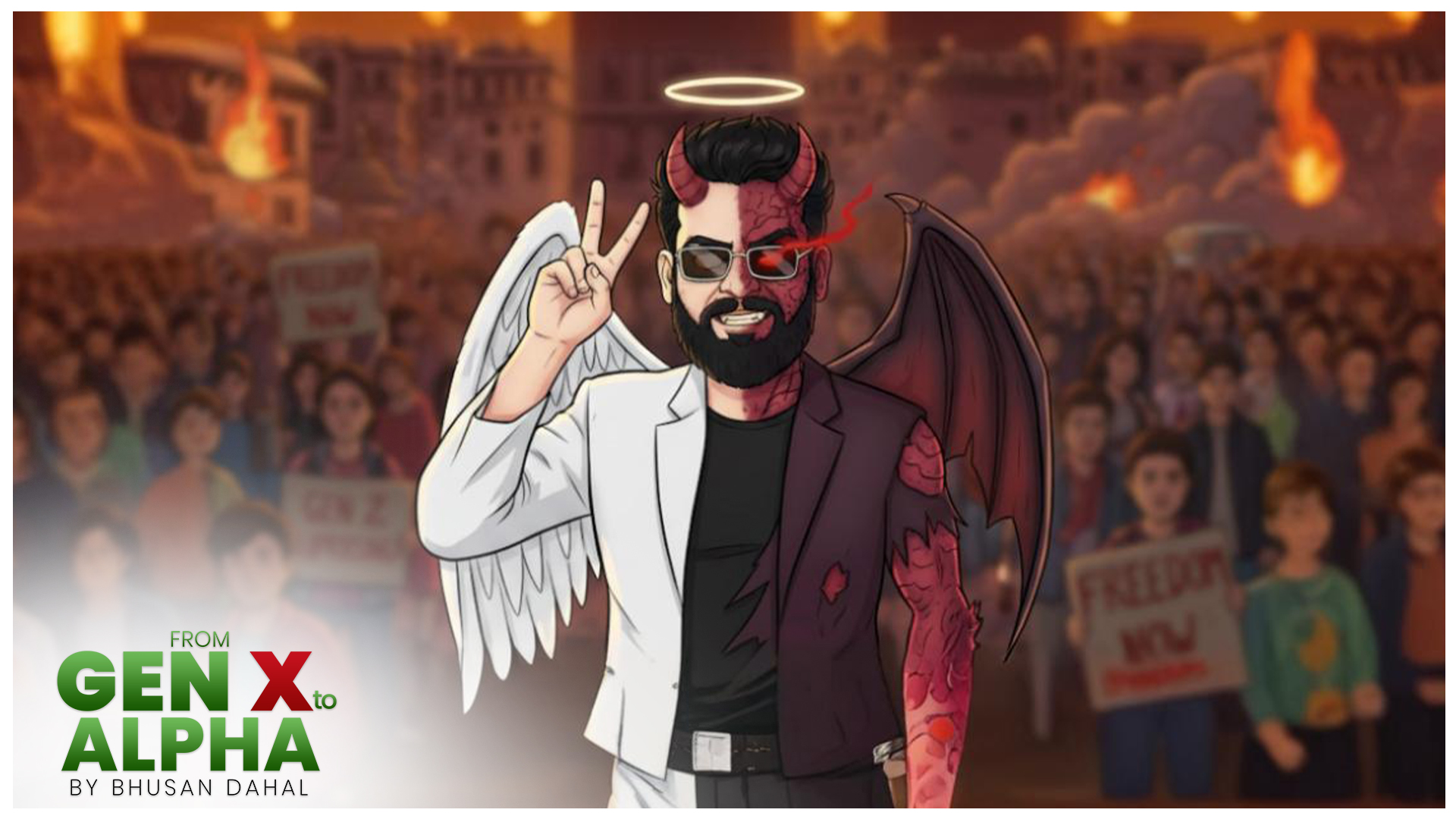
In the shadow of the Himalayas, where ancient temples meet the digital age’s fury, Balendra Shah-better known as Balen stands as both savior and scapegoat. The 35-year-old mayor of Kathmandu, a former rapper with a engineer’s precision and a rebel’s fire, has become the improbable epicenter of Nepal’s turbulent September. Once hailed as the voice of a disillusioned youth, he now grapples with the moniker “Lucifer,” thrust upon him by critics amid the ashes of a Gen Z revolt that scorched the nation’s political landscape. But like the biblical figure he evokes, Balen’s story is one of light and shadow, rebellion and reckoning-a tale where symbols shift with the beholder’s gaze, much like democracу itself.
From Rap Bars to City Hall: The Rise of Balen Shah
Balen’s ascent defies Nepal’s entrenched political dynasties. Born in 1990 in Kathmandu, he traded structural blueprints for sharp-tongued hip-hop tracks that lambasted corruption and inequality. Songs like those railing against “thieves looting the country” resonated with a generation stifled by unemployment and nepotism. In 2022, running as an independent, Balen stunned the establishment by clinching the Kathmandu mayoralty with over 61,000 votes-a “Balen effect” that rippled across Nepal, inspiring young independents nationwide. His governance style is as unfiltered as his music: live-streamed council meetings, bulldozing illegal structures, and public shaming of negligent officials. Garbage strewn streets began to clean up; traffic snarls eased. To his fans, he was no mere bureaucrat but a disruptor, a light-bearer in a city choked by smog and scandal. Yet Balen’s charisma is laced with enigma. Не rarely grants interviews, preferring cryptic social media posts that blend policy updates with philosophical musings. This stealth elusive as a Himalayan mist fuel both adoration and suspicion. Supporters see a principled loner; detractors, a calculating operator pulling strings from the shadows. As one on X @adhramita quipped amid the chaos, “Sun rose too early? Balen Shah. Your Wi-Fi is slow? Balen Shah.” In a nation where leaders are often caricatured as puppets, Balen’s opacity adds spice to the controversy, turning him into a Rorschach test for Nepal’s fractured psyche.
The September Inferno: Gen Z’s Revolt and the Shadow of Destruction
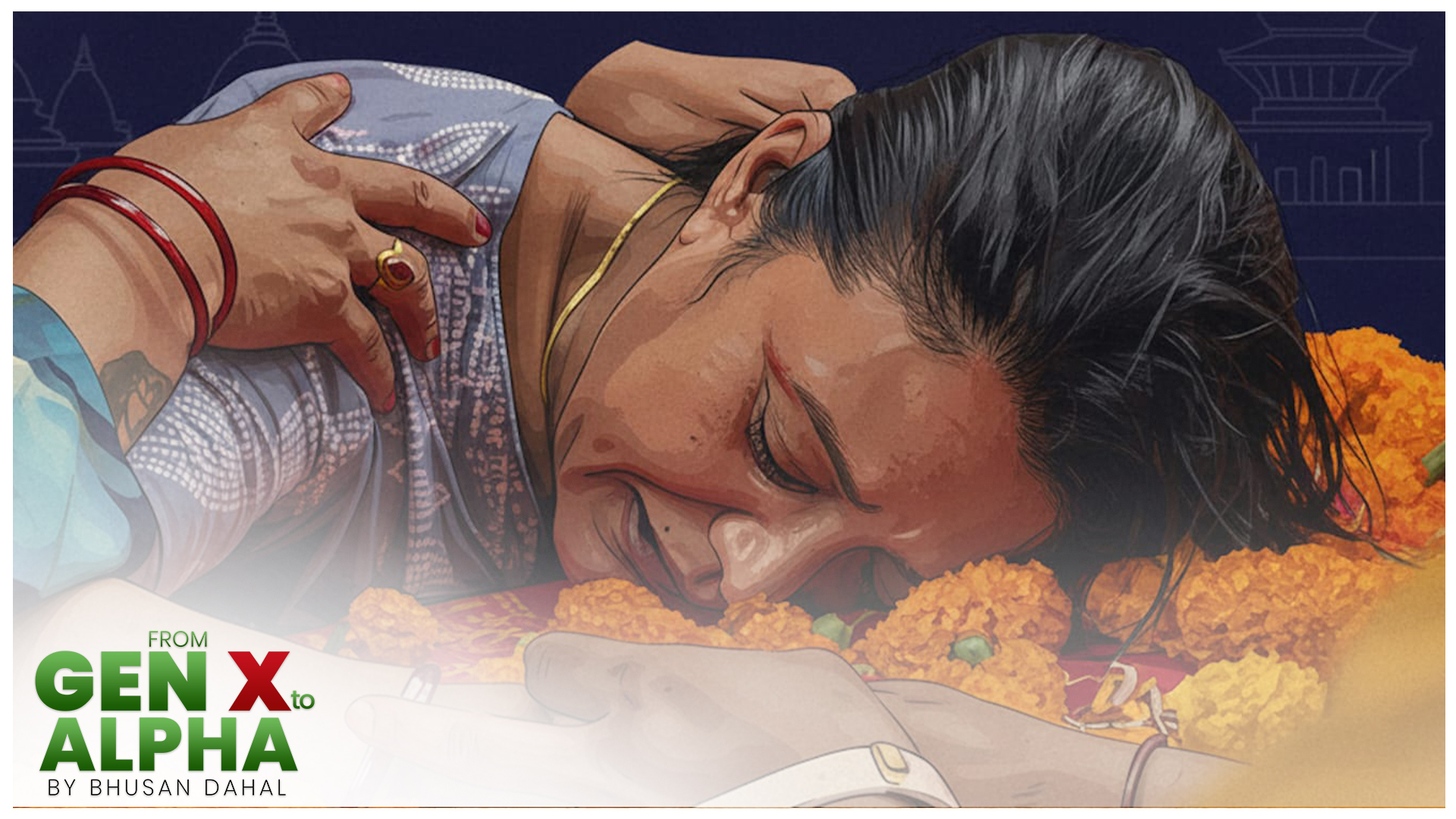
The backdrop to “Lucifer Balen” is a blaze that nearly consumed Nepal. On September 8, 2025, what began as a peaceful rally against a draconian social media ban-imposed amid rampant corruption scandals-erupted into the bloodiest youth uprising in decades. Gen Z, under-28 protesters in school uniforms and with books in hand, marched on Kathmandu, Pokhara, Itahari and quite a few other addresses demanding not just lifted restrictions but systemic overhaul. The government’s response was swift and brutal: security forces fired on crowds scaling parliament walls, killing 19-many teenagers still in college attire-and injuring over 345. Arson followed: Parliament, the executive premise and judiciary torched, the presidential residence gutted, media houses and private properties aflame, shopping malls looted. Prime Minister КР Sharma Oli resigned on September 9, the ban was rescinded, and former Chief Justice Sushila Karki (74) stepped in to lead an interim government. Balen, too old for the under-28 banner at 35, watched from City Hall. In a pivotal Facebook post, he declared full sympathy for the “spontaneous Gen Z movement,” urging politicians not to hijack it for party gain and asking, “What kind of country do you want to see?” His words ignited online fervor: #BalenForPM trended globally, dubbing him “Nepal’s potential prime minister without personal interest.” Half of Nepal’s population under 30 saw in him credible face for change-an anti-corruption warrior who could bridge rap’s raw energy with governance’s grind. But as the smoke cleared, so did the illusions. Balen’s post-revolt silence shifting to mundane municipal updates stirred discontent even among allies. Whispers grew: Did his endorsement embolden the chaos? Was he the hidden architect, or merely a bystander profiting from the pandemonium? The destruction estimated in billions of rupees, with irreplaceable cultural sites scarred demanded a villain. Some pointed fingers at foreign meddlers or party agitators, but increasingly, at Balen. “Encouraging violence,” one critic charged, linking him to “wet dreams of Greater Nepal” and anti-India rhetoric. In this blame game, Balen became the fall guy for a revolt that spiraled beyond anyone’s control.
The Lucifer Label: A Moniker Born in Fire
The epithet “Lucifer” crystallized in the revolt’s aftermath. Commentator Saurab, in a viral interview with journalist Tikaram Yatri, branded Balen as such-evoking the “morning star” fallen from grace, a symbol of hubris and infernal ambition. The remark exploded online, spawning memes, threads, and a polarized lexicon: #LuciferBalen trended alongside defenses portraying him as a “dark agent dismantling mafia strongholds. What began with one voice echoed through many, turning a theological metaphor into a political weapon. Lucifer, after all, is no monolith. In Christian lore, he’s the prideful angel cast from heaven, embodying temptation and evil-a cautionary tale of rebellion’s cost. Yet to Gnostics and esoteric thinkers, he’s Prometheus unbound, the light-bringer gifting knowledge to humanity, challenging tyrannical order. Modern Satanists recast him as individualism’s icon, a defiant spark against conformity. Balen, in this mirror, reflects these facets: To Gen Z devotees, he’s the enlightener, his rap-fueled critique illuminating corruption’s underbelly. To old- guard loyalists, he’s the destroyer, his “stealth and illusive personality” a devilish sleight-of-hand fanning flames for personal gain. This duality spices the controversy, much like democracy-a system venerated as freedom’s bulwark by some, decried as mob rule or elite capture by others. Balen’s Lucifer tag argues the same ambiguity: Is he the revolt’s unintended casualty, blamed for destruction he neither ignited nor quelled? Or a cunning provocateur, whose silence post-uprising betrays complicity? Critics decry his alleged ties to external forces US ambassadors, shadowy cabals-while fans rap odes to his “steel soul” tearing down the wicked. In Nepal’s echo chambers, Lucifer Balen is democracy incarnate messy, multifaceted, and eternally contested.
A Nation at the Crossroads: Hero, Devil, or Something In Between?
As Sushila Karki’s interim regime stabilizes the rubble, Balen’s path forks dramatically. Gen Z campaigns persist, with X pleas like “Balen Dai, take the lead. Nepal is behind you.” International eyes-from Time magazine’s emerging leaders list to Reuters spotlights-watch warily, pondering if this bearded ex-rapper could helm the nation. Yet the Lucifer shadow lingers, a reminder that revolutions devour their symbols. Balen’s elusiveness refusing Saurab’s barb, dodging the national stage-only heightens the intrigue. Is he biding time for a PM bid, or retreating from the inferno he helped stoke? In Kathmandu’s labyrinthine alleys, where incense mingles with tear gas residue, Balen Shah embodies Nepal’s paradox: a light-bearer fallen into controversy, a democrat cast as devil. Like Lucifer, his legacy hinges on interpretation. To the youth he inspired, he’s redemption’s promise. To those he displaced, apocalypse incarnate. And to history? Perhaps the spice that makes democracy’s brew palatable-or poisonous. As one observer noted amid the blame, “Whether you love him or hate him… this man’s single post sparked the entire overturn.” In the end, Lucifer Balen isn’t just a mayor; he’s a mirror, reflecting the chaos we all court in the name of change.
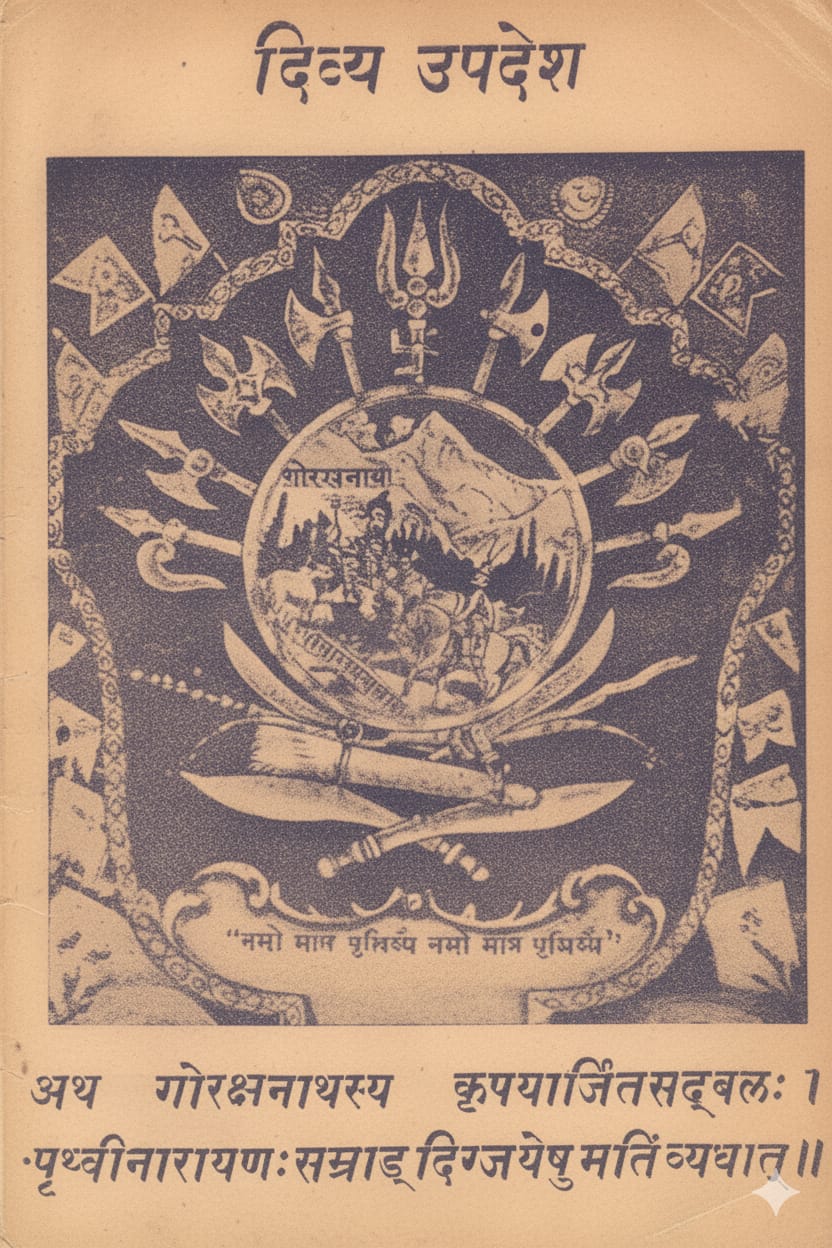
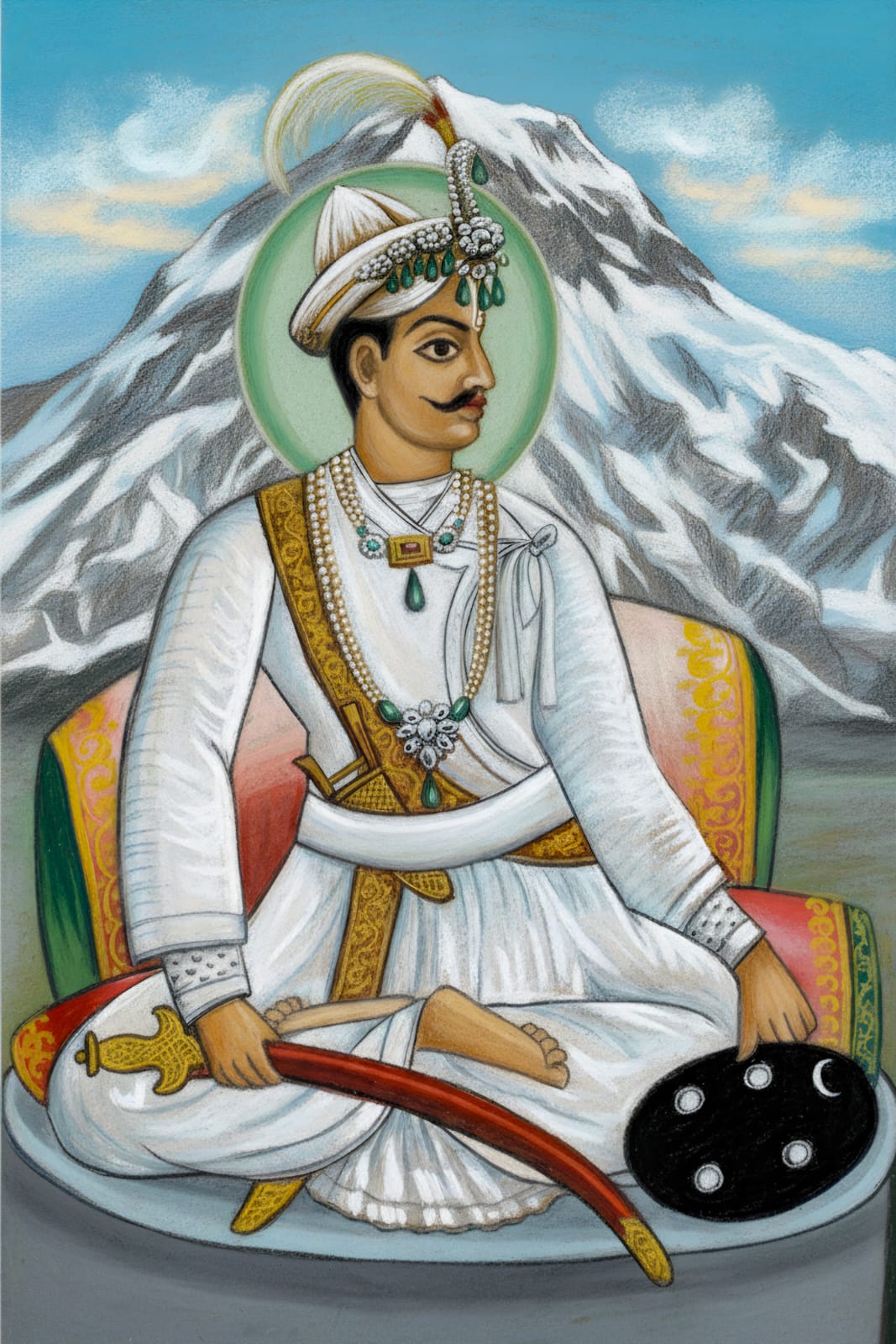
Nepal, a nation forged through the vision and valor of King Prithvi Narayan Shah the Great, has stood as a unified entity for centuries, predating even the formation of the United States. At the heart of this unification lies a timeless guiding framework—the Divya Upadesh (Divine Counsel), a set of principles laid down by the founder of modern Nepal. This article argues that the Divya Upadesh is Nepal’s eternal constitution, a sacred blueprint that transcends the need for modern constitutional experiments. Instead of chasing imported ideologies or clinging to the myth of a “living constitution,” Nepal must return to its roots, using bylaws to manage daily governance while preserving its sovereignty in a complex geopolitical landscape.
The Divya Upadesh: Nepal’s Eternal Constitution
Long before the modern concept of written constitutions, King Prithvi Narayan Shah, in the 18th century, provided Nepal with a guiding philosophy that encapsulated the essence of statecraft, unity, and sovereignty. The Divya Upadesh is not merely a historical artifact but a strategic vision that addressed Nepal’s unique geopolitical position, cultural diversity, and existential challenges. It emphasized unity, self-reliance, and vigilance against external influences—principles as relevant today as they were centuries ago. Unlike modern constitutions, which are often amended, debated, or replaced, the Divya Upadesh is eternal because it is rooted in timeless truths about Nepal’s identity and survival. It advised against foreign domination, promoted internal cohesion among diverse communities, and stressed the importance of a strong, centralized leadership to safeguard the nation. King Prithvi Narayan Shah’s counsel was not a rigid legal document but a flexible, principle-based framework that allowed Nepal to adapt while remaining anchored to its core values.
The Fallacy of a “Living Constitution”
In recent decades, Nepal has been caught in a cycle of constitutional experimentation, with multiple constitutions drafted and discarded since the 1950s. The current 2015 Constitution, often hailed as a “living document,” is seen by some as a progressive step toward inclusivity and democracy. However, this belief is a myth that risks eroding Nepal’s sovereignty. The frequent rewriting of constitutions reflects a lack of confidence in Nepal’s indigenous wisdom and an overreliance on imported ideologies that do not fully align with the nation’s unique context. The Divya Upadesh already provides the foundational principles for governance. What Nepal needs are not new constitutions but practical bylaws to address day-to-day administrative and legal matters. Bylaws, grounded in the spirit of the Divya Upadesh, would allow the nation to function efficiently while preserving its cultural and political identity. The obsession with constitutional reinvention distracts from the real task: implementing policies that reflect Nepal’s historical resilience and strategic foresight.
The Geopolitical Imperative
Nepal’s geopolitical position, nestled between two global giants—India and China—has remained largely unchanged since the time of Prithvi Narayan Shah. His Divya Upadesh famously described Nepal as a “yam between two boulders,” urging the nation to maintain neutrality and independence to avoid being crushed by external powers. This advice is as critical today as it was in the 18th century, given the growing influence of foreign actors in Nepal’s politics and economy. The current trend of adopting foreign ideologies—whether liberal democratic frameworks or other imported models—threatens to dilute Nepal’s ability to navigate its delicate geopolitical reality. The Divya Upadesh warns against such vulnerabilities, advocating for self-reliance and strategic diplomacy. By returning to these principles, Nepal can resist external pressures and maintain its sovereignty in an increasingly polarized world.
The Gen Z Revolution: A Call to Return to Root
Nepal’s younger generation, particularly Gen Z, is at a crossroads. Fueled by global connectivity and exposure to international ideas, many are drawn to ideologies that promise progress but may not suit Nepal’s unique context. The energy and idealism of Gen Z are powerful forces for change, but they must be channeled wisely. The Divya Upadesh offers a framework that is neither regressive nor dogmatic but deeply pragmatic, rooted in Nepal’s history and tailored to its future. The revolution Nepal needs is not one that dismantles its identity in pursuit of foreign ideals but one that rediscovers the wisdom of its founder. By embracing the Divya Upadesh as the nation’s eternal constitution, Gen Z can lead the charge in crafting bylaws that address modern challenges such as economic development, environmental sustainability, and social inclusion while preserving Nepal’s sovereignty and cultural heritage.
The Myth of Redemption Through Constitutionalism
The belief that Nepal’s salvation lies in perfecting a modern constitution is dangerous myth. Each new constitution has promised redemption, yet political instability, corruption, and external interference persist. The Divya Upadesh reminds us that true redemption comes from unity, self-reliance, and adherence to principles that have stood the test of time. Clinging to the idea of a “living constitution” risks entangling Nepal in endless debates and divisions, weakening its ability to act decisively in defense of its sovereignty. If Nepal continues down this path, it may find itself too late to reclaim its agency, with too little strength to resist external domination. The Divya Upadesh is a call to action-a reminder that Nepal’s strength lies in its ability to stay true to its roots while adapting to the demands of the modern world.
Conclusion: A Path Forward
Nepal does not need another constitution; it already has one in the Divya Upadesh. What it requires are bylaws that operationalize these timeless principles for the 21st century. By returning to the wisdom of King Prithvi Narayan Shah, Nepal can navigate its geopolitical challenges, harness the energy of its youth, and safeguard its sovereignty. The Divya Upadesh is not a relic of the past but a living guide for the future-one that can lead Nepal toward a path of unity, resilience, and independence. Let the Gen Z revolution be one of rediscovery, not reinvention, as Nepal reclaims its eternal constitution and charts its own destiny.