Nepal’s Social Media Ban Zaps Young Entrepreneurs, Gov Goes Full Caveman

Yo, Nepal’s digital crew, let’s talk about the absolute clown show that hit on September 4, 2025, when the government banned 26 social media platforms Facebook, Instagram, YouTube, X, WhatsApp, the works-for not registering with the Ministry of Communications and Information Technology.This mess is torching the dreams of young Nepali entrepreneurs who stayed to hustle in the 977. Let’s break it down, throw shade at the government’s ancient vibes, and see how the world’s handling regulation without yeeting entire economies. Buckle up, it’s a wild one.

The Ban: Gov’s Big “No WiFi for You” Moment

Imagine vibing on Insta, then-poof!-it’s gone.That’s what Minister Prithvi Subba Gurung and the Supreme Court pulled, banning platforms for skipping paperwork under the Social Media Regulation Guideline 2080 BS. Why? “Fake accounts and misinformation!” they cry, as if banning YouTube stops your uncle from sharing “5G causes baldness” conspiracies. TikTok and Viber got a pass for registering, but the rest? Blocked by the Nepal Telecommunications Authority like it’s 1995. The government’s acting like it saved Nepal from a hacker invasion, but really, it just dunked on its own youth.

Young Entrepreneurs: From Slay to Slayed

Nepal’s young hustlers content creators, Insta shop owners, YouTubers are the real casualties. A report says thousands of SMEs rely on these platforms for cash flow. Picture Aasha in Kathmandu, running an Insta boutique, or Kiran in Pokhara, dropping travel vlogs. Now? Their followers are gone, their revenue’s toast. With 43.5% of Nepal’s population on social media, this ban’s a gut punch to the digital economy. These kids stayed to build something in Nepal, not chase visas abroad, and the government’s like, “Cool, go sell souvenirs in Thamel.” Savage.

The Global Scene: Regulating Without the Rage-Quit

Nepal’s ban is like using a bazooka to swat a fly. Other countries do it smarter: EU (Digital Services Act, 2022): Fines platforms for slacking on content moderation, keeps the vibes flowing. India (IT Rules, 2021): Demands grievance officers and content takedowns, bans sparingly, pushes local apps like Koo. Australia (Online Safety Act, 2021): Quick content removal, user complaint portals, no platform bans. Singapore: Targets specific posts, boosts digital literacy, keeps the internet humming. Nepal could learn from these OGs, but nah, they’re too busy playing internet police.

The Shade: Gov’s Out Here Cosplaying as Internet Karens

This ban’s like a grumpy uncle unplugging the router because TikTok’s “too loud.” The government’s whining about misinformation while Nepal’s cybersecurity ranking’s in the gutter (100th globally, oof). Instead of teaching folks to spot scams, they’re banning WhatsApp like it’s the source of all evil. It’s peak boomer energythinking a few forms will fix the internet while young entrepreneurs watch their dreams 404.

What’s Next for the Youth?

Young hustlers are pivoting to Tik Tok or VPNs, but it’s like swapping a sports car for a tricycle. Groups like Youth IGF Nepal are fighting back, and with the Social Media Bill 2081 BS looming, the pressure’s on. Keep pushing, maybe meme-bomb the Ministry (oh wait, X is banned).

The Bottom Line

Nepal’s social media ban is a masterclass in screwing over your own youth while waving the “regulation” flag. Young entrepreneurs are getting crushed, while the world regulates smartly with fines and local fixes. To the government: maybe chill before you kill the digital hustle. To the youth: keep slaying, grab a VPN, and don’t let these dinosaurs dim your glow.

The Plot Twist: Gov Dodging Heat While Crushing Youth Fire

Let’s call it what it is-this ban reeks of a shady government scheme to duck the spotlight and stomp out the raging youth anti-corruption wave that’s blowing up nationwide. With Gen Z rallying for protests on September 8 against graft and this very shutdown, it’s no coincidence the plug got pulled right as voices were amplifying scandals and demanding accountability.

The Oli crew claims platforms like X reached out post-ban, yet they’re still enforcing a total blackout instead of negotiating, which screams ulterior motives. And talk about shooting yourself in the foot: this knee-jerk move is nuking Nepal’s rep as a spot for foreign direct investment, scaring off global cash with vibes of instability and overreachFDI pledges are already shaky, and now investors are side-eyeing a country that flips the switch on digital freedom overnight.

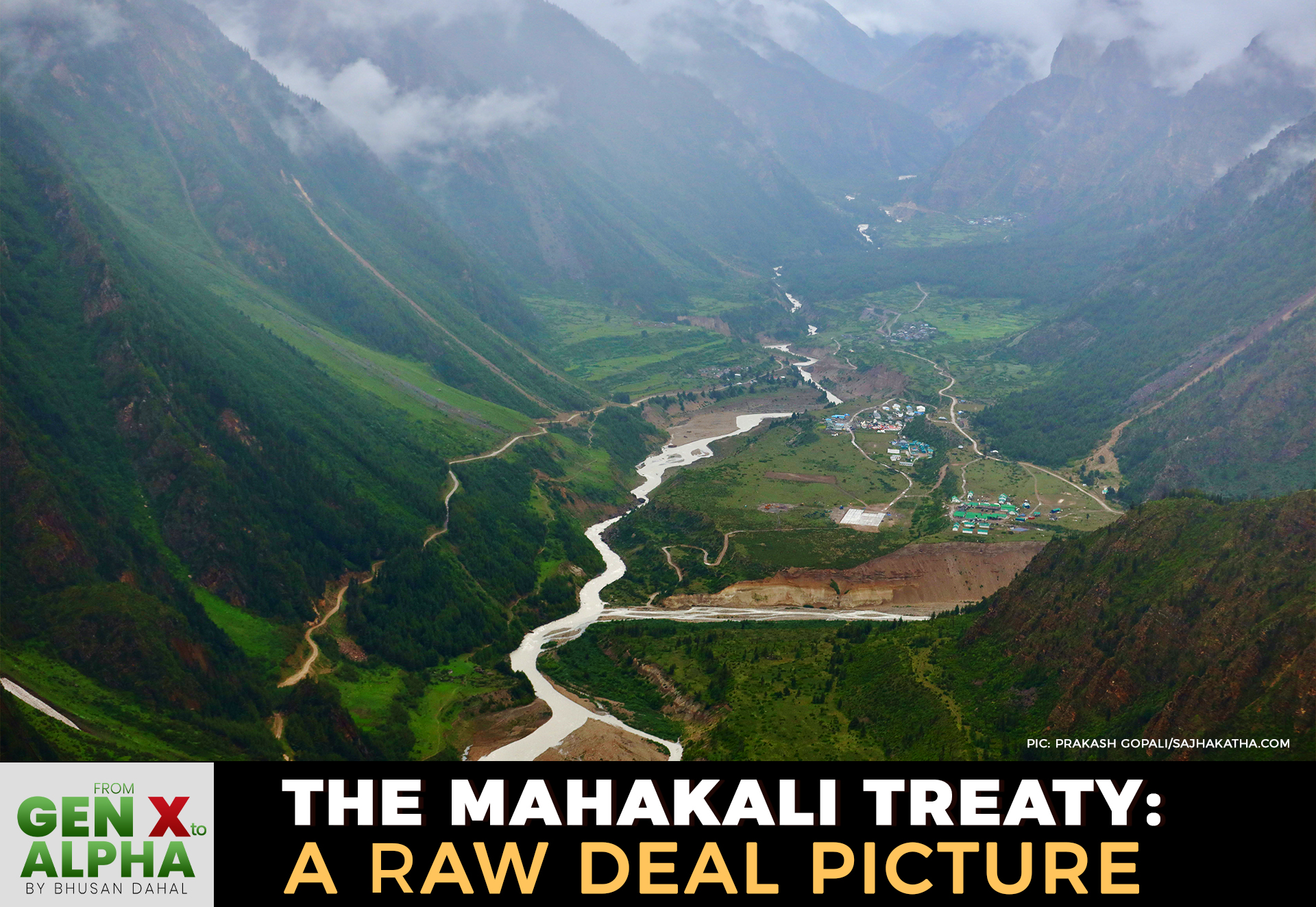
Nepal’s Epic Betrayal: How the Mahakali Treaty Screwed a Nation

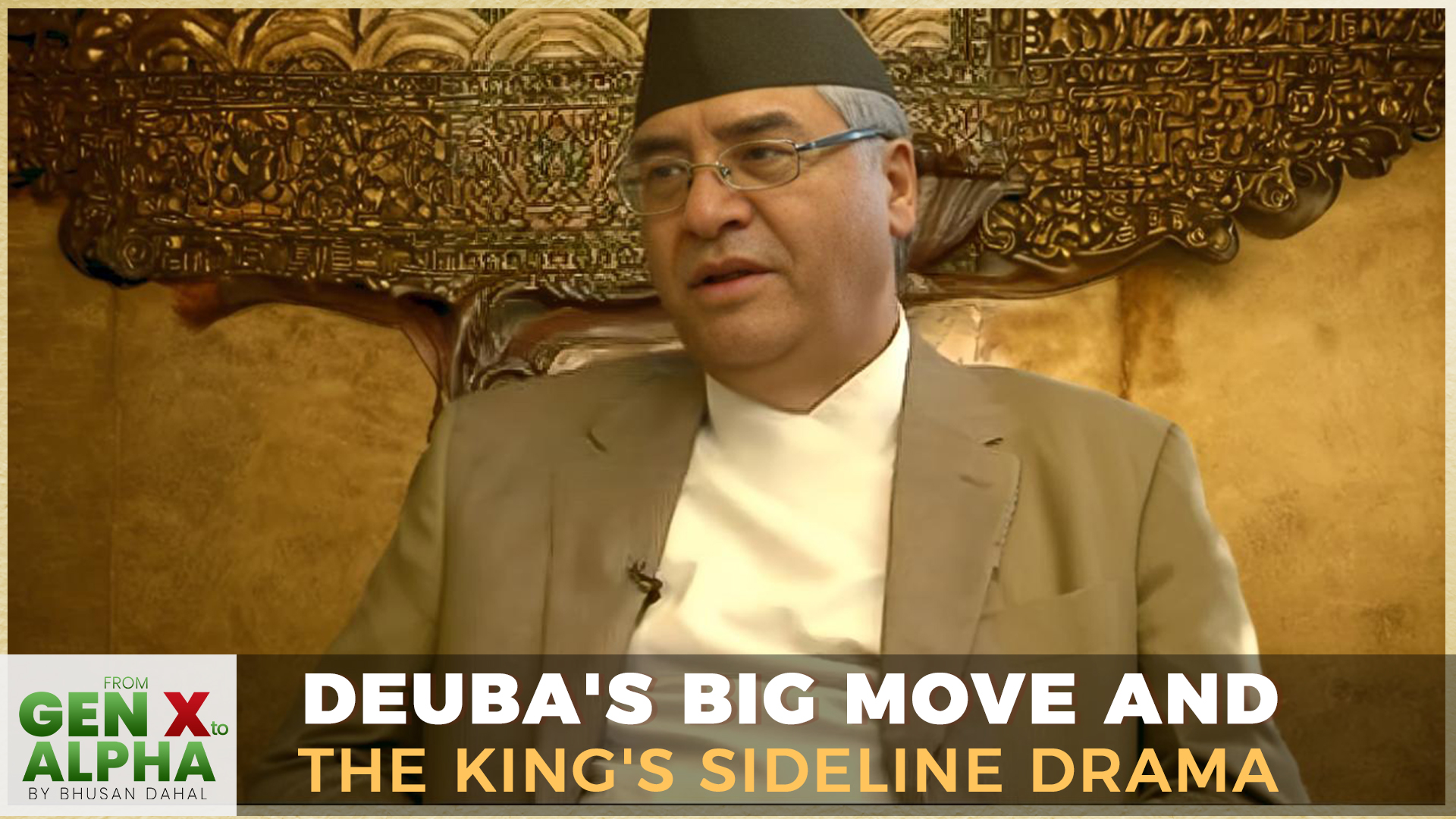
Imagine your country’s leaders signing a deal that hands over your land, water, and future to a powerful neighbor, all while sidelining your heritage and silencing dissenters-some even disappearing under shady circumstances. That’s the real-life drama of Nepal’s 1996 Mahakali Treaty, a political betrayal more intense than any binge-worthy series. Signed by Prime Minister Sher Bahadur Deuba with India’s P.V. Narasimha Rao, this treaty didn’t just mess with Nepal’s rivers-it gutted its sovereignty, crushed its monarchy, and handed India the reins of Nepal’s politics. For those of you in your 20s and 30s, here’s the breakdown of how Nepal got played, who was in on it, and why this 29- year-old sellout still demands your attention.

Nepal and India teaming up to “share” the Mahakali River, a lifeline for both. The 1996 Mahakali Treaty, signed on February 12, promised teamwork on irrigation, hydropower, and flood control through projects like the Sarada Barrage, Tanakpur Barrage, and the Pancheshwar Multipurpose Project. Sounds like a winwin, right? Nope. Locked in for 75 years until 2071, this treaty was a one-sided hustle that left Nepal holding an empty bag. Nepal gave up 2.9 hectares for the Tanakpur Barrage, which India built in the 1980s without Nepal’s full okay, basically greenlighting India’s land grab. In return, Nepal got promises of a trickle28.35 m³/s of water in the wet season, 8.5 m³/s in the dry season, and 70 million kWh of electricity yearly. It’s like trading your ancestral home for a used phone charger. Worst of all, the treaty dodged Nepal’s claims to Kalapani, Limpiyadhura, and Lipulekh-lands India’s controlled since the 1962 Sino-Indian War but which Nepal claims under the 1816 Sugauli Treaty. When India and China decided in 2015 to use Lipulekh as a trade route, Nepal wasn’t even invited to the chat. Protests erupted in Kathmandu, exposing the treaty as a stab in the back for Nepal’s territorial pride.

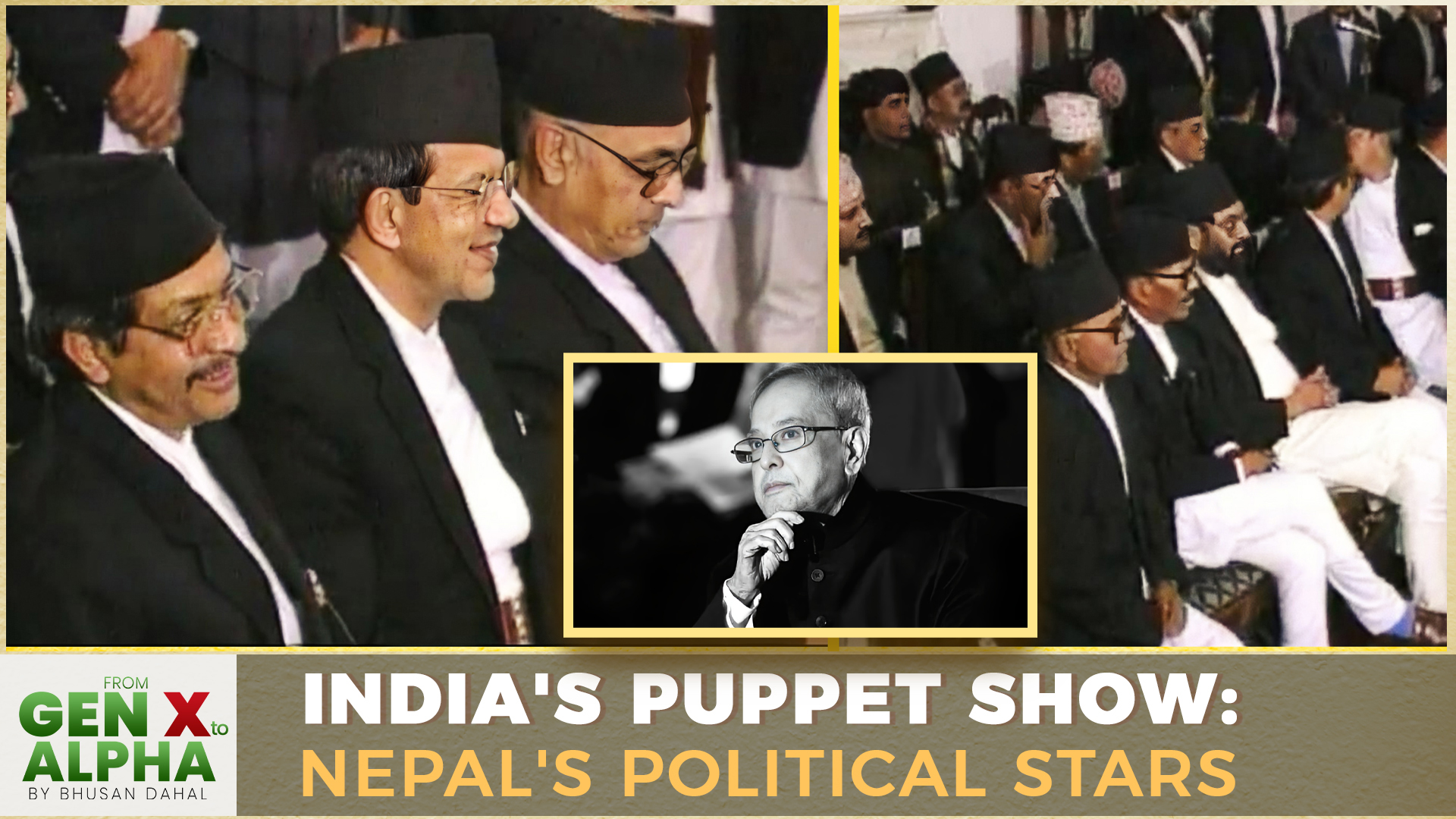
Sher Bahadur Deuba, Prime Minister from 1995 to 1997, signed this deal without looping in King Birendra, the monarchy’s figurehead who carried Nepal’s soul under the 1990 Constitution. Sidelining the king was a bold move, like ghosting your own history for a foreign power’s approval. Deuba, cozy with India and his political crew, pushed the treaty through like a shady crypto deal. It needed a two-thirds majority in parliament, per Article 126, and passed in September 1996 with a 220-to-8 vote. But the real plot twist happened behind the scenes. Enter Dev Raj Ghimire, a CPN-UML parliamentarian in 1996, now the Speaker of the House (since January 2023). The CPN-UML was torn over the treaty-some saw it as a sellout, others a necessary deal. Ghimire’s vote in an internal party head count was the tiebreaker that swung the CPN-UML to back the treaty, paving the way for its ratification. That vote wasn’t just a checkmark; it was a game-changer. Today, Ghimire’s Speakership looks like a thankyou gift from the powers that backed the treaty, a reward for tipping the scales. But dissent came at a cost. Some CPN-UML members who opposed the treaty walked out, like Bam Dev Gautam, who split the party in 1998 to form the CPN (MarxistLeninist). Others? They met mysterious ends-deaths that linger in Nepal’s political gossip as too convenient to be accidents, though hard evidence is missing. It’s the kind of twist that’d make you question everything. And who was cheering Deuba on in New Delhi? KP Sharma Oli, now Nepal’s Prime Minister but then a CPNUML leader running the party’s Mahakali Treaty study team, alongside RPP’s Dr. Prakash Chandra Lohani and Pashupati Shumsher Rana, the monarchist rightwingers. Their trip to India wasn’t a vacation-it was a sign they were playing for Team India. A Treaty That’s All Hype, No Delivery Here’s the infuriating part: the Mahakali Treaty is a broken promise. The Pancheshwar Project, hyped as the big win, is still just talk, stuck in endless bickering over costs, water shares, and a Detailed Project Report due in 1996. India hasn’t built the promised 1,200-meter canal to Nepal’s border, leaving the Mahakali Irrigation Project a weed-covered disaster. The 10 m³/s of water for Dodhara-Chandani? Still a fantasy, tied to Pancheshwar’s delays. It’s like ordering a pizza and getting an empty box-except it’s your country’s future. The treaty’s silence on Kalapani, Limpiyadhura, and Lipulekh was a calculated move, letting India keep those lands without a fight. By 2015, when India and China turned Lipulekh into their trade hub, Nepal’s loss was crystal clear.

The treaty wasn’t just about rivers-it was India’s ticket to running Nepal’s politics. Deuba, Mahat (Ramsharan) Oli, Lohani, and Rana, who partied in New Delhi, became India’s go-to guys. Oli’s push for the treaty fractured his CPN-UML, but it boosted his career. Lohani and Rana, despite their royalist vibes, sided with India, keeping their seats warm in politics. Ghimire’s tie-breaking vote in the CPN-UML sealed his loyalty, and his current Speakership feels like a delayed payoff. Then came the Maoists-Pushpa Kamal Dahal (Prachanda) and Baburam Bhattarai -who flipped from treaty-hating rebels to India’s allies by 2006-2007. Their 1996 40- point demands trashed the treaty, but India saw them as useful tools to dismantle Nepal’s monarchy and nationalists. The 2006 Comprehensive Peace Agreement, backed by India and the Seven Party Alliance (including Deuba’s Nepali Congress and Oli’s CPN-UML), brought the Maoists into power, cementing a political system where Deuba, Oli, Prachanda, and Bhattarai (a sapped out extra) play musical chairs, all under India’s watchful eye. It’s like a reality show where the winner’s already picked-by India.

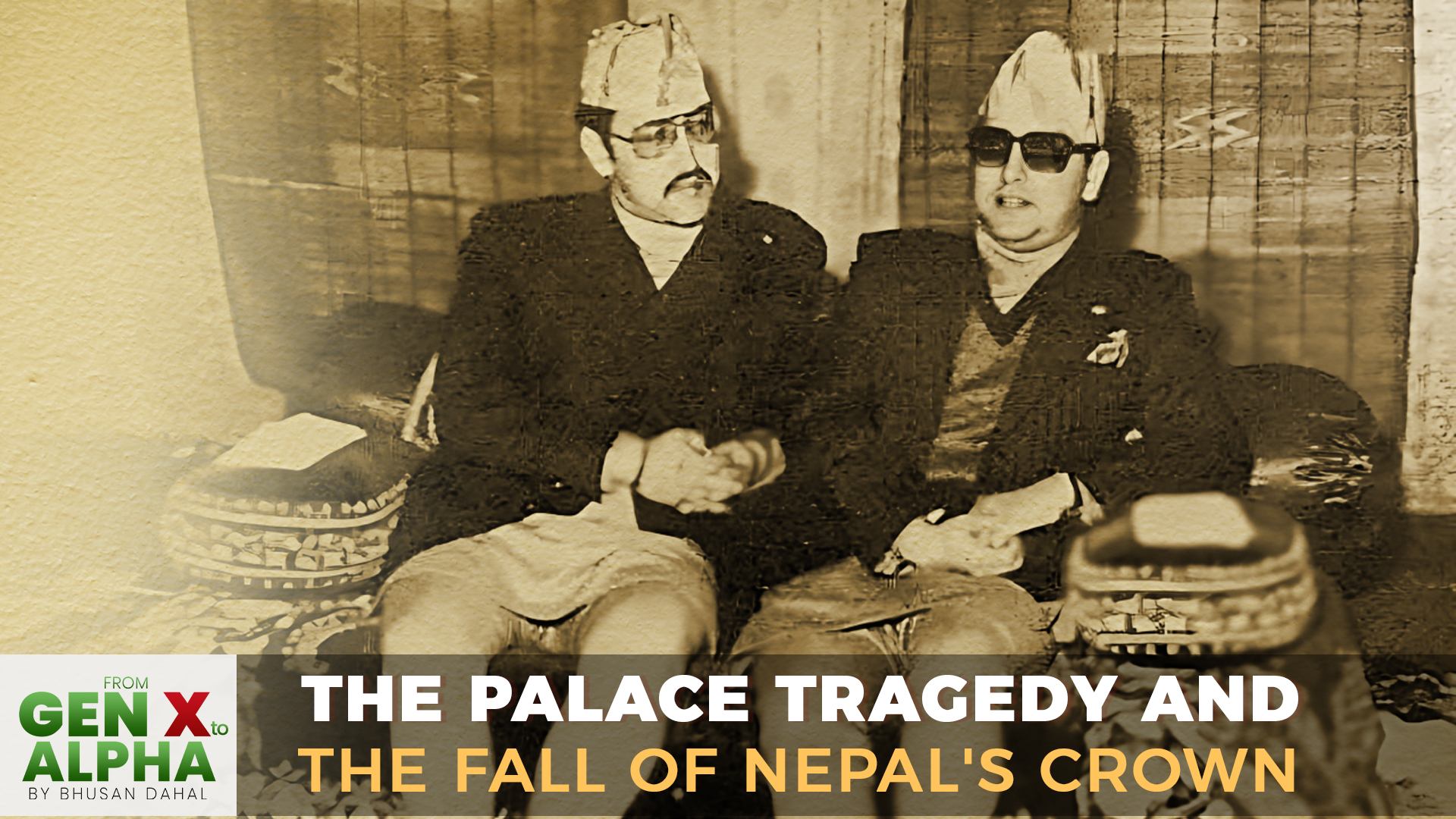
The treaty’s fallout set the stage for Nepal’s darkest chapter: the 2001 Narayanhiti Palace Massacre. On June 1, 2001, Crown Prince Dipendra allegedly killed King Birendra, Queen Aishwarya, and several royals before killing himself. Most Nepalis smell a conspiracy, pointing to India’s intelligence agencies, which had long trashed the monarchy as a nationalist threat. The massacre cleared the path for King Gyanendra, already painted as a villain by India’s media. Gyanendra’s 2005 royal coup, a desperate bid to stabilize Nepal amidst Maoist chaos and political games, was spun as tyranny. By 2006- 2007, the Maoists, now India’s allies, teamed up with Deuba, Oli, and others in the Seven Party Alliance to abolish the monarchy in 2008. India’s press and spies fueled the hate, while China, Nepal’s northern neighbor, quietly played along, betraying Nepal in a rare team-up with India. The monarchy, Nepal’s backbone, was gone, and India tightened its grip.

The Mahakali Treaty, 29 years old and binding until 2071, is a chain on Nepal’s future. It’s not just history-it’s a wake-up call. Nepal lost Kalapani, Limpiyadhura, and Lipulekh, its monarchy, and its independence to a game rigged by India, with China’s complicity. Dev Raj Ghimire’s tie-breaking vote in the CPN-UML, rewarded with his Speakership, and the New Delhi crew of Oli, Lohani, and Rana show how Nepal’s elite sold out. The mysterious deaths of treaty opponents and the 1998 CPN-UML split reveal the brutal cost of resistance. If you’re in your 20s or 30s, this is your fight. Nepal’s sovereignty is about your identity, your future, and your right to a country that stands tall. The same players-Deuba, Oli, and Prachanda,-are still running the show, backed by foreign hands. It’s time to unite, demand accountability, and climb out of the ditch they dug. Nepal’s not just a country-it’s your legacy. Fight for it.

Rising tourist numbers lift Nepal’s hotel industry

Hotels operating in Bagmati Province, the region that has witnessed the largest investment in Nepal’s hospitality industry, have reported a rise in guest arrivals. According to the Economic Activity Study 2024/25 published by Nepal Rastra Bank, the average hotel room occupancy rate in Bagmati has reached 57 percent, up from 51.9 percent in the previous fiscal year 2023/24. The study notes that the increase in both domestic and foreign tourists has boosted the hotel, restaurant, and trekking sectors.

The data shows that hotel occupancy was highest in mid-October to mid-November 2024 at 67.8 percent and lowest in mid-January to mid-February 2025 at 44.7 percent. In other months, the rates were 47.6 percent in mid-July to mid-August 2024, 59.7 percent in mid-August to mid-September 2024, 59.2 percent in mid-September to mid-October 2024, 63.7 percent in mid-November to mid-December 2024, 56.6 percent in mid-December 2024 to mid-January 2025), 60.5 percent in mid-February to mid-March 2025, 63.6 percent in mid-March to mid-April 2025), 56.8 percent in mid-April to mid-May 2025, 54.5 percent in mid-May to mid-June 2025, and 49.2 percent in mid-June to mid-July 2025.

Hotel Association Nepal (HAN) president Binayak Shah said that the occupancy rate during October-November this year also appears encouraging. However, he noted that such trends may not remain consistent throughout the year. According to him, trekking tourists generally arrive in greater numbers during this season, and they often prefer destinations like Pokhara, Manang, Mustang, Chitwan, or Lukla rather than Kathmandu. As a result, hotels outside the capital tend to remain full.

“In Mustang, some hotels even had to stop taking bookings,” he says to Onlinekhabar, adding that it is natural for hotel occupancy to rise when both domestic and foreign tourists travel simultaneously.

Following the Gen Z movement, two five-star hotels in Kathmandu suspended operations, which led to increased business for other luxury hotels. Shah explained that large hotels are currently doing satisfactory business and that the closure of Hilton and Hyatt has redistributed their business to other hotels, creating a natural rise in pressure. He added that Shangri-La and Annapurna, two other five-star hotels, are also not in operation at present, allowing newly opened large hotels to enjoy higher occupancy rates. In Chitwan and Pokhara, hotels have reported good business during public holidays, supported by a steady flow of both domestic and Indian tourists. Hotels in the Terai region have also recorded satisfactory arrivals of Indian visitors.

Nepal Rastra Bank, analyzing the first quarter of the current fiscal year 2025/26, expects further improvement in the service sector. Although foreign tourist arrivals declined in mid-August to mid-September 2024 following the Gen Z movement, the numbers have since improved, contributing to a rise in tourism revenue and economic activity. The report also suggests that ongoing reconstruction efforts and the upcoming elections will further expand the transport, hotel, and restaurant businesses, supporting overall economic growth.

In October 2025, which is considered Nepal’s main tourist season for trekking and mountaineering, a total of 128,443 tourists visited the country, 3.3 percent more than in the same month the previous year. American and European tourist arrivals were particularly notable. Although Indian tourists topped the list in number, other countries recorded higher growth rates. That month, 17,298 tourists came from India, 13,286 from the United States, 8,718 from the United Kingdom, 6,755 from China, and 6,366 from Germany. Among the total visitors, 31.6 percent were Europeans (40,600 tourists), while 22.6 percent were from South Asian countries, including India (29,060 tourists). Other Asian countries accounted for 23,127 visitors, while 16,407 came from the Americas, 6,814 from Oceania, 3,548 from the Middle East, 443 from Africa, and 8,444 from other regions. During this autumn season, 1,450 climbers from 175 expedition teams received climbing permits, generating NPR 25.51 crore (about USD 1.9 million) in royalties for the government.

According to the Nepal Tourism Board, a total of 943,716 tourists visited Nepal in the first ten months of 2025, a slight increase compared to the same period the previous year. Among them, India ranked first with 243,350 visitors, followed by the United States with 93,985 and China with 78,929. The United Kingdom, Bangladesh, Australia, Sri Lanka, Germany, Thailand, and South Korea also contributed significant numbers. In total, 35.8 percent of visitors came from South Asia, 20.9 percent from other Asian countries, 19.1 percent from Europe, 12 percent from the Americas, 4.4 percent from Oceania, 0.4 percent from Africa, and 5.5 percent from other regions.

Share market rises after 3 days, 4 companies gain 10 %

After declining for three consecutive trading days, the share market rebounded on Tuesday. Compared to the previous day, the NEPSE index increased by 3.21 points, settling at 2,565 points.

Although the market fell until around 1:30 pm after the opening session, it recovered later in the day. Prices of 142 companies rose, 102 declined, and 10 remained unchanged. The transaction volume, however, decreased from Rs 4.51 billion on the previous day to Rs 3.62 billion today.

Sectoral indices showed mixed trends, with all fluctuations remaining below one per cent. The indices for Banking rose by 0.07 per cent, Hydropower by 0.77 per cent, Life Insurance by 0.57 per cent, Manufacturing and Processing by 0.33 per cent, Non-Life Insurance by 0.50 per cent, and Trading by 0.69 per cent.

Meanwhile, the indices for Others declined by 0.67 per cent, Microfinance by 0.05 per cent, Investment by 0.29 per cent, Hotels and Tourism by 0.38 per cent, Finance by 0.61 percent, and Development Banks by 0.47 per cent.

Share prices of four companies surged by the maximum limit of 10 per cent all of them newly listed. The companies are Bandipur Cable Car, Mabilung Energy, Sagar Distillery, and Bungal Hydropower.

Similarly, shares of Daramkhola Hydropower rose by 6.88 percent, Eastern Hydropower by 6.29 per cent, and Swastik Laghubitta by 4 per cent. City Hotel recorded the sharpest decline of 4.96 per cent.

The most actively traded companies of the day were Sahas Urja, Radhi Bidyut, NRN Infrastructure, Shivam Cement, and Synergy Power.

Gold price jumps by nearly Rs 5,000 in a single day

The price of gold surged by nearly Rs 5,000 per tola on Tuesday. Compared to the previous day, the price rose by Rs 4,900 per tola, according to the Federation of Nepal Gold and Silver Dealers’ Associations. The new rate for fine gold has been set at Rs 246,400 per tola, up from Monday’s Rs 241,500.

Similarly, the price of silver increased by Rs 105 per tola, reaching Rs 3,170 from Rs 3,065 the previous day.

The rise in gold and silver prices in the international market has directly influenced the Nepali market, traders said.

Singapore Airlines introduces Boeing 737-8 MAX on Kathmandu–Singapore route

Singapore Airlines has launched permanent operations of the Boeing 737-8 MAX aircraft on the Kathmandu–Singapore route, offering passengers enhanced comfort and convenience.

Previously, the airline operated Boeing 737-800 NG aircraft on this route. The upgrade to the new Boeing 737-8 MAX significantly improves the overall flying experience, the airline said.

According to Singapore Airlines, the new aircraft features fully lie-flat seats in Business Class, allowing passengers to enjoy a more comfortable journey and arrive feeling refreshed. Complimentary in-flight Wi-Fi is also available for passengers in all classes, enabling them to work, stay connected with family and friends, or enjoy entertainment during the flight, according to the airline’s General Sales Agent (GSA) in Nepal, Everest Express International.

The Boeing 737-8 MAX offers a modern cabin design, an advanced in-flight entertainment system, and superior fuel efficiency, making it an environmentally friendly aircraft. Singapore Airlines stated that the Boeing 737-8 MAX will now serve the Kathmandu–Singapore route and onward destinations on a permanent basis, ensuring consistent quality and reliability for travelers flying from Nepal to destinations worldwide.

Singapore Airlines honours cargo and travel partners in Nepal

Meanwhile, Singapore Airlines recognised three cargo companies and 10 travel agencies in Nepal for their outstanding business contributions this year.

According to Everest Express International, the airline’s GSA in Nepal, Pioneer Cargo, Rising Star Cargo, and Legend Cargo received the Outstanding Cargo Agent Award.

Similarly, Rupakot International Travels, Rupse Holidays, Aishwarya Travels, Roaming Nepal, and Sumegh Tours & Travels were honored with the Enterprising Agent Award.

In addition, Prabas Travel & Tours, Bon Travel & Tours, Sea Links Travels & Tours, Da Vinci Travels & Tours, and Osho World Travel Nepal received the Outstanding Travel Agent Award.

Malaysia stalling labour agreement renewal for 18 months

Nepal and Malaysia signed a labour agreement (MoU) in 2018, with a provision to renew it every four years. Six years later, the agreement has yet to be renewed.

According to Nepali officials, Nepal has repeatedly written to Malaysia requesting renewal of the agreement, but no response has been received so far. The agreement was signed by then Minister for Labour, Employment and Social Security Gokarna Bista and Malaysia’s then Minister for Human Resources Kula Segaran.

An official from the Ministry of Labour, Employment and Social Security said Nepal sent two letters seeking renewal, but both went unanswered. “We have sent letters several times. There has been no reply, and we are still waiting. Perhaps the process is ongoing on their side,” the official said.

According to ministry spokesperson Pitambar Ghimire, the correspondence was done through diplomatic channels.

While delaying renewal, Malaysia recently issued a 10-point standard guideline for manpower companies in five labour-sending countries, including Nepal. The guideline set conditions Nepali recruitment agencies must meet to send workers to Malaysia. However, Nepal rejected it outright, sending a diplomatic note stating it could not be implemented.

Officials say Malaysia’s hesitation to renew the labour agreement is linked to several factors. One is the decline in job demand in Malaysia itself. Another is the growing influence of syndicates trying to monopolise recruitment through limited companies.

About 18 months ago, Malaysia proposed renewing the deal under the same model as its agreement with Bangladesh. But then Minister for Labour Sharat Singh Bhandari rejected the idea, stating Nepal would not sign any agreement that created syndicates among manpower agencies.

“The government treats all businesses equally, large or small. We cannot sign an agreement that promotes syndicates,” said a ministry official. “The agreement must also promote ethical migration, which was not ensured under that proposal.”

Some Nepali and Malaysian recruitment agents had pressured Minister Bhandari to follow the Bangladeshi model, which restricts worker deployment to a few selected companies. Bhandari, however, maintained that the manpower sector needed regulation, not syndication.

Malaysia has long recruited Bangladeshi workers through a few licensed manpower companies. A Bangladeshi businessperson, Aminul Islam Abdul Noor (Amin), residing in Malaysia, reportedly played a key role in establishing the syndicate system. His company, Bestinet, also helped draft the 10-point guideline that was circulated to Nepal, India, Bangladesh, Pakistan, and Myanmar.

Rs 3 million allocated for National Assembly meeting hall

Aside

Around Rs 3 million has been allocated for arranging a hall to hold the meeting of the National Assembly.

According to National Assembly Chairperson Naran Prasad Dahal, preparations are underway to hold the meeting in the hall of the Agriculture and Natural Resources Committee located in Singha Durbar.

“Internal preparations have started. The estimated cost for managing the hall is around Rs 3 million,” Chairperson Dahal said during Sunday’s meeting of the Legislative Management Committee under the National Assembly.

The National Assembly meeting has not been held so far due to the unavailability of a suitable hall. Discussions are ongoing about completing the hall arrangements soon so that the session can be called.

Chairperson Dahal said that a proposal has been made to convene the National Assembly session in the second week of Mangsir (late November to early December).

“It has been suggested that calling the session by Mangsir 15 would be appropriate,” Dahal informed the committee meeting, referring to the recommendation given to Prime Minister Sushila Karki.

He further noted that Prime Minister Karki has shown a positive attitude towards the National Assembly’s concerns.

Election Commission sends recommendation to government, opening path for ordinance

he Election Commission has sent its legal recommendations to the Ministry of Home Affairs suggesting necessary amendments to existing laws to grant voting rights to Nepalis residing overseas.


According to Commission Spokesperson Narayan Prasad Bhattarai, the recommendation was submitted to legally pave the way for such amendments. To ensure voting rights for Nepali citizens living abroad, the government is preparing to amend the Voters’ Roll Act, the Election Offenses and Punishment Act, the Election Commission Act, and the House of Representatives Election Act.

“The Home Ministry had sought the Commission’s opinion on the legal provisions. We have provided recommendations specifying the appropriate legal terms and clauses,” Bhattarai told Sajhakatha.

Although the legal process has begun, Bhattarai noted that the government must carry out additional work to address the practical aspects of implementation.

“The law does not specify operational modalities or estimated costs,” he said. “The Commission has, however, given a positive opinion regarding the legal framework.”

With this, the government can now bring an ordinance to amend existing laws to grant voting rights to Nepalis living abroad, if it chooses to move forward.

The Office of the Prime Minister, the Ministry of Home Affairs, the Election Commission, and the Policy Research Institute are currently working to draft necessary amendments and policy directives to enable voting rights for Nepalis abroad.

The Home Ministry stated that further discussions are ongoing regarding the technical draft submitted by the Election Commission, which proposes allowing Nepalis abroad to vote under the proportional representation system.

Officials at the Ministry of Home Affairs said the government is exploring the possibility of initiating overseas voting, at least in a few selected countries, during the upcoming House of Representatives elections on March 5 (Falgun 21). However, decisions regarding which countries to begin with and what modality to adopt are yet to be finalized.

Nevertheless, if the government decides to proceed, the ordinance route is now open for amending the laws. The Home Ministry had requested the Election Commission’s legal opinion as part of its preparations for such an ordinance.

Since the House of Representatives currently stands dissolved, any amendment to the laws must be introduced through an ordinance.

President Paudel to return home this afternoon

Aside

President Ramchandra Paudel is returning home this afternoon after participating in the Second World Summit for Social Development held in Doha, the capital of Qatar. During the visit, President Paudel addressed the main session of the Summit last Tuesday.

He also addressed the high-level roundtable conference on strengthening the three pillars of social development: poverty eradication, full and productive employment and decent work for all, and social inclusion organized during the summit.

President Paudel had reached Doha on Monday, leading a Nepali delegation to participate in the World Summit that began on Tuesday. President Paudel was invited to participate in the World Summit by the Emir of Qatar Sheikh Tamim bin Hamad Al Thani.