
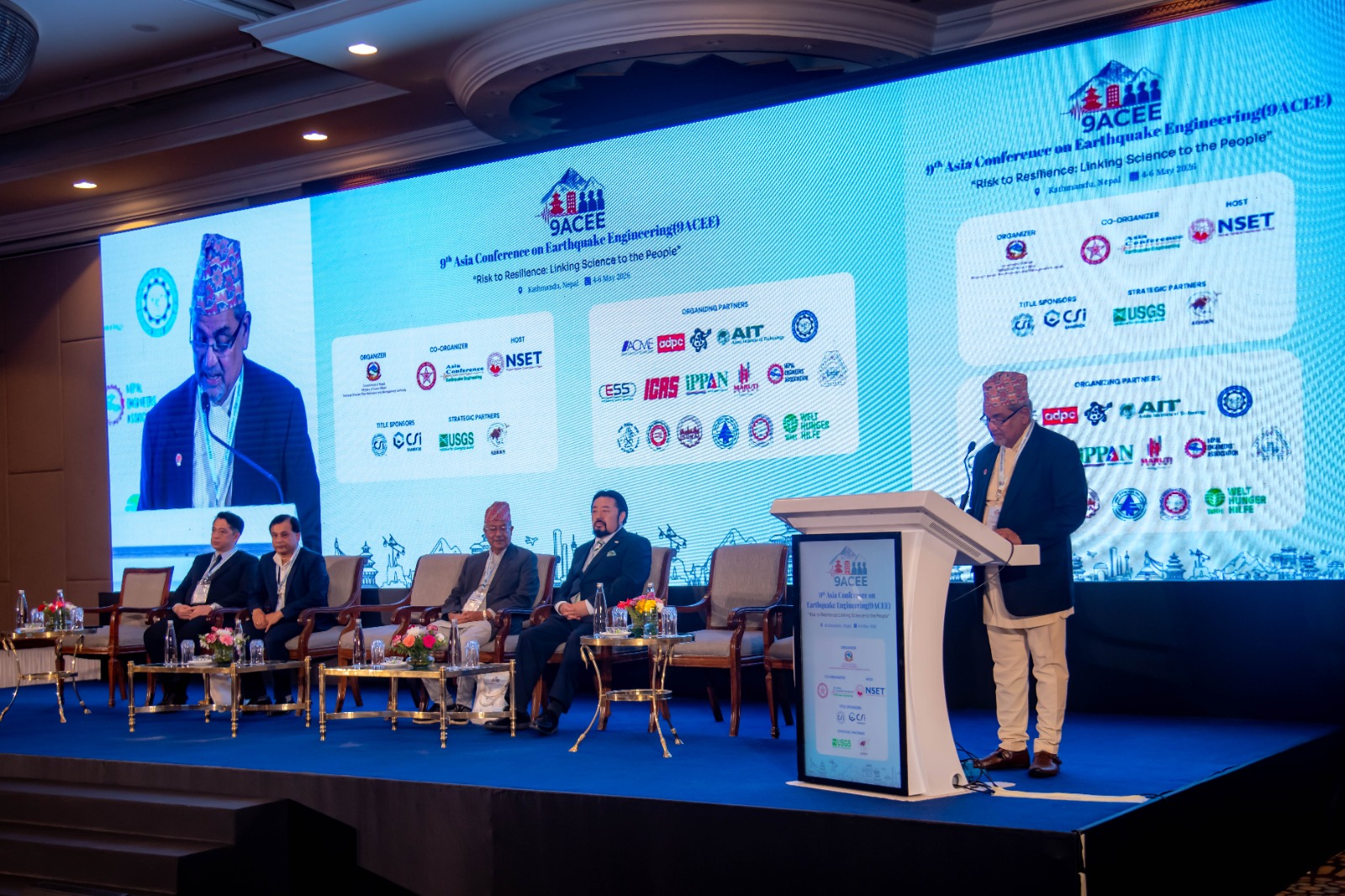
Kathmandu is hosting a major regional gathering of earthquake experts as the 9th Asia Conference on Earthquake Engineering (9ACEE) commenced on Monday, aiming to advance scientific dialogue and practical solutions for earthquake risk reduction.
The three-day conference, running from May 4 to 6, is centered on the theme “Risk to Resilience: Linking Science to the People.” It brings together experts from across Asia and beyond to share research, innovations, and collaborative strategies to reduce seismic risks, particularly for vulnerable communities.
Convener Amod Mani Dixit highlighted the scope of the event, noting that it features six keynote lectures, over 89 scientific papers presented both in person and online, and 22 technical sessions running in three parallel tracks. Each session includes an invited lecture by a leading professional to guide discussions. The conference also includes exhibitions on earthquake-resilient technologies, field visits to reconstruction sites, and student paper competitions.
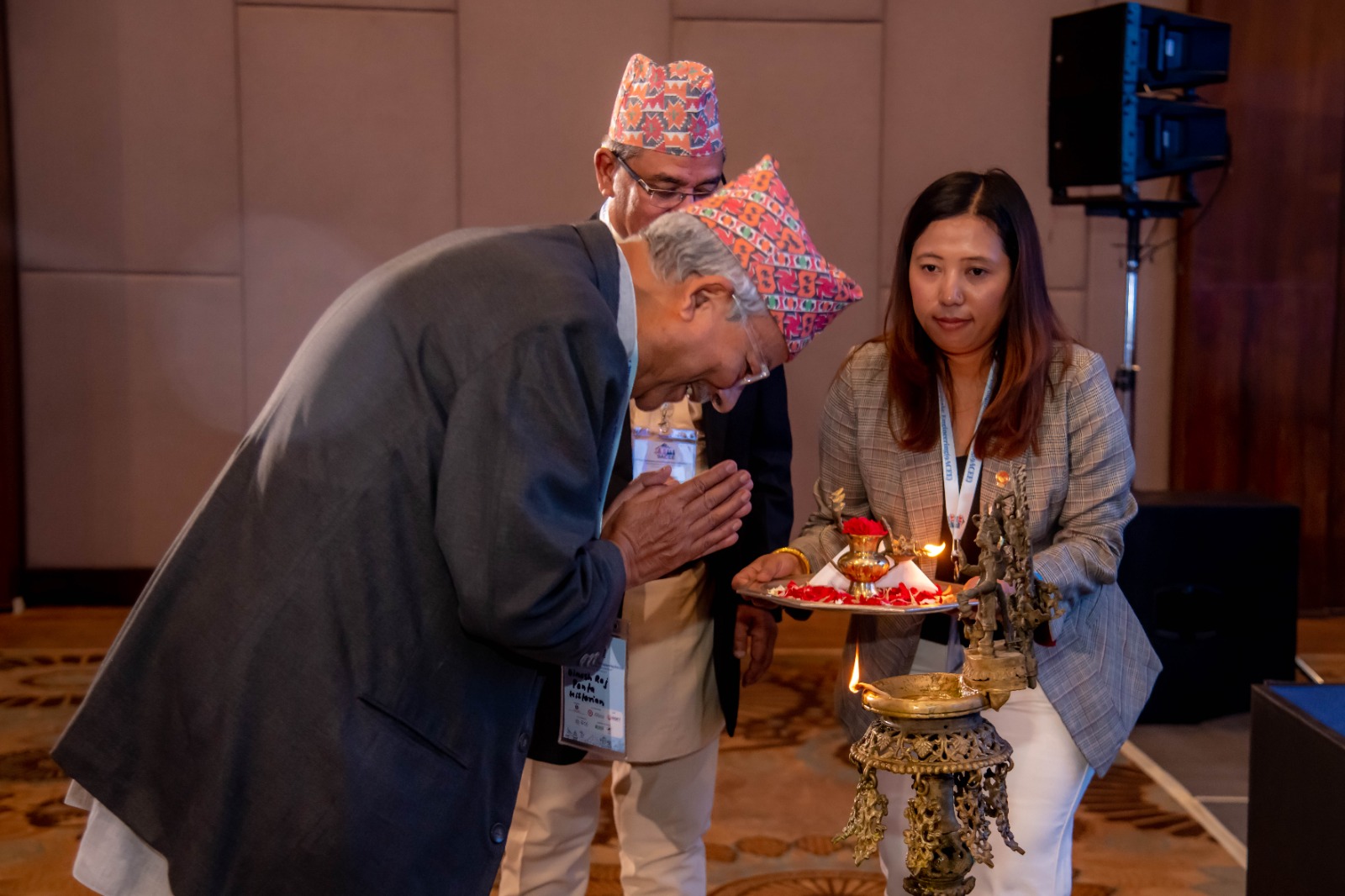
Addressing the inaugural session, chief guest Dinesh Raj Panta reflected on Nepal’s long history of earthquakes. He noted that records from the Lichchhavi period indicate the destruction of temples and palaces, possibly due to seismic events. He also referenced major historical earthquakes in 1255 and 1344 that reportedly claimed the lives of ruling monarchs.
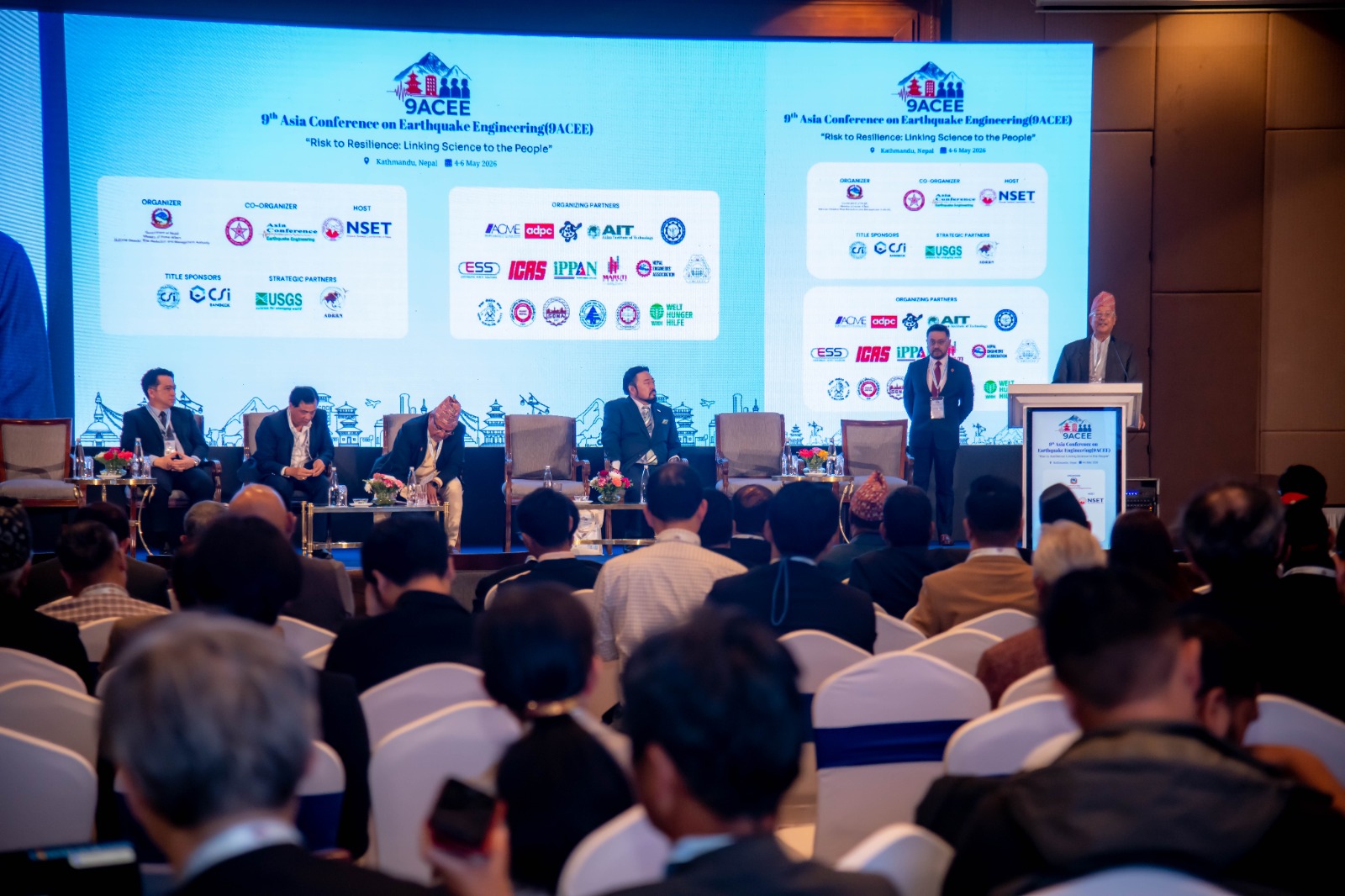
As Guest of Honor, Amrit Shrestha emphasized that disasters are not just scientific issues but development challenges that directly affect people’s lives and livelihoods. Referring to the devastating 2015 Gorkha Earthquake, he stressed the importance of translating scientific knowledge into action at the community level and noted ongoing efforts to integrate disaster risk reduction into national and local development plans.
In his remarks, Dixit recalled the loss of nearly 9,000 lives in the 2015 earthquake, describing it as a reminder of the urgency to strengthen resilience and preparedness across Nepal.
The conference opened with plenary sessions featuring keynote presentations by international experts. Ronaldo S. Ison spoke on advancing earthquake engineering collaboration in Asia, while Kimiro Meguro addressed key challenges in building earthquake-resilient societies.
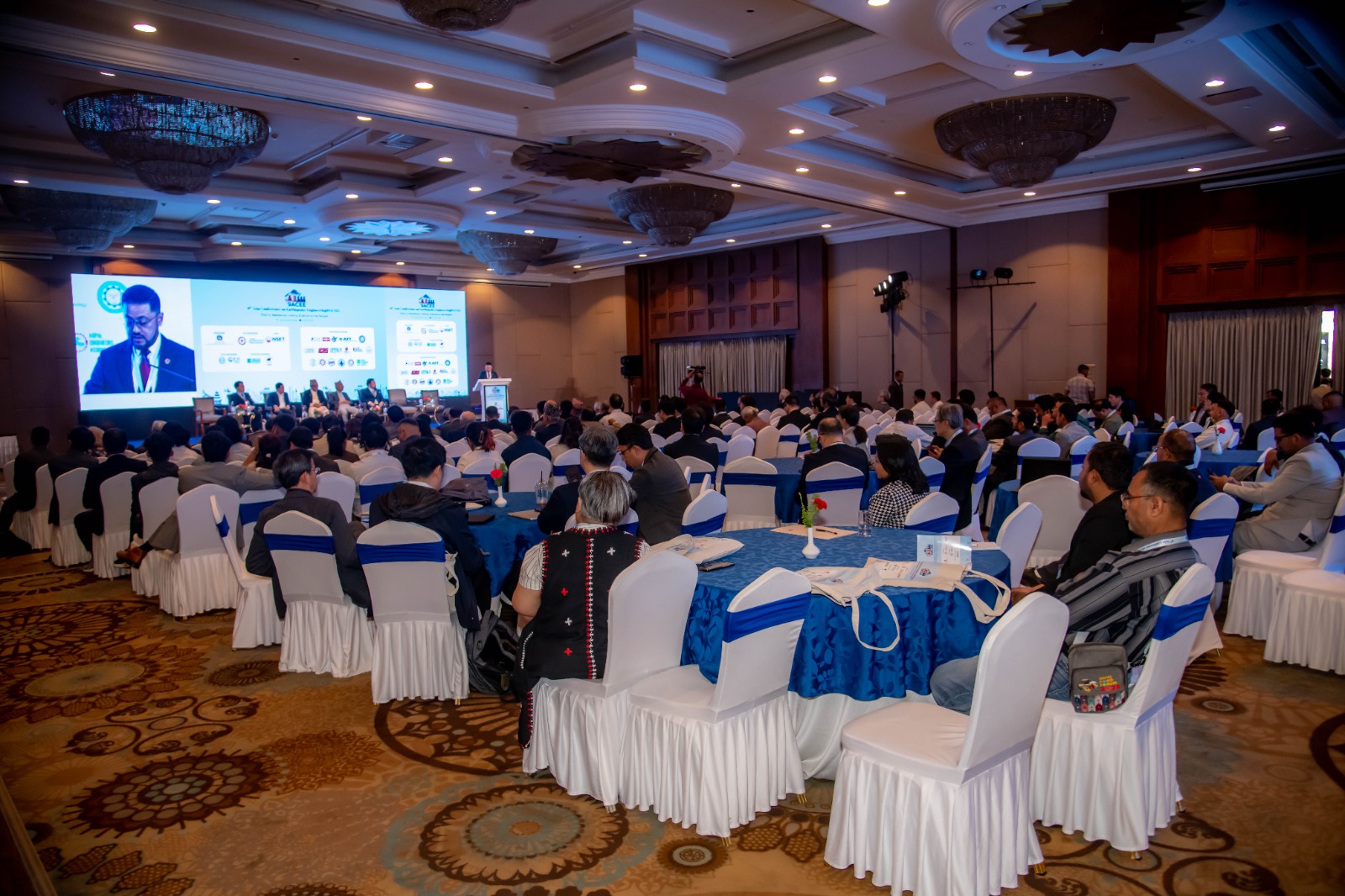
The event is being organized under the leadership of the National Disaster Risk Reduction and Management Authority (NDRRMA), with technical guidance from the Nepal Academy of Science and Technology and the Asia Conference on Earthquake Engineering, and hosted by the National Society for Earthquake Technology – Nepal.
The conference has drawn participation from a wide range of stakeholders, including government agencies, academic institutions, professional societies, and private-sector organizations from Nepal, India, Thailand, and beyond. Strategic partners such as the United States Geological Survey and the Asian Disaster Reduction and Response Network are also contributing to the initiative.
With its strong emphasis on linking science to community action, the conference is expected to play a significant role in strengthening regional cooperation and enhancing resilience against future earthquakes.
Great scientific discourses on building earthquake resilience – important for Nepal and the region! Thank you #grabnews for sharing about the effort!
Very informative reporting on one of the important and relevant scientific dialogues and brainstorms happening in the city! Thank you!